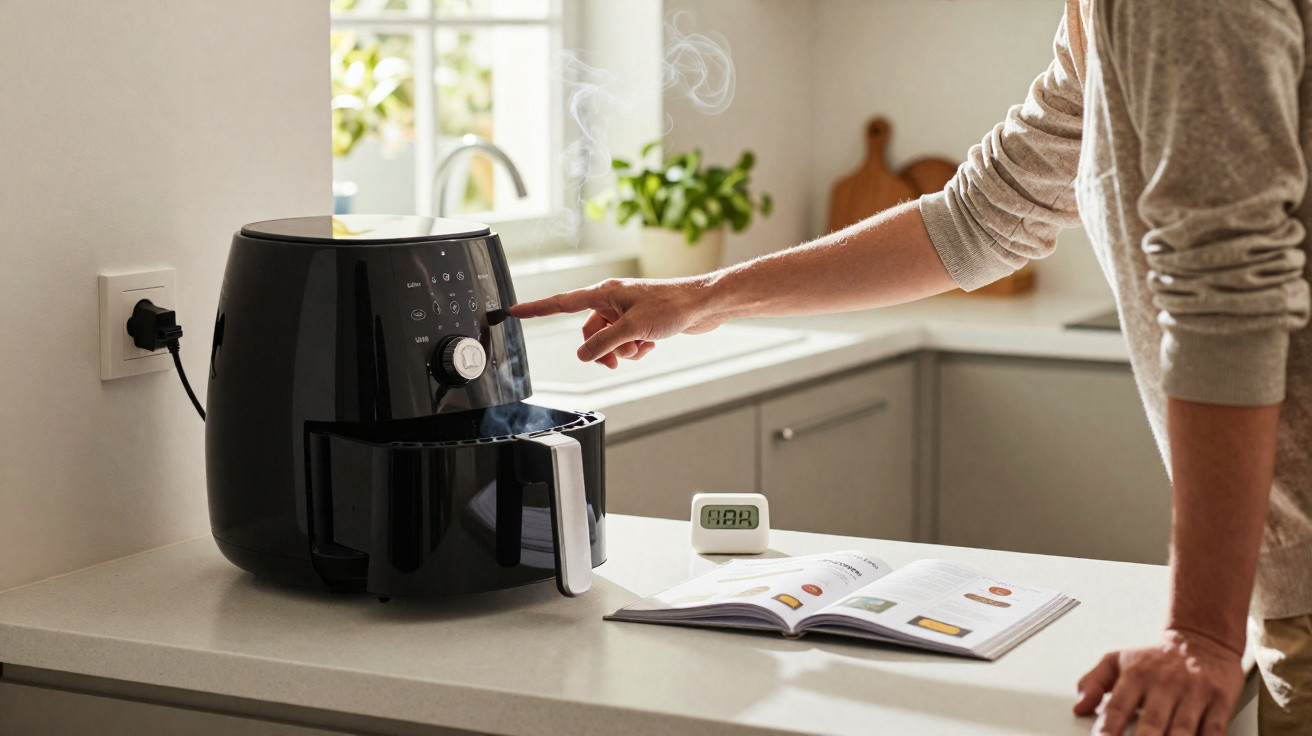
Less even cooking, a persistent smell or an unfamiliar noise may indicate that the appliance is no longer operating as it should.
Handy for making chips, roasted vegetables or chicken with very little fat, the Airfryer has become a fixture in many kitchens. With repeated use, however, it is exposed to grease splashes, recurring heat and built-up residue. Certain changes should be taken seriously before they lead to a breakdown, significant smoke or overheating.
Cooking becomes unpredictable
The first sign often goes unnoticed: food no longer cooks as it usually does. Chips remain pale on one side, fish is undercooked in the middle, or vegetables brown too quickly around the edges. Increasing the cooking time or temperature will not necessarily solve the problem.
An Airfryer relies on a heating element to generate heat and a fan to circulate it around the food. When the hot air no longer moves freely, cooking becomes less even. Grease collecting on the upper grill, a worn fan or a heating element nearing the end of its life may all cause this result.
“If the same recipes suddenly take longer and produce uneven results, the appliance should be checked before it is used again.”
Before considering a replacement, inspect the drawer, grill and air vents first. An overfilled basket can also prevent air from circulating properly. Cooking in two batches may be necessary to achieve a more consistent result.
A hum that differs from the usual sound
A steady airflow sound is normal while the appliance is running. A loud hum, unusual vibrations, squeaking or repeated knocking, however, are not. Such noises may come from the fan, whose blades are obstructed by deposits, or from a motor beginning to struggle.
Do not leave the appliance running unattended in this situation. A motor under strain may become hotter than expected. If the noise continues after cleaning and checking the basket, unplug the appliance and avoid using it until it has been inspected.
What to do as soon as unusual noises begin
- Switch off the appliance and unplug it once it has cooled down.
- Check that the basket, grill and accessories are fitted correctly.
- Clean away visible residue from the drawer without scraping the coatings.
- Make sure the air vents are not pressed against a wall or blocked by a tea towel.
- Do not attempt to dismantle the heating unit unless you are qualified to do so.
Smoke should never become routine
A small amount of smoke can appear when very fatty food is heated at a high temperature. This should be occasional and disappear quickly. By contrast, smoke that returns with every use, including when cooking low-fat foods, requires immediate attention.
The most common cause is grease build-up in hard-to-reach areas, particularly above the drawer and close to the heating element. When it heats up, it burns and produces smoke. Forgotten crumbs or leftover marinade can have the same effect.
“Persistent smoke, the smell of heated plastic or black marks near the upper section: unplug the Airfryer and do not start another cooking cycle ‘just to see’.”
A burnt electrical smell is especially concerning. It is different from the smell of overcooked food and may point to an issue with wiring, the motor or an internal component. In this case, cleaning alone is not enough: the appliance needs to be examined by a competent service provider or replaced.
When a bad smell remains after cleaning
The smell of old grease can become embedded in a poorly maintained Airfryer. It may eventually transfer to food and spoil even simple cooking, such as potatoes or vegetables. The basket may look clean while the top part of the appliance still contains invisible grease splashes.
Wait until the appliance has cooled completely, then remove the drawer. Using a soft, slightly damp sponge and a little washing-up liquid, clean the accessible areas. Avoid abrasive sponges, scouring powders and metal objects, as they can damage the non-stick coating.
Some people use hot water and lemon to loosen grease. This can help with the drawer or washable accessories, but it must not result in water being poured into the appliance housing. Moisture must never reach the electrical components. The manufacturer’s instructions remain the point of reference, particularly for the area around the heating elements.
When you should stop using the Airfryer
An older appliance is not automatically dangerous. It is the combination of symptoms that should prompt action. An Airfryer that cooks poorly, produces smoke, vibrates heavily and smells burnt should not remain in use simply out of habit.
- Unplug it as soon as an unusual malfunction appears.
- Allow it to cool on a non-flammable surface.
- Never cover the vents to reduce noise or smoke.
- Keep baking paper, kitchen roll and plastic packaging away from the heating area.
- Use the warranty or contact after-sales support if the appliance was bought recently.
One frequently overlooked detail: where the appliance is placed
Overheating does not always result from an internal fault. An Airfryer positioned beneath a wall cupboard, wedged between two objects or used near a curtain cannot release heat as effectively. Leave clear space around the appliance, especially at the back and sides, where the air vents are often located.
Baking paper also requires care. If it is not held down by food, the fan’s airflow can lift it up and cause it to touch the heating element. Use only suitable perforated liners, or place the paper beneath the food; never put it into an empty drawer during preheating.
Cleaning after fatty cooking noticeably reduces odours and smoke. Yet when there is a mechanical noise, recurring smoke or an electrical smell, it is best not to wait for a complete failure: these warnings can turn a simple meal into a kitchen incident.

















Comments
No comments yet. Be the first to comment!
Leave a Comment