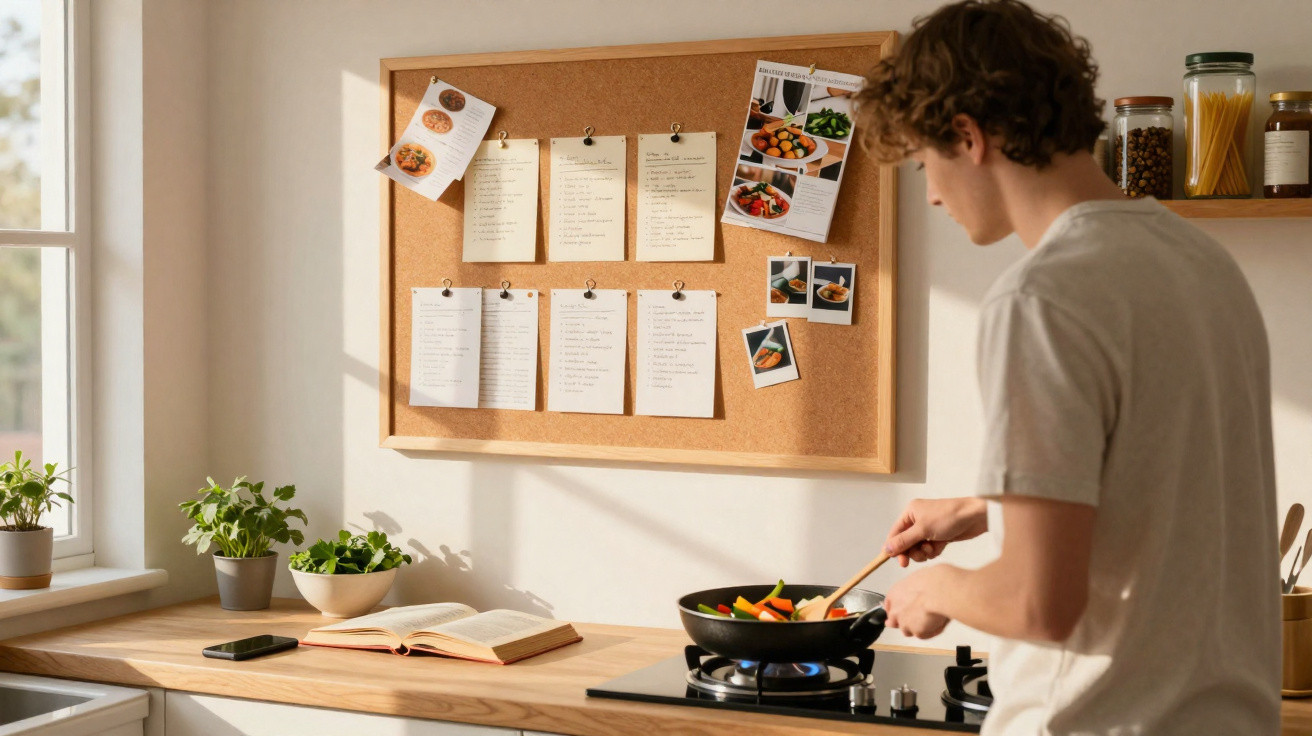
The phone remained face down as the room fell quieter. I had not set out to cook more; I simply wanted the recipes I genuinely enjoy to be in front of me while I made coffee and battled the toaster. Within a few days, my kitchen sounded less like a passage between my desk and the takeaway menu, and more like a room with a purpose. Something had changed.
When a cork board outdid my phone
I assumed my problem was planning, but it was really visibility. A cork board makes visibility tangible: patient, obvious and slightly demanding. When recipes are displayed where you naturally look while moving between the sink and the hob, dinner becomes less of a choice and more of a prompt. That prompt is more powerful than expected when a card catches your eye as you walk past. What you see is what you cook. It seemed almost laughably straightforward, like putting your keys on a hook within reach and treating it as a revelation. Yet it genuinely was one.
During the first week, I pinned up five recipes that even a tired Tuesday brain could manage: chickpea stew, garlic noodles, roasted salmon, a crispy tofu bowl and a one-pan sausage bake. I wrote each one by hand so that they felt deliberate. By Friday, I had made four of them, as one card or another appeared to beckon each evening. My shopping list had been reduced to onions, greens, lemons and inexpensive cuts that become excellent with heat. The best surprise was not the money saved or the leftovers, but the quiet sense of progress whenever I removed a pin and placed a splattered card in a “cooked” corner like a prize.
Analogue tools beat apps for the same reason paper calendars make birthdays seem more real: our brains respond to what is out in the open, and friction determines which habit prevails. At 6:40 p.m., tapping through menus, swiping beyond adverts and searching through saved recipes demand more from you than a board that simply stands there, answering ten per cent of the question just by being present. I began to rely on the idea that doing the small task in advance - pinning rather than planning - would let the rest of the evening take care of itself. That confidence altered how I felt at the hob more than any new kitchen gadget could have.
How to create a recipe board you will actually use
Choose a place you pass ten times daily - the end of a cupboard, the fridge side or a slim wall by the light switch - and fix a medium-sized board at eye level. Then use coloured pins to create four informal sections: “This week”, “Quick wins”, “Try soon” and “Family asks”. On Sunday, spend ten minutes handwriting five recipes that you could sensibly make, rather than meals you merely aspire to cook. Attach a pen and tape to the frame, too, so changes can be made where the ideas are kept. Start small: five pins, one week. The ritual matters more than the cork.
The usual error is to pin twenty recipes and call it ambition. That only turns the board into a menu you will never use, allowing overwhelm to take over. Keep it uncluttered, update it on one designated day and adopt a simple rule such as “two repeats from last week”, so that your future self appreciates your willingness to be unexciting. We have all faced a full fridge while dinner still feels unachievable. Honestly, nobody does this every day, and that is all right; if the board catches you three evenings out of seven, it can transform the atmosphere in your kitchen.
Let shapes and texture help make choices for you: the brain enjoys shortcuts, and you have plenty to do.
“Walls decide dinner before hunger does.”
Choose one easy-to-read code and leave it at that:
- Red pins = protein already defrosted.
- Green pins = 20 minutes or less.
- Blue pins = new, fun, weekend energy.
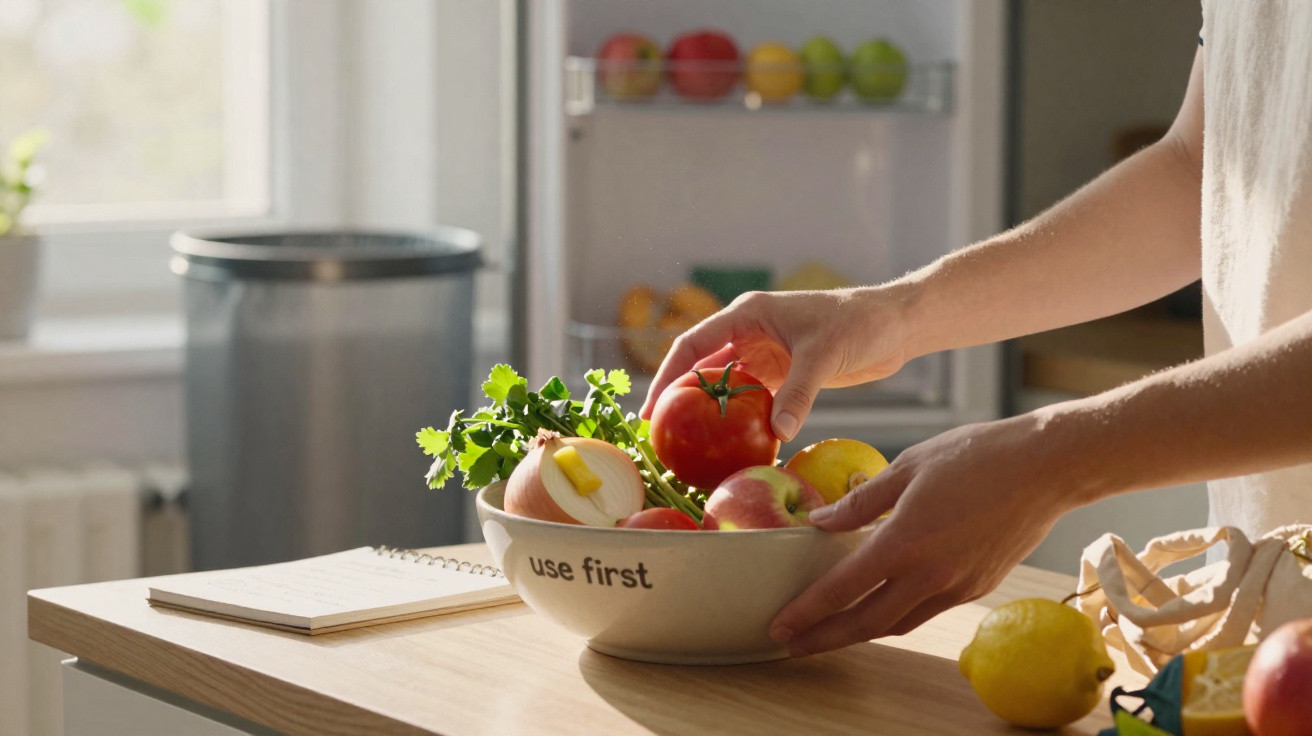
- Yellow pins = “use up” ingredients in your crisper.
The system does not have to be clever. It simply needs to remain consistent enough for Thursday-you to be guided by Tuesday-you, who had greater optimism and better coffee.
What changed beyond dinner
After a month, a subtle shift had taken place: recipes on the board became conversation starters rather than chores. My child began shifting the “try soon” card into “this week” with the authority of a tiny editor, while my partner added a sticky note that simply said “broccoli, confidence.” I was cooking more without feeling as though I was acting out adulthood, and my trolley began to resemble that of someone with a point of view rather than a collection of panic purchases. Fewer choices made the whole day feel wider. This was not about control. It was about establishing a rhythm that allowed spontaneity because the essentials were covered, and that feeling extended to lunches, hosting and the quiet satisfaction of saying, “I’ve got something at home.” Send a photo of your board to a friend, exchange a recipe card by post, or make a small tradition from the pins as they move.
| Key point | Detail | Benefit for the reader |
|---|---|---|
| Make it visible | Position the board where your gaze falls between the sink and hob | Makes cooking a reflex rather than a decision |
| Limit the choices | Five handwritten recipes each week with straightforward colour codes | Reduces overwhelm and speeds up “what’s for dinner” |
| Ritual over perfection | A ten-minute Sunday reset, two repeats and one new dish | Creates momentum and keeps the habit low-effort |







Comments
No comments yet. Be the first to comment!
Leave a Comment