The meal itself was never the problem. The timing was.
Steam clouds the small kitchen window. The pan bubbles away, a wooden spoon taps against the side, and someone calls, “Pasta’s ready!” You reach for the colander, send the rushing water into the sink, then follow it with a blast of cold tap water because that is what your aunt taught you in the 1990s. The pasta cools until it squeaks. Meanwhile, the sauce sits waiting in the pan, shiny and full of promise-then nothing happens. It will not cling. It will not turn silky. It merely coats the pasta before sliding away. Somewhere between the colander and the tap, the magic vanished. That is where the sauce died.
The quiet pasta mistake that robs your sauce of its superpower
The error is rinsing the pasta. That fast, well-intentioned run under the tap removes the surface starch-the very ingredient that allows sauce to hold on to every curve and ridge. Remove the starch and you lose the connection. The result is a slick, thin sauce that sits apart, like a handshake from cold hands.
We have all seen noodles that look shiny and “clean”, while the sauce acts as though it belongs in a separate dish. Your recipe is not at fault. The rinse is. Flowing water carries away flavour, salt and the fine starch particles that help thicken and emulsify the sauce. As a result, a sauce that seemed promising can become watery or clumpy the moment it meets the pasta.
Here is the science you can taste. While pasta cooks, its starch gelatinises and rises to the surface. This starch acts as a natural binder and mild thickener. When it combines with fat in the sauce-olive oil, butter or cheese-it creates an emulsion that is glossy, soft and clingy. Rinsing returns the pasta to a squeaky-smooth surface. The sauce cannot get a grip, fat separates, and your lovely pan of tomatoes or cream ends up circling the noodles rather than embracing them.
How to fix it tonight: let starch do the work
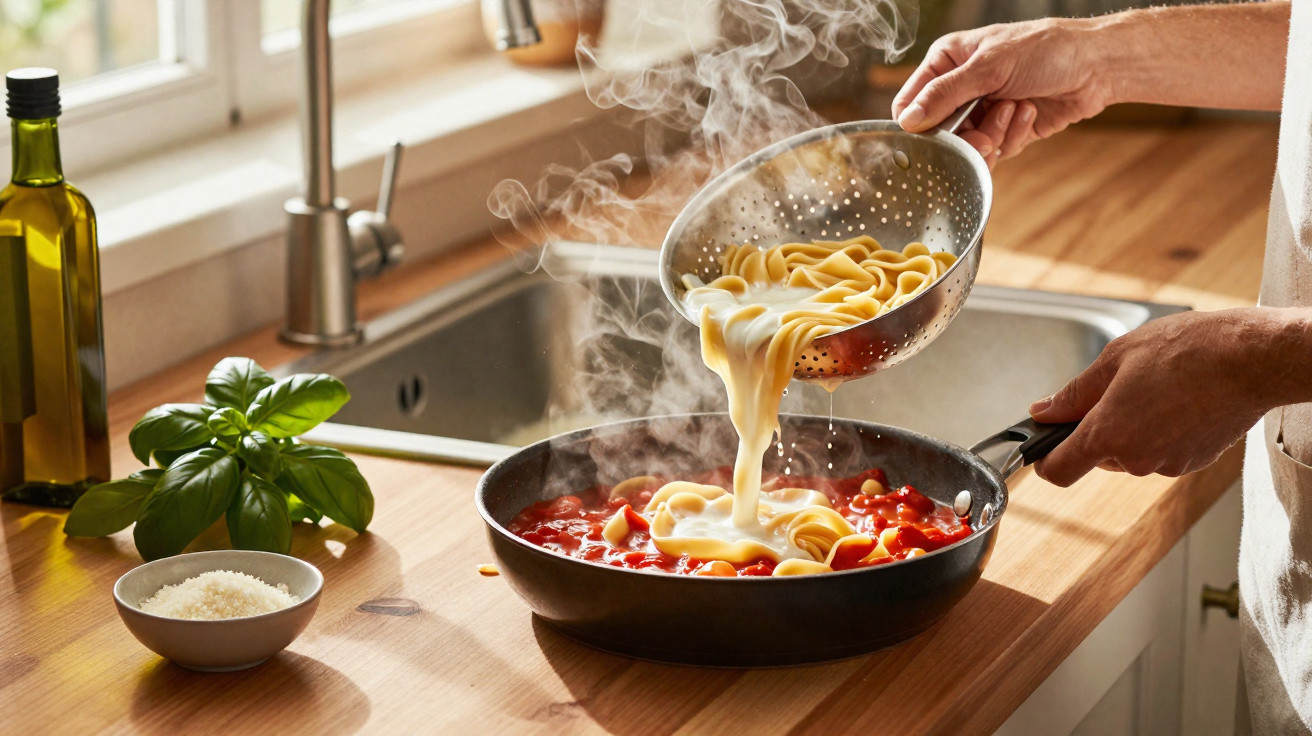
Do not rinse the pasta. Transfer it directly from the pot to the sauce, along with a splash of cooking liquid. That liquid-starchy pasta water-is liquid gold. It contains seasoning as well as the precise starch released by the pasta. Toss everything over a low heat for one or two minutes. The starch joins with the fat in the sauce, the liquid loosens the mixture, and suddenly you have that restaurant-style shine and tender coating.
Cook the pasta just short of done, then complete it in the pan. Think of it as a short handover: the pot cooks the pasta, while the sauce completes the tale. Salt the water until it tastes agreeably briny. Do not add oil to the pot; it rises to the top, coats the pasta and prevents sauce from sticking, much like rinsing does. Honestly, hardly anyone manages this every day, but the first evening you do, it can feel as though you have taken a secret from a professional kitchen.
Two further steps make a real difference. Before draining, use a ladle or mug to set aside some cooking water. Keep both pasta and sauce moving around the pan, adding small splashes of that water until the sauce becomes glossy and wraps around the noodles. This isn’t about snobbery; it’s about physics that tastes better.
“Sauce doesn’t stick to clean pasta. It sticks to starch. Keep the starch, save the sauce.”
- Never rinse the pasta once it has drained.
- Reserve 1 cup of cooking water.
- Toss the pasta with the sauce over a low heat for 1–2 minutes.
- Add water in small splashes to create shine and cling.
- Serve immediately, straight from the pan.
What rinsing takes away, and what starch gives back
Rinsing rapidly cools pasta, firms up its surface and stops the final stage of carryover tenderness. It also removes salt, forcing the sauce to work harder to taste lively. This is why rinsed pasta often calls for more cheese, more butter and more of everything else-yet can still taste flat. The rinse takes away your sauce’s advantage.
Leave out the rinse and the result changes completely. The pasta remains hot and porous, with starch ready to catch the sauce and keep it in place. Even a simple tomato sauce becomes silky with a small splash of cooking water. Cream-based sauces are less likely to split and more likely to gleam. Cheese melts more smoothly rather than clumping, because it has something to hold on to besides a slippery noodle.
Here is a useful kitchen swap: lift the pasta straight into the sauce with a spider or tongs. Keep the large pot nearby while you toss, in case more water is needed. One or two spoonfuls of liquid bring everything together like a good edit. The sauce does not swamp the pasta; it becomes part of it. That is the difference between two separate components on a plate and one unified dish. Finish the pasta in the sauce, and the sauce will finish you.
A simple checklist for pasta that loves its sauce
Bring a large pot of water to a vigorous simmer and season it generously with salt. Add the pasta, stir once to separate any clumps, and set the timer for a minute before the packet instruction. Heat the sauce in a wide pan. Before draining, dip a cup into the pot and save that cloudy, gleaming water. Then add the pasta to the sauce and toss with purpose.
Even careful cooks can run into common problems. Oil in boiling water may sound smart, but it forms a slippery layer on the pasta that repels sauce. Draining it too thoroughly leaves no room to create an emulsion, making the sauce feel thick yet disconnected. Overcooking produces pasta that is soft and overly absorbent, releasing starch at the wrong point and making the sauce gummy. None of this means you are “bad at pasta.” You simply needed a few small controls.
One more point to raise at the table: Don’t rinse the pasta. If you are preparing a cold salad, rinsing is perfectly reasonable to stop the cooking and cool it quickly. For hot pasta with sauce, keep the starch in place, keep the water close by and allow the sauce and noodles to meet properly in the pan. On a busy evening, that ritual may seem fussy. It is not. It is a two-minute step that changes “fine” into “oh wow.”
Leave space for better: one final thought from the sink
The bowl you are after is not the result of a chef’s trick. It comes from a small adjustment in timing and trust. Preserve the starch, let the sauce cling and allow the heat to do its quiet work. Next time you reach for the tap, stop for a moment. Ask whether rinsing serves the dish you want, or simply a habit learned years ago.
Some evenings, you will still rush, drain and tip everything out, and dinner will still nourish you. On another night, you will save that cloudy water and toss the pasta into the pan. The sauce will loosen, the noodles will turn glossy, and the room will smell like a promise fulfilled. Share that bowl with someone who needs a small victory. The method spreads quickly.
| Key point | Detail | Benefit for the reader |
|---|---|---|
| Keep surface starch | Skip rinsing; transfer pasta directly to the sauce | Better cling, silkier texture, brighter flavour |
| Use pasta water | Add small splashes to create an emulsion | Glossy sauce that coats evenly without heaviness |
| Finish in the pan | Undercook by 1–2 minutes and toss with heat | Restaurant-level results with home effort |










Comments
No comments yet. Be the first to comment!
Leave a Comment