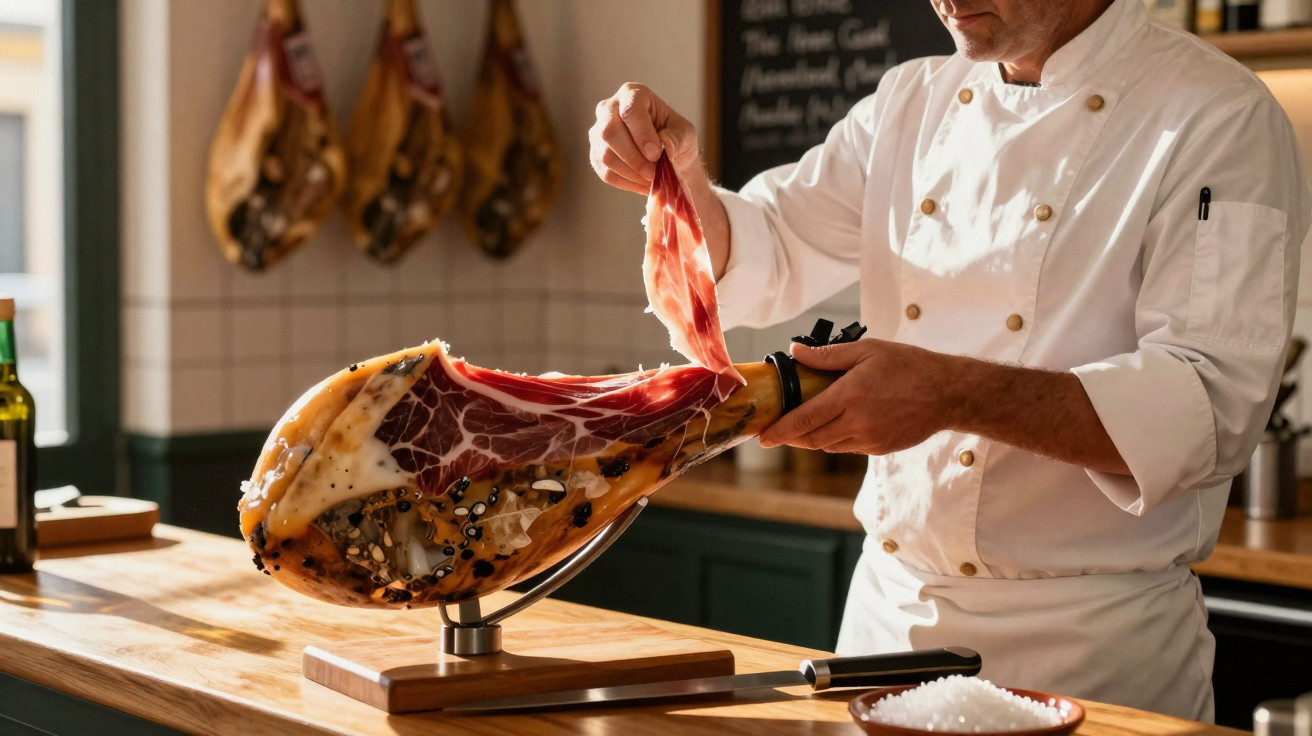
One melts like butter; the other is pink, wet and forgettable. Your eyes can spot the difference before your palate does.
At delicatessens and supermarket counters across the UK, charcuterie is thriving even as price pressure intensifies. Chefs say the answer is not an expensive label but a straightforward habit: assess colour, fat, aroma and time. Learn those signals and the better slice nearly chooses itself.
Why flavour never happens by accident
Excellent cured ham is edible patience. Salt, fresh air and long, still months create notes of hazelnut, broth and a clean cellar. Industrial methods often rely on brine injection, climate-controlled rooms and colour stabilisers to speed things up. The result is dependable pink colour, more pronounced salt and a moist chew that disappears quickly.
Time, salt and air write flavour more clearly than any additive ever will.
Ham-producing regions such as Parma, San Daniele, Navarre and Extremadura still work with the seasons. Temperatures move up and down, humidity shifts, and enzymes gradually release umami. That unhurried chemistry cannot endure a race against time.
What really changes between artisanal and industrial
Farming and fat quality
The difference begins in the field. Pigs raised more slowly, reaching a higher slaughter weight and fed with care, produce stable, fragrant fat. It softens quickly in the mouth and delivers flavour. Rapid growth on consistent rations produces more brittle fat and reduced marbling. The slice tastes less complex and finishes sooner.
Salting and maturation
In an artisanal cellar, ham is left to rest and dry for 12 to 36 months or longer. Natural enzymes convert proteins and lipids into savoury compounds. Faster systems reduce that period by driving water loss in climate-controlled rooms. Although legal minimums apply, extra time creates greater depth. Remove months and nuance tends to go with them.
Additives, salt and labelling
Numerous traditional hams contain nothing but salt, while others permit nitrite or nitrate. Public health bodies have encouraged lower nitrite exposure from processed meat, making labels important. Salt-only hams commonly have a deeper, less consistent red colour and a softer flavour with less metallic character. Their aromas are often rounder and less standardised than those in products enhanced with stabilisers or artificial smoke.
If the first thing you taste is salt, quality has already left the room.
Shape and slicing
A complete leg reveals its history: bone, rind and an uneven outline can indicate limited intervention. Reformed blocks appear almost too flawless, producing matching circular slices. A quality leg can be cut thinly with a knife without breaking apart. Industrial slices frequently release moisture and stick to the blade.
A quick comparison at a glance
| Aspect | Artisanal | Industrial |
|---|---|---|
| Colour | Deep red to brick, natural transitions | Uniform pink, glossy sheen |
| Fat | Ivoire to pale straw, translucent when thin | White, chalky or greasy |
| Aroma | Nutty, buttery, clean cellar | Brine-forward, smokey-aroma or neutral |
| Texture | Silky, dry to the touch, melts | Wet surface, rubbery chew |
| Finish | Long, layered, savoury | Short, sometimes metallic or bitter |
| Slice behaviour | Holds thin, slight transparency in fat | Sticks to knife, tears |
| Label cues | Place, producer ID, months aged, salt only | Vague claims, flavourings, accelerated process |
The seven-step chef method you can use at the counter
Try this process at the counter, in front of the display cabinet or at home. It takes two minutes and can prevent wasted money.
- Examine the label carefully. Find a specific origin, an ageing period in months, identifiable producer information, and confirmation of whether it is salt only or includes nitrites/nitrates. Disregard broad claims such as “traditional recipe”.
- Assess the colour. Look for natural red tones with subtle variation, rather than bubblegum pink. The fat should be ivory to pale yellow, never grey.
- Look over the marbling. Small, uneven flecks of fat suggest maturity. Its sheen should be satin-like, not damp.
- Smell it once it reaches room temperature. You should notice hazelnut, light broth and clean air. Avoid intense brine, solvent-like aromas or artificial smoke.
- Feel the fat and lean meat. The fat ought to soften and smear slightly, while the lean should be dry but yielding rather than tacky.
- Check the balance when tasting. Salt should support the flavour rather than dominate it. Seek a soft chew and an aftertaste that lasts.
- Watch how it is sliced. A thin knife-cut is encouraging. Bone, a fine rind and evenly spread fat on a leg indicate attentive ageing.
Read for place, time and salt-only. Trust what the label admits, not what it promises.
Why the choice matters beyond the plate
Choosing artisanal ham supports long-cycle farms, salters and cellars that preserve regional expertise. These networks face pressure from standardised prices and centralised manufacturing, but they also sustain culinary heritage and rural employment.
The environmental effect changes as well. Older animals, outdoor access and ageing with natural airflow have a different footprint from high-volume factories. Maturation does consume energy, but the greater flavour intensity means many households serve fewer, thinner slices with equal satisfaction.
Health policy creates a further consideration. UK guidance continues to encourage lower salt intake and monitors nitrite exposure in processed meats. Hams made with salt, hygiene and time rather than numerous additives present a clear option for cautious consumers.
Price, labels and marketing traps
Cost reflects maturation, trimming waste and the farmer’s timetable. A substantial price difference is seldom explained by retailer margin alone. Impressive-sounding terms such as reserve, master’s selection and special say little unless they are backed by a place, a producer and a stated ageing time. Official schemes can be useful: protected origin or traditional specialty designations indicate rules, yet the small print still matters. The months aged and ingredient list are often more revealing than logos.
Packaging also affects texture. Slicing fresh to order usually treats the ham better. Pre-packed options are practical for busy weeks, but their protective atmosphere can soften the aroma and create surface moisture. After opening, allow slices to stand at room temperature for ten minutes and use them within two days.
Serving makes the difference
Arrange slices loosely rather than piling them up. Allow the fat to relax before serving. Choose uncomplicated accompaniments: country bread with a soft crumb, ripe tomato, restrained olive oil or a dry, crisp beer. Sweet glazes and sugary chutneys obscure cellar notes and disrupt the salt balance.
Keep a whole piece beneath a clean cloth in a cool place away from draughts. Should the outer surface become slightly darker, remove it at the next cut. Use sharp knives: a long, flexible blade cuts more smoothly and prevents shredding.
Further notes
For a rapid test at home, weigh a 60 g serving from two hams and present them side by side at room temperature. Measure how long the flavour of each remains after swallowing. The one with the longer finish will usually have benefited from slower ageing and superior fat. This small test develops your palate more quickly than any guide.
For a budget option, request end pieces. Many counters offer the final irregular piece of a premium leg at a lower price. Chop it into warm dishes, including omelettes, lentils and buttered greens, where intense flavour matters more than paper-thin slices. When cutting at home, target a thickness of 0.8–1 mm; cut delicate hams thinner, and younger hams a little thicker to prevent a squeaky chew.











Comments
No comments yet. Be the first to comment!
Leave a Comment