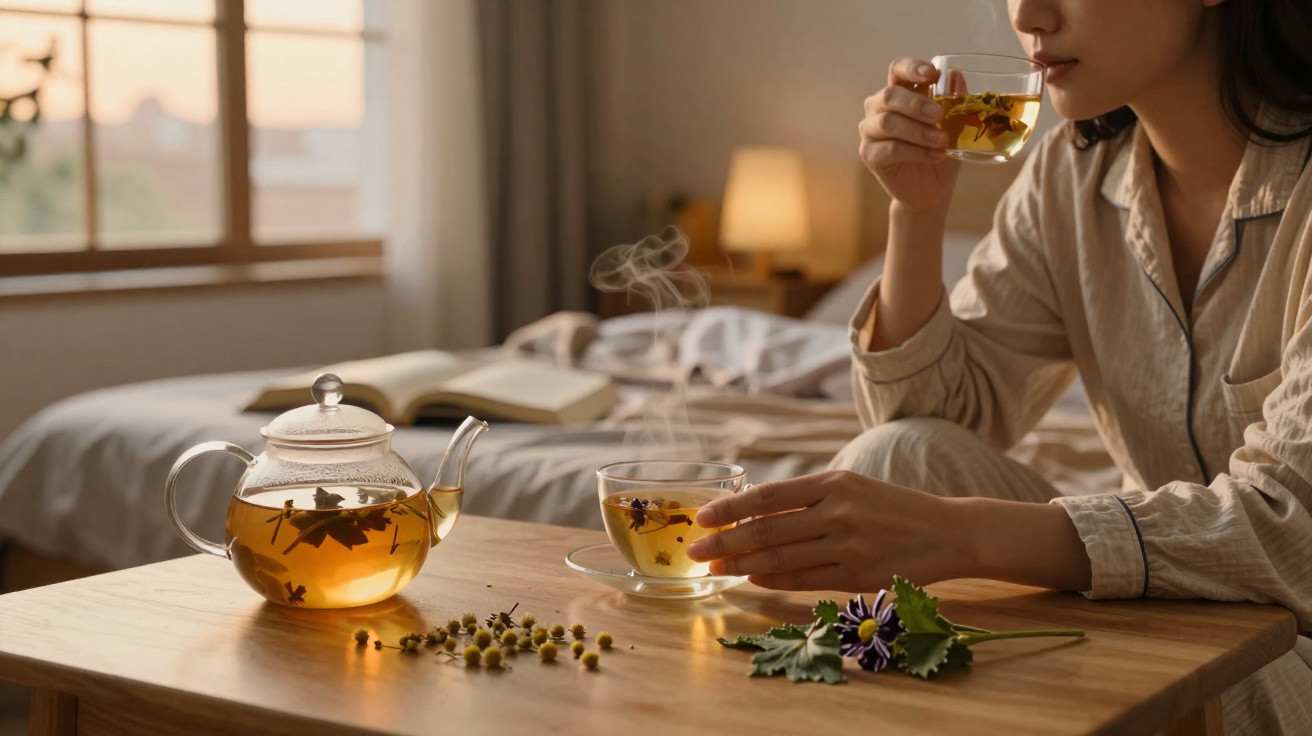
Recent research is clarifying what a bedtime tea ritual does to the body, rather than simply creating a cosy feeling. From shifts in core temperature to plant compounds that interact with the brain’s GABA system, clinicians are gaining a clearer understanding. In UK nutrition consultations, one particular blend is being recommended with striking regularity.
At 10:41 p.m. in a peaceful South London flat, the quiet was so complete that the refrigerator’s hum seemed loud. The kettle clicked off and a delicate plume of steam carried chamomile’s apple-and-hay fragrance. Opposite, a woman in a hoodie flicked through sleep tips, her eyes heavy but her scepticism intact. Still, she was prepared to give it a go. She took a sip, placed her phone face down and watched the steam unfurl like an unhurried breath. A subtle change followed. She was not suddenly asleep; she simply stopped tensing herself for the night. One ingredient was doing most of the work.
What the latest research says about tea before bed
A bedtime tea can help through two connected routes: gentle bioactive effects and a physical cue that night-time has started. A warm drink raises skin temperature in the hands and feet, which can help the body’s core temperature fall. That drop in core temperature is one of the body’s gateways to sleep. Research is moving away from “tea is a placebo” and towards “tea helps create the conditions for sleep.” It is not magic; it is physiology.
Studies from the past decade suggest that some herbal infusions can bring modest but genuine improvements in sleep-quality scores. Apigenin in chamomile attaches to receptors that are also targeted by sleep medicines, although its effect is far gentler. Passionflower seems to encourage GABA activity, the nervous system’s braking mechanism. Lemon balm is associated with a calmer mood and fewer spiralling anxious thoughts, both of which matter at 11 p.m. These small studies may not make blockbuster headlines, but the overall pattern remains consistent.
Caffeine is the most disruptive factor. Ordinary black and green tea contain enough caffeine to delay sleep, particularly as its half-life can extend beyond five hours. Decaf is an improvement, but it is not caffeine-free. Herbal blends avoid that issue. They also benefit from the ritual itself: the brain learns to associate scent, warmth and quiet with winding down. The genuinely effective part is small and unglamorous: repetition. Repeat the same simple action at the same time and the body will often respond in kind.
The bedtime tea blend UK nutritionists keep recommending
British clinics and magazine columns repeatedly mention the same three-herb combination: chamomile + lemon balm + passionflower. Chamomile brings calm, lemon balm supports a steadier mood, and passionflower provides mild sedation. The blend UK nutritionists now circle around is simple: chamomile + lemon balm + passionflower. For a loose-herb mix, use 2 parts chamomile, 1 part lemon balm and 1 part passionflower. Pour over water just below boiling point, cover the mug and leave it to infuse for 7–10 minutes. Drink it 60–90 minutes before switching off the lights.
Choose a small mug rather than a pint-sized glass. The amount you drink matters when night-time toilet visits could undermine the whole purpose. If you sweeten it, use very little, if any, to help keep blood sugar stable. Most people know the feeling of their thoughts accelerating as soon as their head reaches the pillow. This blend will not “knock you out”; instead, it turns down the mental noise so sleep has room to arrive. Let the steam and the slower pace contribute as well.
A few common mistakes are worth avoiding. Leave out peppermint if reflux is what keeps you awake, and do not follow the tea with another large glass of water. Mentally label it your “night cup” to strengthen the association with bedtime. Realistically, no one manages that every night. Try to do it on most evenings and do not worry about the others.
“Bedtime is biology, not willpower. Create the lane and your brain will drive into it,” the saying goes.
- Have it 60–90 minutes before bed to avoid waking during the night.
- Keep the mug covered while it steeps to retain the calming oils.
- Lower the lights and leave the phone on the other side of the room.
- Keep the bedroom cool: warm hands, cooler core.
- Use the same mug each night to reinforce the signal.
Why this calming ritual suits busy UK nights
Life in the UK often continues late into the evening: delayed trains, emails and a quick supermarket trip at 9:30 p.m. A caffeine-free drink that warms the skin, releases a gentle floral scent and supports GABA fits neatly with human biology. Neither the ingredients nor the preparation is exotic or complicated, which is precisely why the habit can last. Share a pot, sit on the step for five minutes and allow the city to quieten by one more degree. Your nervous system may register that signal sooner than expected. There are no preachy rules, only the same practical cue repeated each night.
| Key point | Detail | Benefit for the reader |
|---|---|---|
| The go-to blend | Chamomile + lemon balm + passionflower (2:1:1), caffeine-free | A straightforward shopping list with clear proportions |
| Timing and amount | One small mug, infused for 7–10 minutes, 60–90 minutes before bed | Helps reduce night-time waking and supports an easier transition into sleep |
| Who should take care | Pregnancy, ragweed allergy, sedative medication, liver conditions-speak to a clinician | Allows the ritual to be tried safely |















Comments
No comments yet. Be the first to comment!
Leave a Comment