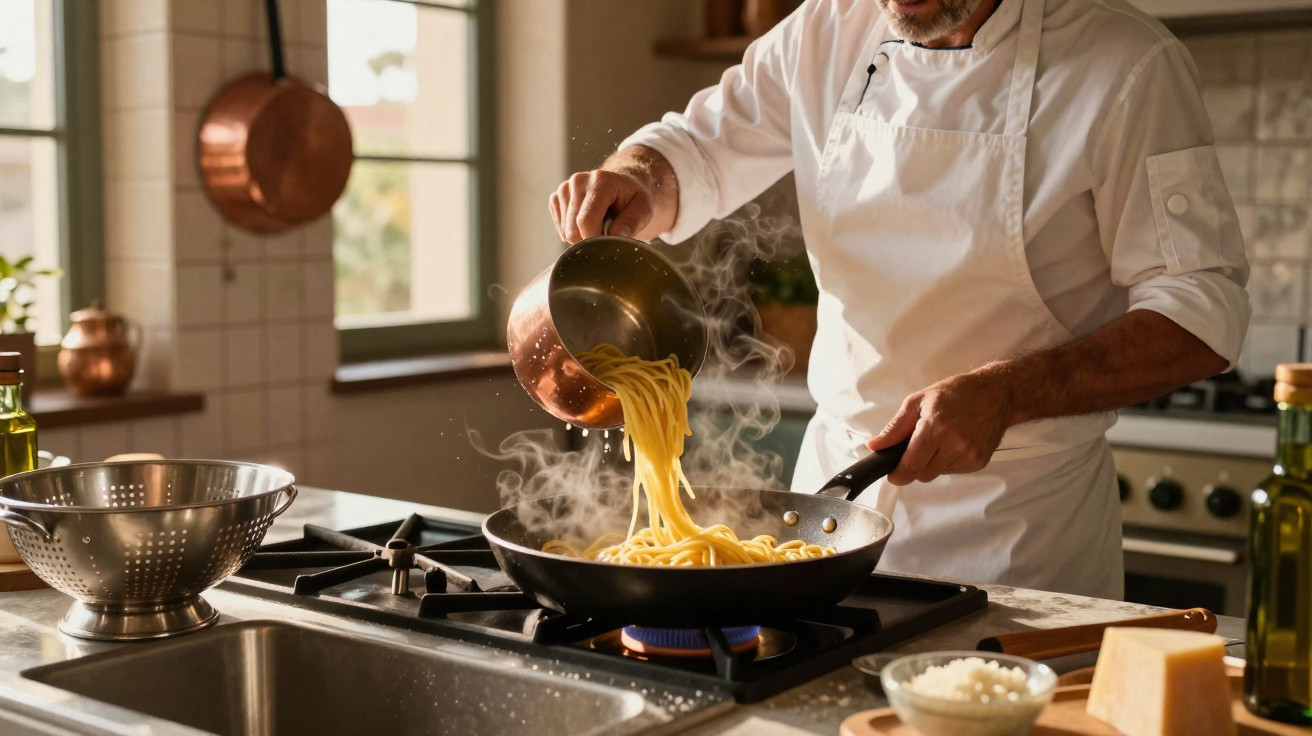
Tip a saucepan into the sink and hear the water hiss away, and your pasta can lose its sparkle in seconds. Italian chefs want you to break the habit. Cooking everything in one pan is not merely quicker - it changes the finished dish completely.
I watched her lower a ladle into the simmering nest of pasta, transfer it directly into a broad pan of bubbling tomatoes, then add starchy water as carefully as someone tuning a musical instrument. The sauce drew together, the pasta softened, and the kitchen filled with a scent full of promise.
She noticed me watching. “Water is flavour,” she said, holding a small splash between her fingertips as though it were olive oil. On the plate, the spaghetti had a lacquered finish: every strand was coated in sauce rather than submerged by it. I ate without speaking, slightly amazed. I had not known pasta could seem so vibrant.
At home later, I emptied a saucepan and watched that golden liquid disappear down the plughole. It seemed both wasteful and rather sad.
Why draining makes pasta dull - and how the one-pan method fixes it
Most of us were taught to cook pasta with the same automatic routine as brushing our teeth: a large pan, a vigorous boil, then straight into a colander. It is neat and speedy, but it is also the point at which flavour disappears. Tip out the pasta water and you discard the starch that helps sauce adhere to the pasta.
One Tuesday in a busy London flat, I made penne in two different ways for friends. I drained one portion before mixing it with jarred arrabbiata. I lifted the second, while it was still slightly undercooked, into a pan of the identical sauce and completed it with ladles of its cooking water. The drained pasta was perfectly acceptable. The one-pan pasta tasted complete. Everyone helped themselves to another serving without looking up.
This is the unseen work of the one-pan method. Pasta releases starch into its water as it boils. That starch works as a natural emulsifier, joining fat and liquid to create a shiny sauce. When you toss pasta in the pan with this starchy water, countless tiny impacts take place. The sauce grips. The texture shifts. Stop tipping pasta water down the drain; it is the best part of the dish.
The one-pan method, step by step - plus the little errors to avoid
Choose a wide pan instead of a deep saucepan. Begin with your sauce base - garlic and oil, a tin of tomatoes, or butter and pepper for cacio e pepe. Add the dry pasta, then pour over enough hot water to only just cover it. Season it until it tastes like a mild broth. Simmer and toss, adding more water as the pasta absorbs it, much as you would when making risotto. When the sauce becomes glossy, you have your cue.
We all know the evenings when supper needs to be both fast and excellent. Keep the heat responsive: high enough for reduction, but gentle enough to prevent scorching. Initially cook the pasta a minute short of done; it reaches tenderness in the pan. Think of pasta like risotto: you feed it water, it feeds you flavour. Complete the dish with a knob of butter or a pour of good olive oil. Realistically, no one does that every day. Yet when you do, it is magical.
Typical missteps include adding oil to the cooking water, which prevents the sauce from clinging; rinsing pasta, which removes its starch; and failing to reserve water, so keep a mug close at hand. If the sauce is too soupy, continue tossing it over the heat until the emulsion tightens. If it becomes too thick, add a spoonful of water and a touch of heat. Your hands will soon recognise the rhythm.
“Water isn’t waste - it’s seasoning, texture, and glue,” says an Italian chef from Trastevere. “Cook the pasta and sauce together, and you cook one story, not two.”
- Select a wide frying pan to give more surface area and reduce the sauce faster.
- Add water in modest splashes rather than flooding the pan.
- Toss instead of stirring: lift and fold the pasta to create the emulsion.
- Add fat once the pan is off the heat for a silky finish.
- Put cheese in last, after the pan has settled, to prevent clumps.
What you get by abandoning the colander
Your sauce tastes more vivid because it has not been watered down. The pasta remains springy because it finishes in sauce, rather than meeting a sinkful of cold air. You also use less water and have fewer dishes to wash. More importantly, you gain control: the pan becomes a dial that can be adjusted towards creamy, velvety, punchy or light. It is like replacing an on-off switch with a dimmer.
Different shapes benefit as well. Spaghetti coils with a glossy sheen, orecchiette holds sauce in its cups, and rigatoni’s ridges become little shelves for sauce. In the last few minutes, you can add peas or prawns to the pan, where they will steam in fragrant starch. Parmesan turns into a soft cloud instead of stringy lumps. Suddenly, the whole dish tastes more like itself.
This is not a professional chef’s secret, but a useful home-cooking habit. After doing it twice, your hands begin to remember the signs: the hiss becomes gentler, the sauce grows thicker, and the pan feels weightier in your hand. Once you try one-pan pasta, the colander starts gathering dust. The sink falls quiet. Dinner improves.
You need neither new cookware nor a Roman postcode to make it work. Simply replace the old instinct - pouring water into the drain - with a new one: keep the valuable part in the pan. All it takes is a wide pan, a ladle of water and a little patience. The result far outweighs the effort.
| Key point | Detail | Benefit for the reader |
|---|---|---|
| Starchy water is an ingredient | It emulsifies fat and liquid into a glossy sauce that clings | Better flavour and texture without extra cream |
| Cook pasta and sauce together | Finish the pasta in the pan, adding water as you would for risotto | Precise control and fewer dirty dishes |
| Small changes, major rewards | Adjust the heat, toss, and add water one splash at a time | Reliable, restaurant-level results at home |







Comments
No comments yet. Be the first to comment!
Leave a Comment