They were crunchy, clacky and fresh, while the lettuce at your desk had collapsed like a forlorn napkin by 2 pm. The difference was not some magical variety of leaf or an expensive refrigerator. It came down to technique.
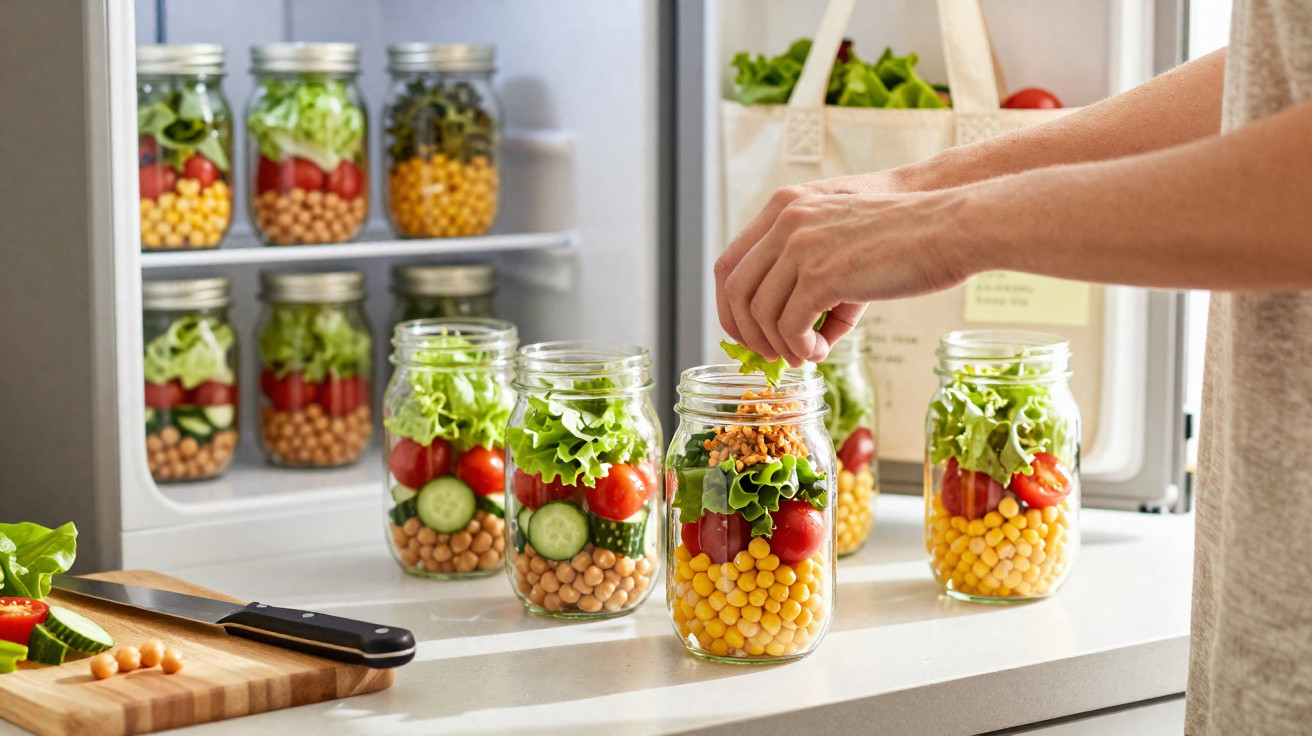
I assembled mine on a Sunday evening beneath the kitchen’s unforgiving light, with jars standing across the worktop like miniature skyscrapers. As the cat watched, I spun the leaves dry while the radio played quietly, then built the layers as though laying bricks: dressing, substantial vegetables, grains, herbs and greens. On Wednesday, I opened one at my desk and heard the seal release with a pop: a small, personal triumph over weekday disorder. The first mouthful had an October-like crunch. A colleague looked across with a familiar expression: envy, interest and a trace of “mine always turns soggy”. I smiled, because this has nothing to do with being more virtuous. It is about gravity, texture and a little determination. The solution was almost ridiculously straightforward.
Crisp all week: why jar salads actually work
Salads become waterlogged when moisture reaches leaves without any structure to stop it. A jar reverses the usual arrangement: dressing and weighty vegetables settle at the base, while delicate leaves remain well above them. That upright layering is not merely Instagram-friendly; it works as a protective system, much like a raincoat. Dressings and juicy ingredients stay contained beneath dense layers, leaving the lighter ingredients dry.
I put it to a proper test using four jars and four combinations. Jar A contained dressing at the bottom, followed by chickpeas, chopped peppers, cooked farro, herbs and, on top, a generous layer of dry romaine. Jar B ignored the rules, placing cucumber directly below the greens. Jar C had pre-salted tomatoes near the top. Jar D contained vegetables and chicken but no grains. By Day 5, Jar A was still crisp. The leaves in B were damp around their edges; C tasted worn out and slightly limp; and D lasted well enough, but was less satisfying. Every forkful made the contrast clear.
The reasoning is simple. Greens soften when they absorb free water and salt, and when their cut surfaces come into contact with moisture. A jar manages this through weight and gravity: robust vegetables and grains create a moisture barrier above the dressing, while the leaves stay high in a dry microclimate of their own. Jars also restrict airflow, which slows oxidation, while glass cools evenly in the fridge. A little empty space at the top helps to prevent condensation from falling back onto the lettuce. It is not elaborate. It is physics for your lunch break.
How to stack a jar salad that never goes soggy
Choose a 700–950 ml glass jar with a secure lid. Put 1–3 tablespoons of dressing in the base. Follow it with firm ingredients that can handle moisture, such as cherry tomatoes, chickpeas, carrots, beetroot and onions. Add proteins and grains next, using them as ballast: chicken, tofu, quinoa or farro. Then layer in softer vegetables, including deseeded cucumber, peppers and sweetcorn. Add herbs after that. Finish with greens, spun far drier than seems necessary. Do not compress them too tightly, and leave some headspace. Refrigerate promptly, keep the jar cold and tip everything into a bowl when it is time to eat.
Even the best intentions can be undone by common errors. Chopping leaves while they are still wet is an invitation to disaster, so dry them first and tear them afterwards. Too much dressing is another quiet culprit: two spoonfuls go further than you might think. Salting tomatoes in advance draws out their water, so place them low in the jar or wait until serving to salt them. We have all had the experience of opening a supposedly healthy lunch only to find a watery mess five minutes later. Honestly, nobody wants to deal with that every day.
Treat it as a small preparation ritual rather than a burden. Wash your greens in advance on Sunday and store them in a container lined with a dry tea towel; the rest of the week will be easier and considerably crunchier. Once I learned to work with gravity, everything changed.
“Crisp isn’t luck. Crisp is a storage problem, solved with layers, dryness, and distance from dressing.”
- Dry the greens until they squeak.
- Always keep the dressing on the bottom and the greens on top.
- Create a firm buffer with beans, grains and sturdy vegetables.
- Leave headspace: cold air is better than condensation.
- Tip the salad into a bowl and toss it immediately before eating.
The quiet win of a crisp lunch
By Friday, I was no longer negotiating with the vending machine or telling myself that a wilted salad was acceptable. The jars gave me one small, dependable success in a week that was otherwise anything but reliable. It felt like the satisfying click of a door lining up perfectly as its latch slips home. I did not need different recipes; I simply needed to stack more intelligently. The reward was a genuine snap in every bite.
There is a quiet pleasure in repeatable results. When you lift the lid and the herbs release their scent, when the leaves emerge dry and glossy, and when dressing reaches them only at the final moment, planning tastes good. It is not about control; it is about care. A soggy salad is not inevitable, nor is it a sign of poor-quality lettuce. It is a design problem that can be fixed. Once you experience the difference, returning to limp leaves is difficult.
| Key point | Detail | Why it matters to the reader |
|---|---|---|
| Layering order | Dressing → sturdy vegetables → proteins/grains → soft vegetables → herbs → dry greens | Shields delicate leaves, keeping them crisp for days |
| Dryness matters | Spin greens until they are almost squeaky, then pack them loosely | Reduces wilting and preserves lively textures |
| Cold and containment | Glass jars cool evenly; tight lids limit airflow and condensation | Maintains freshness and flavour throughout the week |







Comments
No comments yet. Be the first to comment!
Leave a Comment