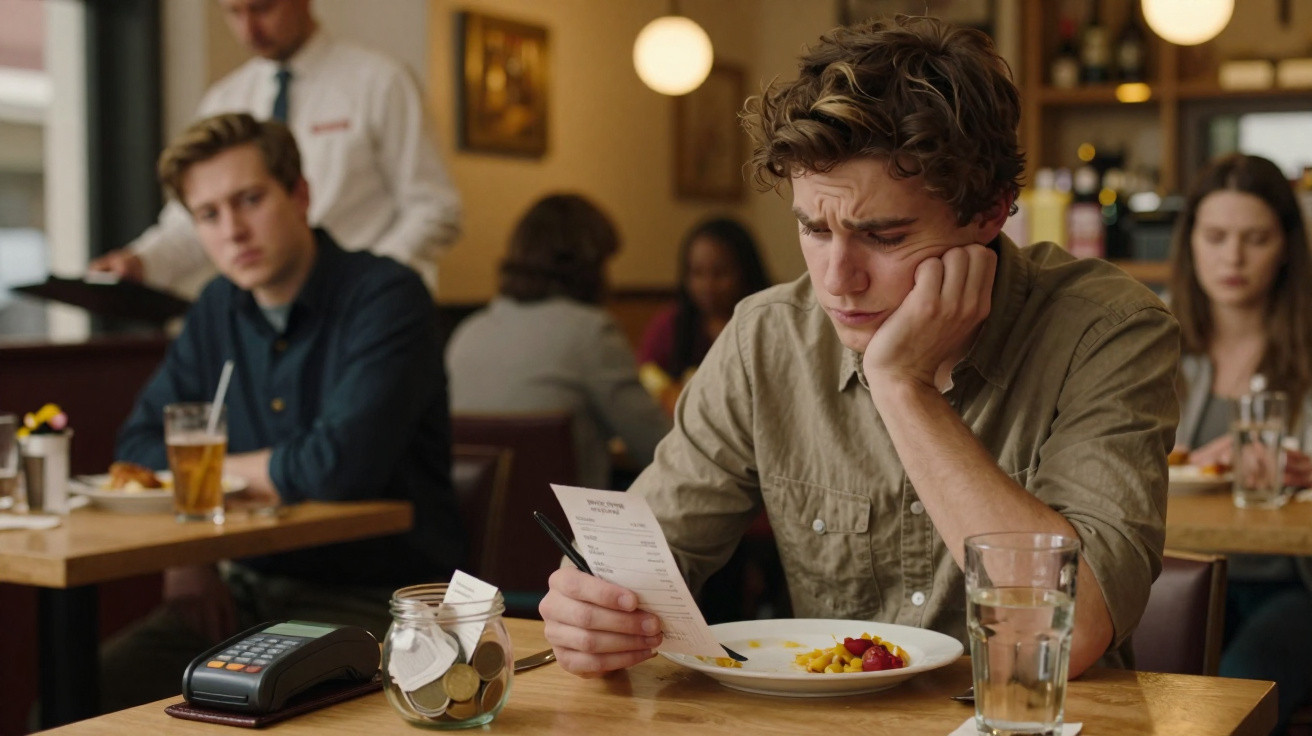
Across Britain and the US, a low-key revolt is forming at the foot of the bill. Restaurants add a “service charge” before suggesting another 12.5%, 18% or even 20%. Some customers are beginning to refuse. Staff are feeling the impact, while owners insist their margins are tight. The convention is starting to unravel, and nobody is entirely comfortable.
Your friend looks up with the half-smile that says it is your turn. The table falls silent. Beyond the window, scooters hum past and a couple debates bus routes. At the table, the figures stare back like a challenge.
Most of us have faced the moment when generosity collides with annoyance at the card terminal. You have ordered a burger and two drinks, yet it somehow feels as though you are funding an entire economy. The service was acceptable. The price, less so. Still, you tap a button.
On the walk home, the doubt remains. Was that tip really voluntary, or was it an extra charge dressed up as a choice? Something is changing.
Why “not tipping anymore” is gaining ground
In many cities, bills now include an automatic service fee before prompting diners to add a “recommended” 20%. That double increase irritates people. Customers want to know where the money goes and whether they are effectively making up wages that businesses should be paying. The calculations seem unclear, while the social pressure is constant.
Higher menu prices make the irritation sharper. A meal that once seemed like a casual treat can now feel like a council tax demand. Diners read stories about “tipflation”, then encounter requests for gratuities on takeaway coffee, bakery croissants and even self-service checkouts. Tipping’s personal element has become a screen prompt loaded with preset guilt.
Restaurants say they require both service charges and tips to retain staff. Workers argue that tips are not an indulgence: they can mean the difference between merely getting by and having room to breathe. As pay cheques stagnate and housing costs climb, even the smallest extra payment becomes a referendum. It is little surprise that “not tipping anymore” has become both a rallying call and a source of division.
What is really hidden in the bill
Service charges are commonly described as a way to make pay steadier or meet non-wage expenses. In reality, their use differs widely. Some restaurants share them between front- and back-of-house teams, while others direct part of the money towards overheads. Diners seldom receive a straightforward breakdown. That absence of clarity breeds suspicion, which spreads quickly on social media.
There is also a cultural collision. In the US, 20% has become standard even when service is merely average. In the UK, 12.5% is widespread, although a growing number of venues are encouraging higher amounts. Tourists move between these expectations like pinballs. No one wants to appear mean, but no one wants to feel exploited. The result is performative tipping: generous figures on a Saturday night, followed by quiet resentment on Monday morning.
It is useful to understand how the money moves. Card tips can take several days to reach workers. Payroll may deduct administration costs, and kitchen staff may receive less than diners assume. As rent inflation and energy bills put pressure on restaurants, venues pass that pressure on indirectly. The tipping screen becomes both a release valve and a target for anger.
How to handle the new normal without upsetting anyone
Set your own approach before taking a seat. Decide what you will tip for restaurant table service, what you might give for counter orders and what does not warrant a tip at all. Keep the rule straightforward. Where a service charge has already been added and the service was ordinary, many diners do not add anything further. If the experience was exceptional, a modest cash top-up can be appropriate.
Raise the question courteously. Ask once, calmly, where the service charge goes. Most staff value the directness. When an unexpected fee appears, query it before paying. Admittedly, hardly anyone does that every day. Even so, one clear discussion can avoid lingering bitterness and show management that transparency matters.
If the situation makes you uncomfortable, say so politely - and pay people rather than the machine. Some staff favour cash because it avoids delays and “processing”. Others choose card payments for security and record-keeping. A brief, considerate check-in can help.
“I don’t need 30% on a latte,” a London barista told me, laughing. “I need a manager who posts the rota on time and a landlord who chills.”
- Check for a displayed tipping policy by the till or on the menu.
- If the service was poor, explain why briefly and leave a smaller tip - or none at all.
- For group bills, agree a spending limit before ordering. Avoid surprises at the table.
- If you are unsure, ask: “Does the service charge go to staff?” Then pause and listen.
What a better approach looks like
Transparency relieves the pressure. If restaurants plainly explain, “12.5% service charge goes entirely to staff, split between front and kitchen,” much of the friction disappears. If they state, “We pay a real living wage; tips are a bonus,” customers are more likely to trust the figures. That trust is more valuable than an aggressive tipping prompt, which only creates backlash.
Some venues are removing tips completely and increasing prices so they can pay fair wages. It is a cleaner model, though owners may worry about the shock of higher listed prices. Diners already spend a great deal; they simply pay through confusing fragments. Clarity beats theatre. Once the industry stops using the tipping screen like a slot machine, diners can stop behaving like unwilling gamblers.
There is a broader solution as well: national wage policy, clear tax rules for tronc systems and basic respect for service work. Until then, the “not tipping anymore” position will keep dividing friends around restaurant tables. The only dependable answer is openness about charges, wages and the route a pound takes from card payment to payslip.
Where this leaves diners and restaurants
The UK never fully adopted American-style tipping, but payment apps and terminals did. They arrived with default choices and cheerful icons, as though generosity could be programmed. That is why the resistance feels unexpectedly hopeful. People are not becoming less kind; they are asking to be treated as adults.
Dining out is one of the remaining shared luxuries. It is more enjoyable without uncertainty at the end of the meal. Businesses seeking loyalty can replace nudges with honesty and treat service as a profession rather than a tip-jar tactic. Diners, meanwhile, can support businesses that pay fairly and make that clear. Clarity, not coercion. The ritual could feel lighter again.
| Key point | Detail | Why it matters to the reader |
|---|---|---|
| Service fee versus tip | They are different; service fees may not be passed entirely to staff | Decide whether to add more without feeling guilty |
| Set your own rule | Choose a simple tipping habit for each situation before ordering | Reduces awkwardness and overspending |
| Ask once, politely | “Does the service charge go to staff?” - then tip accordingly | Helps you spend in line with your values |












Comments
No comments yet. Be the first to comment!
Leave a Comment