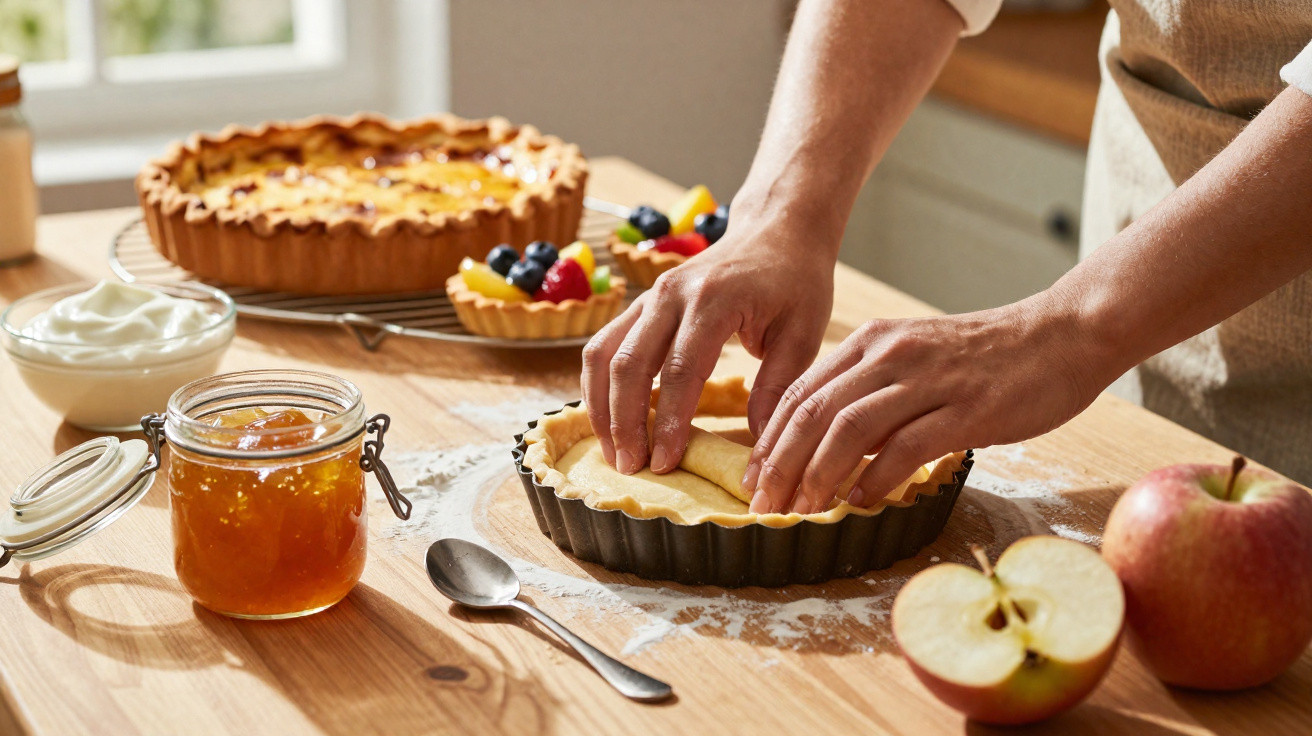
A low-cost insider tip is suddenly delivering impressively soft results.
Anyone who enjoys baking will know the problem: butter prices keep rising, shortcrust pastry turns crumbly or rock-hard, and the calorie count soars. Professional kitchens have long used an unassuming store-cupboard trick that has already been approved by nutrition authorities in France. The intriguing part is that it often costs under €2, contains no butter and produces remarkably tender pastry – without sacrificing flavour.
Why more bakers are moving away from butter
Butter is the traditional choice for shortcrust pastry, tarts, quiches and cake bases. It adds flavour and gives pastry its short texture. At the same time, however, it comes with several clear drawbacks:
- Around 82 per cent fat
- Approximately 715 kilocalories per 100 grams
- Often priced at €8–10 per kilogram
- A high proportion of saturated fatty acids
Nutrition specialists have been pointing out for years that many people consume far too much saturated fat. Some of this comes directly or indirectly from butter, including butter used in cakes, biscuits and savoury tarts. Anyone who bakes regularly will be especially aware of the combination of high fat content, calories and cost.
The idea: remove some or all of the butter, while keeping the pastry supple – and saving both money and calories.
This is precisely where the €2 trick comes in. Rather than reaching for a block of butter, a fruity substitute goes into the mixing bowl, with a second, neutral option available for savoury baking.
The unassuming €2 wonder: apple sauce with no added sugar
At the heart of this approach is something already found in many kitchen cupboards: apple sauce with no added sugar. A standard jar often costs less than €2 and compares strikingly with butter:
| Product | Calories per 100 g | Fat content | Price (approx.) |
|---|---|---|---|
| Butter | approx. 715 kcal | around 82% | €8–10 / kg |
| Apple sauce with no added sugar | approx. 70 kcal | virtually fat-free | often < €2 per jar |
Measured by quantity, the calorie contribution of the pastry’s “fat component” falls to roughly one tenth. For people who bake frequently, that can make a noticeable difference over time – both on the scales and in their wallet.
For savoury pastry, such as quiches or vegetable tarts, apple sauce is not always the best fit in flavour terms. This is when plan B comes into play: plain natural yoghurt. Avoid a 0 per cent product, as it will make the pastry too watery. The flavour remains neutral, while the proportion of saturated fats is still reduced considerably.
Why apple sauce makes shortcrust pastry soft and tender
In classic patisserie, fat has a specific purpose: it coats the flour particles, stops the gluten network becoming too strong and gives the pastry a short texture. If too little fat is used, or the dough is kneaded too vigorously, the base becomes tough, shrinks in the oven and tastes dry.
Apple sauce works differently. It contains pectin, a natural substance that plays an important role in fruit processing. This pectin acts as a gentle binding agent and moisture retainer.
Pectin binds water and retains moisture in the pastry – so the base stays soft and does not crumble apart.
Unlike solid fat, fruit purée does not firm up in the fridge. The pastry remains pliable after resting and is easy to roll out. During baking, the retained moisture prevents the base from drying out as quickly. The result is a tender, soft texture rather than a crumbly one.
What yoghurt does in savoury pastry
Yoghurt functions in another way again. Its advantage is its gentle acidity, which slightly relaxes the gluten network and makes the pastry shorter and finer. This works particularly well in quiches and savoury tarts, producing a pleasingly tender result that is neither greasy nor heavy.
Anyone who prefers a crisper bite can adjust the pastry slightly:
- Mix 1/2 teaspoon of baking powder into the flour
- Add 1 tablespoon of rapeseed or olive oil
This creates a useful balance: more crispness, fewer saturated fats and a rounded mouthfeel that stands up well to strongly flavoured fillings.
How to make apple sauce pastry: a simple step-by-step guide
Anyone wishing to try this butter substitute can follow one straightforward rule: replace it on a 1:1 basis.
- Choosing the product: Use apple sauce with no added sugar that is as smoothly puréed as possible. Choose plain natural yoghurt for savoury versions.
- Ratio: Replace 100 g of butter in the recipe with 100 g of apple sauce or yoghurt.
- Reduce the liquid: Since apple sauce and yoghurt contain water, cut all other liquids in the recipe, such as milk, water and egg, by around half.
- Mixing the pastry: Bring the ingredients together lightly with your fingertips rather than kneading for a long time. The aim is a soft, slightly moist ball of dough.
- Resting time: Wrap the pastry in cling film and leave it in the fridge for around 30 minutes.
- Rolling out: Roll it out on a lightly floured surface. It will usually remain more pliable than butter pastry and rarely tears.
- Baking: Depending on the topping, blind baking may be useful, particularly for very juicy fillings.
Anyone who consistently reduces the liquid will achieve a stable base that still feels moist and soft – without a block of butter.
Practical example: quiche with yoghurt instead of butter
A tried-and-tested approach for a savoury quiche is as follows:
- 250 g flour
- 125 g plain natural yoghurt (instead of 125 g butter)
- 1 pinch of salt
- 1–2 tablespoons of water or milk as needed, if the dough seems too dry
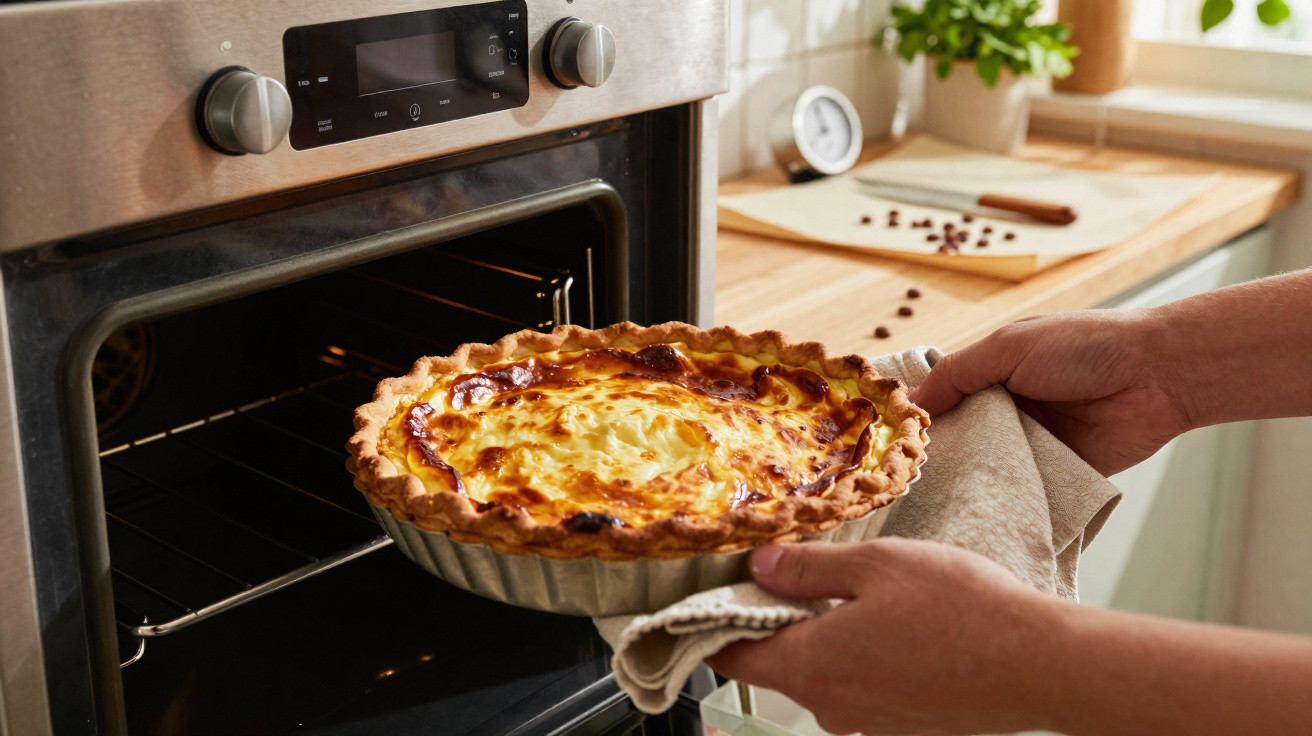
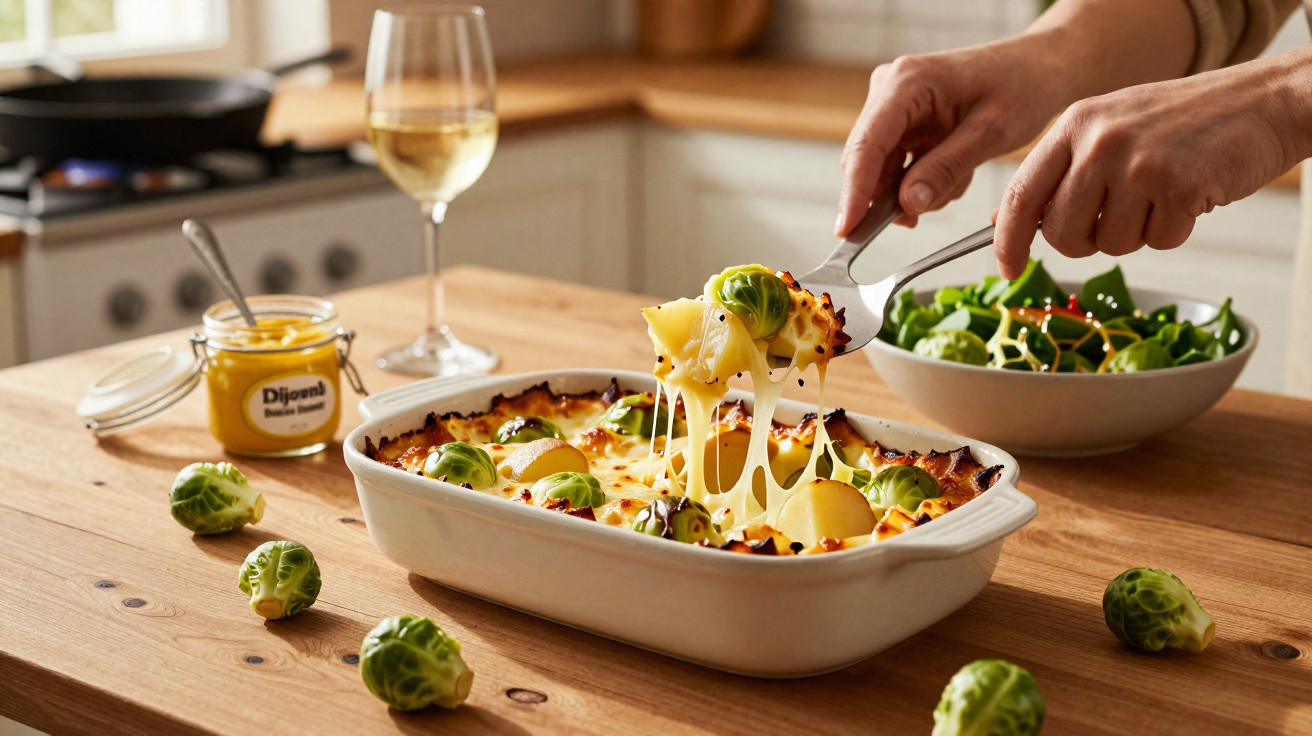
Knead all the ingredients briefly, chill for 30 minutes, roll out the pastry, line the tin and fill as desired. Once baked, the base remains stable but has a softer, less crumbly bite than classic butter pastry. The filling does not soak through as much because the pastry holds moisture more effectively.
Which tarts are particularly suited to apple sauce and yoghurt
Apple sauce is most effective in sweet baking. It is ideal for:
- Apple or pear tart
- Berry cake with a shortcrust pastry base
- Fruit crumble cake
- Sponge cake bases that need to be moister
Yoghurt works particularly well in savoury recipes:
- Vegetable quiche, for example with leeks, courgettes or spinach
- Onion tart
- Tomato or goat’s cheese tart
- Flammkuchen-style bases
Those who enjoy experimenting can also combine apple sauce with a little yoghurt, for instance in a lightly sweet vegetable tart with pumpkin or carrot.
What to consider regarding nutrition and health
Nutrition doctors recommend that fats should provide around 35 to 40 per cent of daily energy intake. Many adults and children exceed this, especially when it comes to saturated fatty acids such as those found in butter. When consumed excessively, these fats can increase the risk of cardiovascular disease.
People who bake often can use the apple sauce and yoghurt trick to make adjustments in several areas at once:
- Less saturated fat
- Significantly fewer calories per slice of cake or tart
- More water and some fibre from the fruit
- An unchanged, or even improved, texture
Of course, a slice of cake remains an indulgence: sugar, white flour and the filling still play a major part. However, replacing butter makes the overall recipe a little lighter without giving the flavour a “diet” quality.
Risks, limitations and practical kitchen tips
The trick is not entirely without pitfalls. Using too much apple sauce, or failing to adjust the remaining liquid, can result in soggy, unstable pastry. Chunky apple sauce can also cause difficulties because it makes the dough unevenly moist.
A few rules of thumb make it easier to get right:
- Always buy a smooth, finely puréed variety, or briefly purée it yourself.
- It is better to start with firmer dough and add extra liquid by the teaspoon only if needed.
- Add a small amount of neutral vegetable oil for especially crisp bases.
- With very sweet fillings, leave out extra sugar in the pastry or reduce it.
If you are uncertain, begin with a partial substitution: 50 per cent butter and 50 per cent apple sauce. This makes it possible to taste the difference directly and adjust the recipe accordingly. Many home bakers report that, after two or three attempts, they can easily leave butter out of shortcrust or quiche pastry completely.
The method is also useful in other types of baking. Pancakes, sponge cakes and muffins respond similarly well to apple sauce as a replacement for fat and egg. In these recipes, the fruit purée adds moisture, while removing butter and using less sugar can reduce calories considerably. So, once a jar of apple sauce has been opened, it quickly finds several uses in the home kitchen.








Comments
No comments yet. Be the first to comment!
Leave a Comment