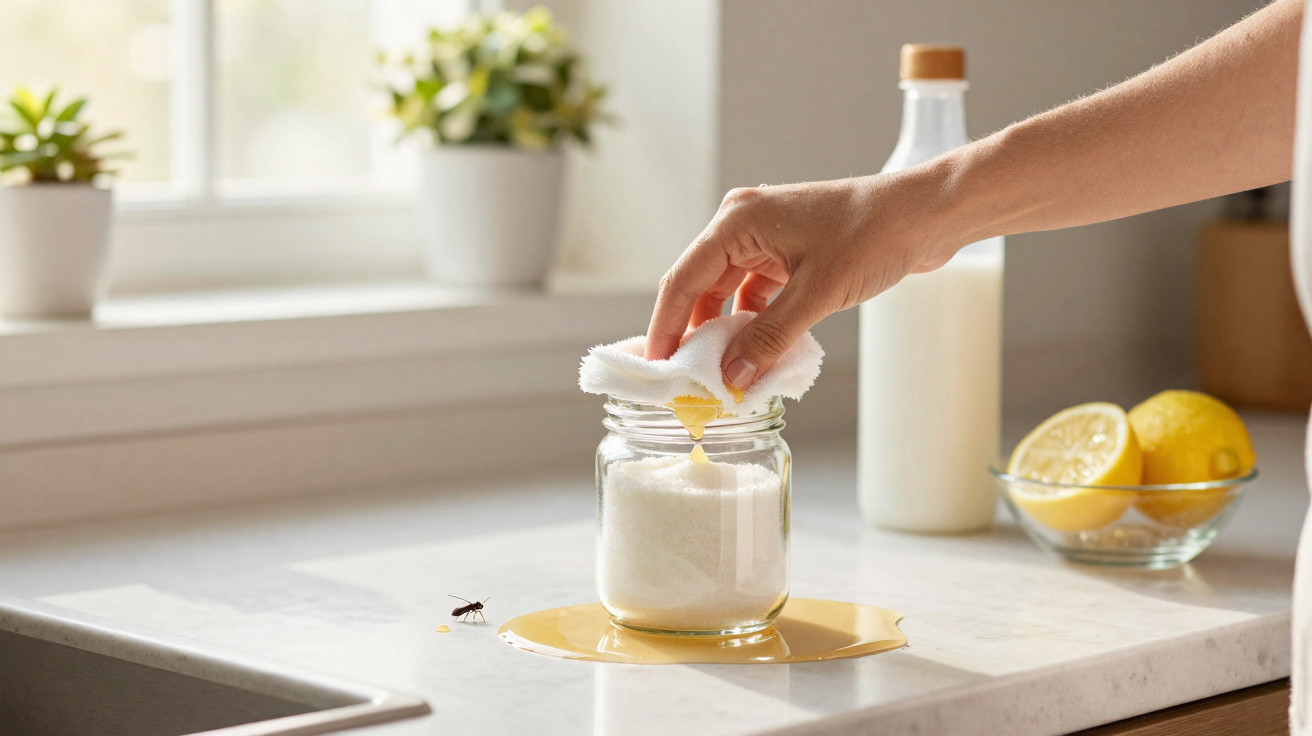
The first ant usually appears near the toaster, exploring on its own as though it pays the bills.
Fifteen minutes later, a dotted procession of tiny bodies is crossing the worktop, winding past the sugar jar and making directly for the sink. You wipe them away, and they return. You spray them, and they divide into two columns, like a miniature horror-film sequel. Eventually, you may start wondering whether they are winning.
For many people, the instinct is to grab the strongest spray in the cupboard and hope it does the job. The odour lingers, breakfast takes on a faintly chemical taste, and a week later the ants are back as if the kitchen belongs to them.
But in an unexpectedly large number of kitchens, the answer involves neither poison, traps nor costly gadgets. It begins with one small daily practice that takes under a minute.
Why ants keep returning to your kitchen
Stand in a silent kitchen on a warm afternoon and look carefully. Ants are not wandering at random. They enter beside a skirting board, stop at a crumb, then move in apparently purposeful zigzags. This is not disorder; it is communication.
Every ant that discovers food leaves a subtle chemical route behind it: a scented motorway for the others to follow. One crumb attracts ten ants, then fifty. Your worktop becomes an invisible pheromone map.
To you, the surface may appear “clean enough”. To an ant, it is a bright network of directions leading to last night’s snack. Unless that unseen map is removed, they will return to precisely the same place. One quiet, almost unremarkable habit can erase it every day.
People who rarely encounter ants often tell a similar story. A teacher in Florida who lived in a ground-floor flat used to fight ants every spring. She tried bait stations, essential oils and even chalk lines. Nothing truly worked for more than a week.
Then her mother came to stay and, without fuss, began doing one small task whenever they had finished eating: she gave the worktop and sink area a quick but thorough wipe with hot, soapy water. It was not an extensive scrub, only a deliberate wipe beneath the toaster, around the sugar jar and along the edges where crumbs tend to collect.
By the end of the month, the ants had simply stopped showing up. There were no dead insects and no traps filled with bodies. They just no longer treated the kitchen as a free buffet. Her mother shrugged and said, “They go where there’s a trail. No trail, no guests.” It seemed almost too straightforward, but the timing was difficult to dismiss.
There is a reason this small routine works so reliably. Ants do not rely solely on sight; they “see” through their antennae, detecting scent molecules attached to surfaces. These routes are more delicate than they seem. Heat, soap and a little friction quickly break them apart.
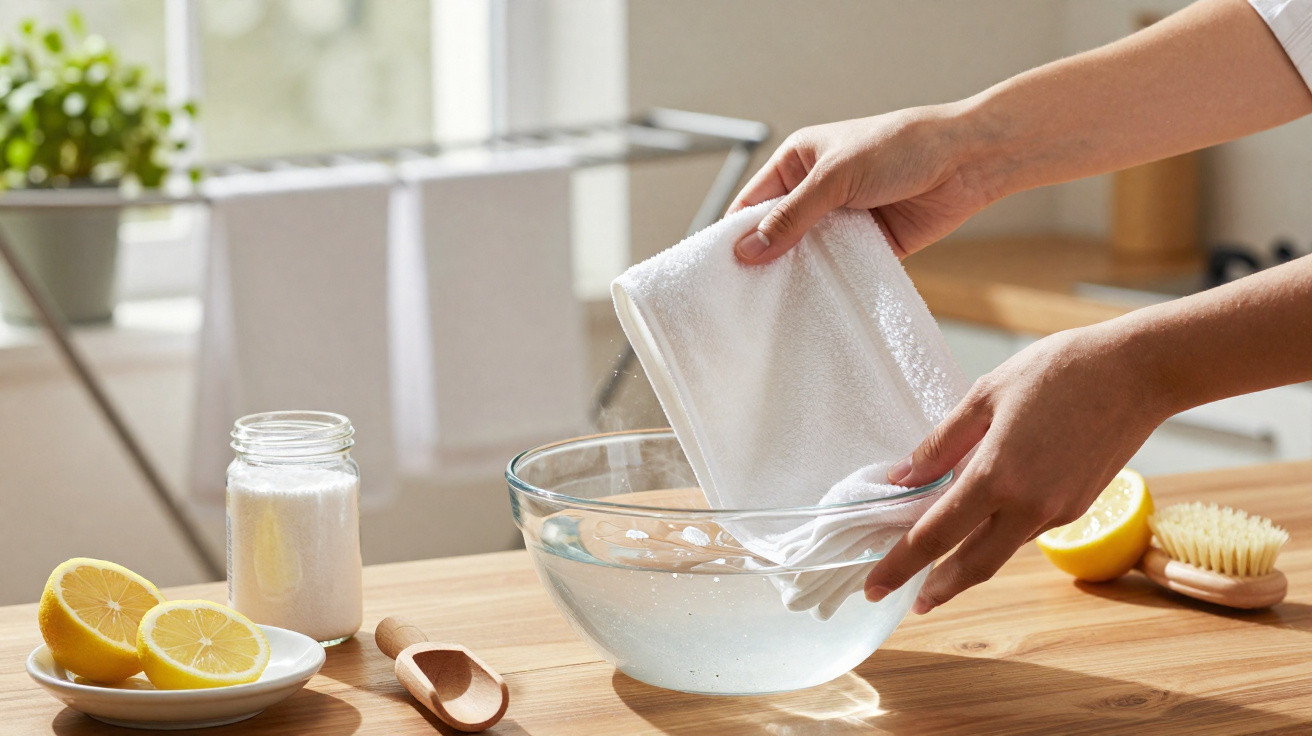
A casual, distracted wipe with a damp cloth often merely spreads food residue around rather than removing the scent properly. The ant motorway remains intact. A brief, purposeful wipe using warm water and a drop of washing-up liquid, however, cuts through the greasy, sugary layer that holds pheromones in place.
The routine does more than clear away crumbs. It quietly disrupts the ants’ navigation system. Instead of following an obvious route to your sink, worker ants roam around, lose interest and return outside. No poison and no collateral harm: simply a daily reset of the invisible signals across your worktop.
The small nightly habit that stops ants
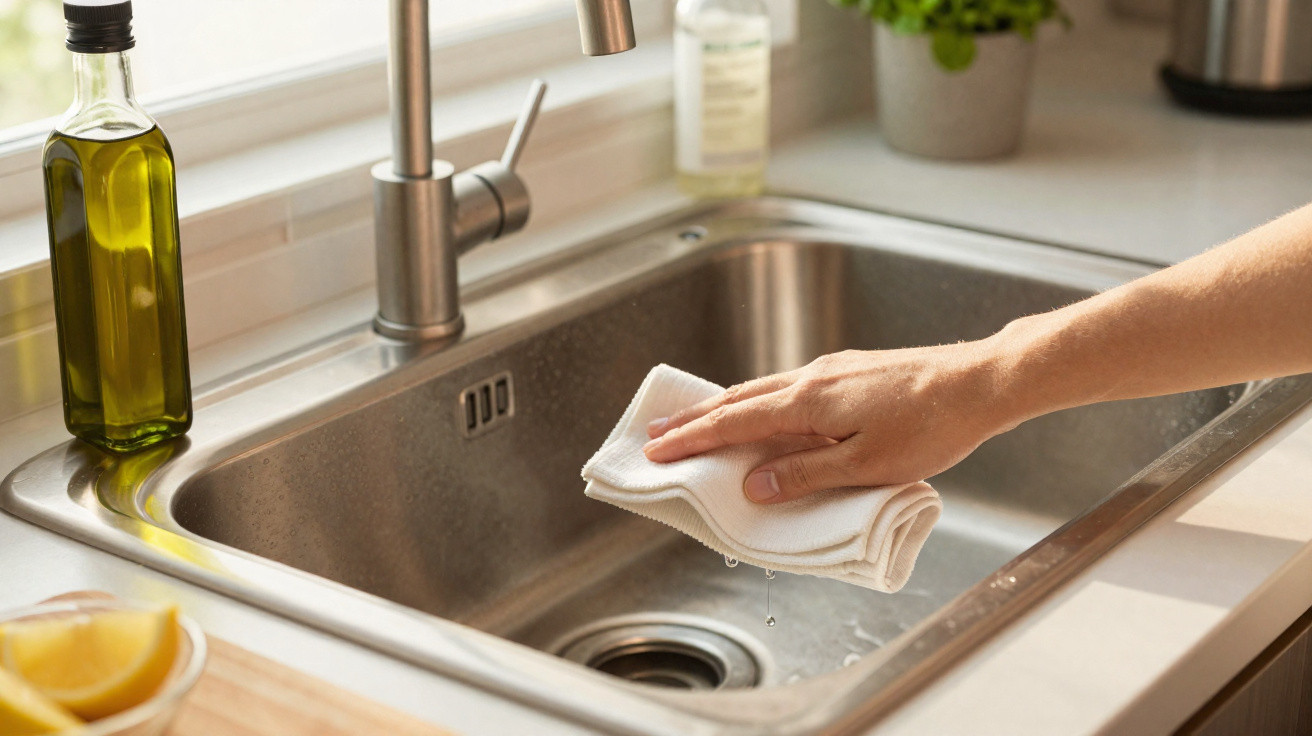
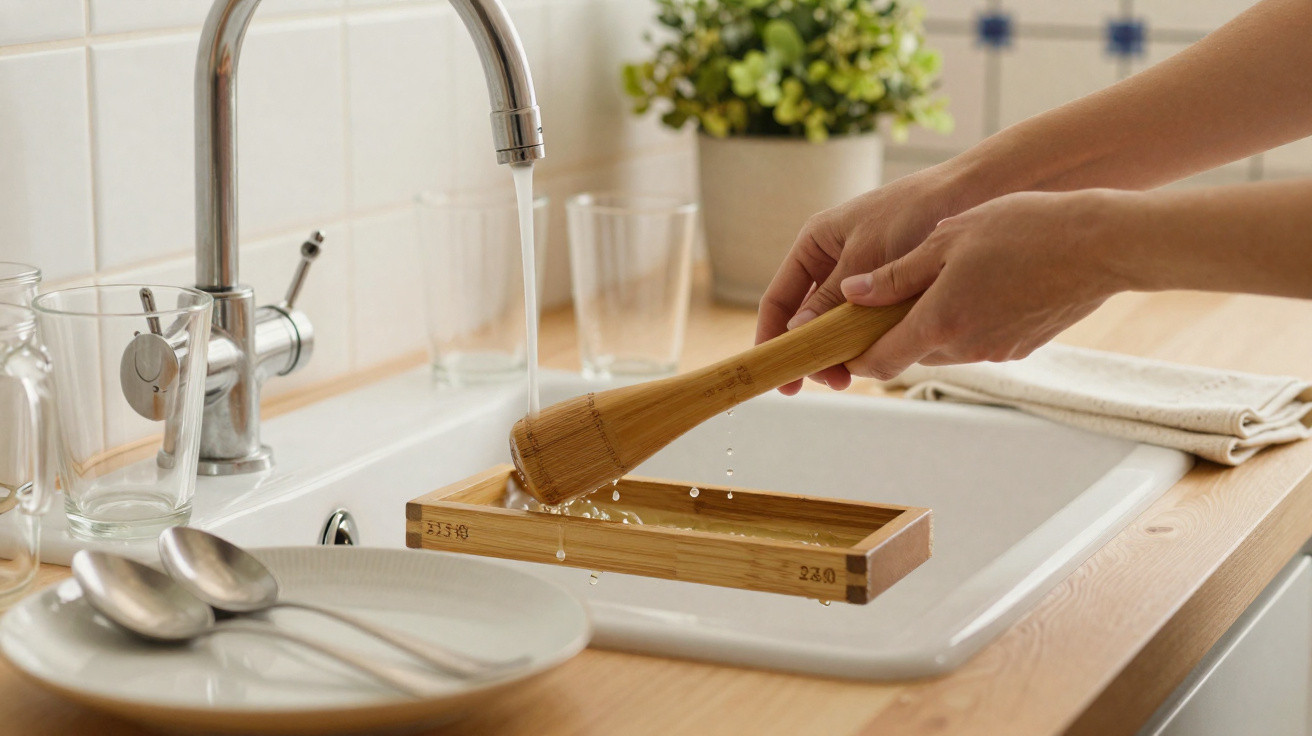
The habit is almost embarrassingly easy: carry out a nightly “ant trail reset” in the areas where food is handled. After the final meal or snack of the day, fill a small bowl or the sink with very warm water and add a squirt of washing-up liquid. With a clean sponge or cloth, carefully wipe three places: the worktops, the strip around the sink, and the floor edge where crumbs roll and hide.
You are not aiming to deep-clean the entire kitchen. Its effectiveness comes from being targeted. Move the toaster, lift the sugar jar, and run the cloth along the narrow gap between the cooker and worktop where food bits always seem to fall. Rinse the cloth once or twice so that you are not simply spreading residue. That’s it. Sixty seconds, perhaps ninety. Repeated consistently, it tells ants: “No path here, move along.”
People often look for a miracle spray or hidden ingredient. They tend to underestimate the difference a focused daily micro-clean can make. Over one or two weeks, though, the results build: scent trails vanish, scouting ants stop finding easy rewards, and the colony turns its attention elsewhere.
Let’s be honest: nobody manages this every day with millimetre-perfect precision. Life gets in the way. You are exhausted, children are shouting, Netflix is waiting, and the thought of a “nightly ritual” can sound like advice from a magazine written by people who have never arrived home at 9:30 pm.
That is precisely why the habit must remain small. If it takes more than two minutes, you will miss it on the days when it matters most. Avoid the perfection trap. Miss one evening? You have not failed some unseen cleanliness test. Simply resume the following night.
The usual errors are straightforward to correct. Using cold water only? The greasy coating remains, along with the scent. Depending exclusively on scented wipes? They may smell pleasant to you, but they do not always remove the tiny food residues ants love. Cleaning every surface except the sticky patch beneath the honey jar? That is like leaving a bright neon sign saying “Buffet here”.
One pest-control technician I spoke to described it this way:
“Everyone wants an easy spray. But the kitchens where I almost never see ants? It’s not magic products. It’s the people who quietly wipe the same three spots every night, without making a big deal out of it.”
This modest ritual is even more effective alongside a few easy, non-obsessive practices:
- Wipe sticky rings beneath jars of honey, jam or syrup once a week.
- Empty and rinse the kitchen bin if it smells even faintly sweet.
- Rinse plates and glasses rather than leaving sugary residue overnight.
- After messy meals, sweep up only the visible crumbs beneath the table.
- Store one or two “high-reward” foods, such as cereal and biscuits, in airtight containers.
You do not need to become a person with an immaculate home. You are only taking away the clearest reasons for ants to invest in your address for the long term. Think less “perfect house tour” and more “this place is dull; let’s raid the compost heap outside instead”.
Taking back control of the kitchen
Once you view ants as readers of scent rather than invaders of space, the entire relationship changes. You are no longer battling them with brute force. Instead, you are quietly revising the story they read when they cross your threshold.
This brief evening habit becomes about more than cleaning; it is a way to reclaim your own routine. It is a small pause before bed in which you reset the scene for tomorrow’s breakfasts, snacks and late-night spoonfuls of ice cream. It does not need to look impressive, only intentional.
On an exhausting evening, it may feel like one more job on the list. Then, a week later, you look at the skirting board where the ant line once marched and notice nothing: no movement and no drama, just a quiet, ordinary stretch of wall. That nearly invisible absence can change how you feel in the space where you cook, eat and talk.
| Key point | Detail | Benefit for the reader |
|---|---|---|
| Erase chemical “routes” | A brief clean with hot, soapy water disrupts pheromone trails | Fewer ants without harsh products |
| Tiny habit, cumulative effect | 1 to 2 minutes each evening, always in the same areas | Long-lasting results without thinking about it constantly |
| Make the kitchen boring, and ants go elsewhere | Fewer crumbs, fewer sticky areas and fewer sweet smells | The colony “disinvests” from your kitchen |







Comments
No comments yet. Be the first to comment!
Leave a Comment