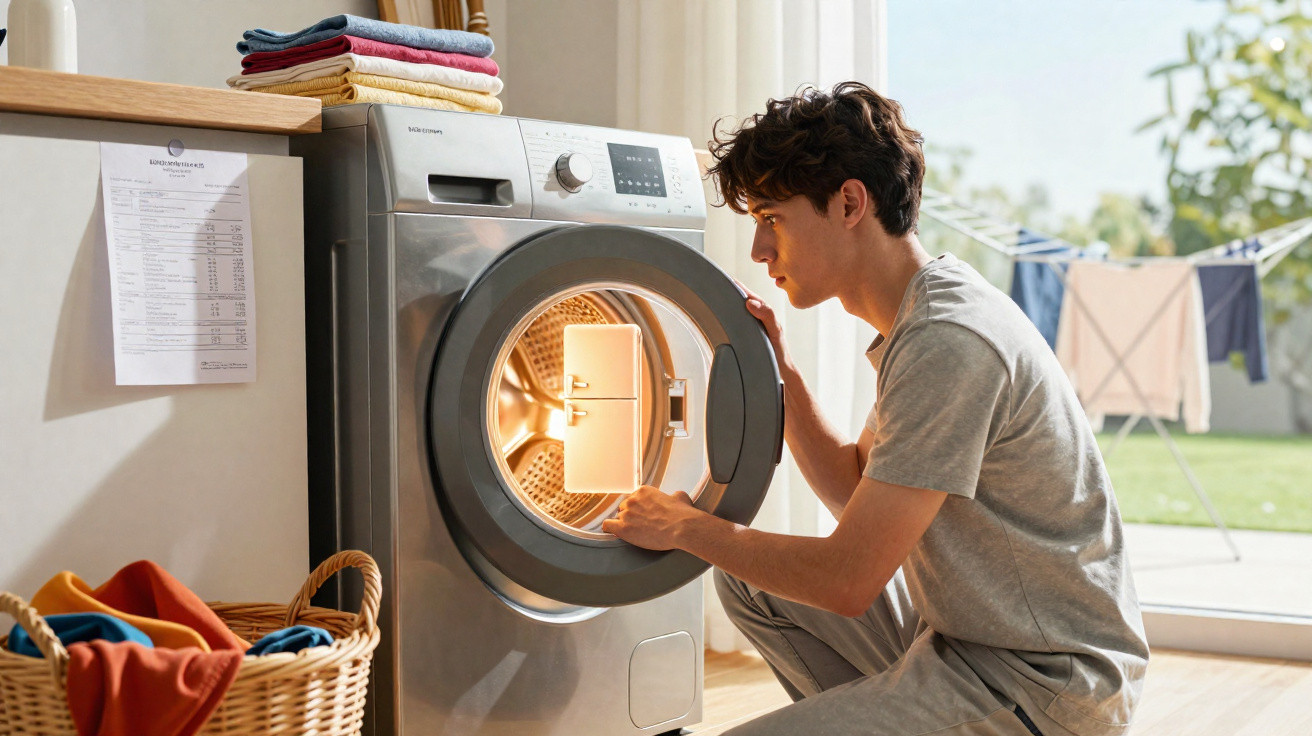
We have all experienced that moment when the electricity meter keeps climbing and we cannot quite work out why.
The lights are off, the oven is cold and the television is on standby. Everything appears sensible. Yet the bill tells a different, almost insulting, story. So we blame the usual heavy users: the fridge, tumble dryer or air conditioning. We sigh and vow to be more careful. Then, almost automatically, we open the door of that particular appliance again. There is a sharp click, a faint hum, and the thought disappears.
One morning in an ordinary suburban London kitchen, an entire family moved around this object without properly noticing it. The children glanced at it absent-mindedly before rushing off to school. Their father opened it several times, “just to check”. Their mother complained about the size of the bills while leaving the appliance running almost constantly. Nobody connected the dots. Nobody imagined that this ordinary machine could use as much energy as 65 refrigerators running at the same time.
What if the household’s real electricity monster is not the one we usually suspect?
The shiny false friend at the back of the kitchen
At first glance, this appliance looks unremarkable. It does not shake like a washing machine or radiate heat like an oven. It makes very little noise, apart from a quiet flow of air. That very discreetness is what makes it so costly for both our bills and the electricity network. We open and close it, and press a button, as naturally as breathing.
Are we talking about the microwave? An American-style freezer? No. In many modern homes, the real energy guzzler is the tumble dryer. More specifically, it is the conventional resistance-heated model, used several times a week in poorly ventilated rooms and sometimes left running for hours. According to some estimates, intensive use over a year can amount to electricity consumption equivalent to 60 to 65 combined fridge-freezers. The comparison is striking: suddenly, it is easy to picture an army of fridges running merely to dry a few towels.
The point becomes even clearer when looking at a typical day. A family with two children puts on a first wash in the morning, then runs a “quick” drying cycle before school. In the evening, there is another wash and another drying session: “a full one this time, we need it for tomorrow”. At the weekend, sheets, duvet covers and sportswear follow one after another. By the end of the month, the tumble dryer has run for dozens of hours. A thousand small, entirely understandable conveniences turn into megawatts of energy swallowed up.
The figures are startling. A standard tumble dryer can use between 2 and 4 kWh per cycle. A modern refrigerator uses around 0.3 to 0.7 kWh each day. Over a year, a frequently used tumble dryer can easily exceed 500 kWh, and considerably more in some households. When intensive use, poor settings and old appliances are combined, the symbolic comparison with “65 refrigerators running in parallel” becomes the clearest way to grasp the scale of the issue. The appliance may seem modest, but its effect is substantial.
How to tame this tumble dryer monster without returning to old-fashioned washing lines
The good news is that nobody has to live surrounded by damp clothes. The first step is to view the tumble dryer as a back-up tool rather than an automatic habit. For instance, it can be reserved for genuine emergencies: guest bedding, towels in winter, or work clothes that really must be ready quickly. On other days, a simple clothes airer near a window or in a well-ventilated room can make a major difference to energy use.
Another highly practical approach is to adjust the washing machine’s spin speed. The drier the washing comes out, the less time the tumble dryer needs to run. Moving from a medium spin to a high spin can cut drying time by several tens of minutes. It may not be obvious at the time, but the difference is clear on the annual bill. Eco programmes can also be prioritised, and the cycle can be stopped once laundry is dry enough to finish airing naturally. Let us be honest: hardly anyone does this every day. Even so, doing it once every two loads can already deliver a considerable saving.
“The cheapest and cleanest electricity is still the electricity we do not use,” sums up an energy-efficiency expert. “The tumble dryer is a perfect example: it provides real comfort, but it is easy to reduce its use without changing your life.”
A few straightforward guidelines can make everyday choices clearer:
- Avoid running the tumble dryer for two T-shirts and one pair of jeans.
- Clean the filter after almost every cycle, so that drying time does not increase.
- Try one “tumble-dryer-free day” each week as a family, simply to see the effect.
- Choose a heat-pump model when buying your next appliance, as it uses far less energy.
- Monitor consumption with a smart plug, even for just one month, to understand the reality.
What if our electrical comfort tells another story?
What is at stake with this appliance that uses as much electricity as 65 refrigerators is not simply a matter of figures. It is about comfort, routines and the small shortcuts we allow ourselves because we are tired, busy or simply accustomed to them. In an already packed daily life, returning to natural drying can feel old-fashioned or even inconvenient. Yet many people find that making only slight changes to their routine saves them tens of pounds each month, without feeling that they are truly going without.
This realisation can also become a kind of collective game. Who in the household will spot the next load that can dry in the open air? Which neighbour will share their tip for drying clothes more quickly without electrifying everything? What simple rules could be agreed within a block of flats or a neighbourhood? There is something almost cheerful about bringing a little common sense back to our plugs and sockets. Dry air moving through a sheet hanging in a sunny room also reconnects us with a slower, more visible and tangible rhythm.
The tumble dryer will remain there, of course, ready to run when it is needed. But seeing it as a machine that is “worth” 65 refrigerators changes the way we see it. We no longer press the button with quite the same carelessness. We pause for one second, perhaps two. Very often, it is in those two seconds that the real saving takes place, both in energy and in peace of mind.
| Key point | Detail | Benefit for the reader |
|---|---|---|
| The tumble dryer, the hidden consumption champion | Intensive use can equal the energy used by several dozen modern refrigerators | Understand the appliance’s true impact on the electricity bill |
| Simple actions, without a life overhaul | Restrict use to emergencies, improve spin speed and finish drying in the open air | Cut costs without giving up all the convenience of rapid drying |
| Make a better choice at the right time | Prioritise heat-pump models and track actual consumption with a smart plug | Invest wisely at the next purchase and avoid unpleasant surprises |
















Comments
No comments yet. Be the first to comment!
Leave a Comment