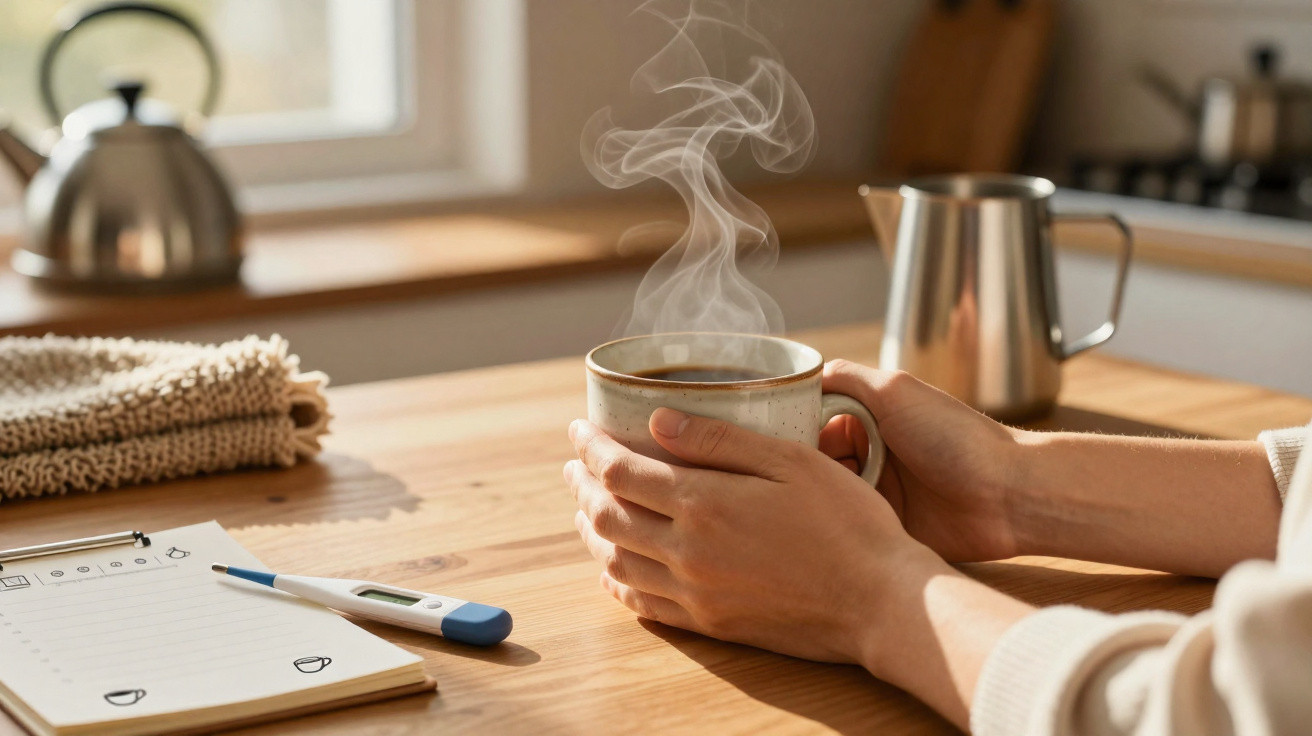
The coffee is flawless for precisely three minutes. Steam twists above the mug, the room has barely woken up, and the first mouthful is rich, deep and almost sweet. You place it beside your laptop, read one email and then a second. Your boss sends a message, Slack begins flashing, and your phone illuminates with an alert you never wanted.
You reply to one request, then deal with another, before looking back at the mug. The steam has vanished. That silky, reassuring warmth has become a tepid disappointment in what seems like no time at all.
You take another sip, wishing it were only in your head. It is not.
Why does coffee always go cold so quickly?
The hidden enemies stealing your coffee’s heat
In most cases, coffee is not cooling “too fast”. It is simply losing a battle on several fronts at the same time.
The mug is the first culprit. A cold, heavy ceramic mug behaves like a heat sponge, pulling warmth from freshly poured coffee almost at once. Then there is the room itself: cooler air and surrounding surfaces steadily draw heat away from your drink.
You cannot see it, but physics is putting in serious work during your morning coffee ritual.
Think back to making coffee on a winter day. The kitchen was cold, the mug had come from a chilly cupboard, and the worktop was cold as well. You poured in boiling-hot coffee and watched the steam rise theatrically… only to find that, five minutes later, it was already halfway to lukewarm.
A kitchen thermometer would reveal a dramatic fall in temperature. In a cold setting, coffee can drop from 90°C to below 60°C remarkably quickly. Around 60°C is where “comfortably hot” starts becoming “meh”.
Your tongue is not wrong: it detects every degree that disappears.
The process is straightforward and unforgiving. Hot coffee gives up heat in three principal ways: into the air, into the mug and into any colder surface it contacts. A broad mug with a large exposed surface loses warmth extremely quickly. A thin, cold rim makes this faster still by allowing more steam to escape.
Put the identical coffee, at the same starting temperature, into a narrow preheated travel tumbler with a lid, and it can seem hot for an hour or longer. The drink has not changed; its pattern of heat loss has.
The issue is not the coffee itself. It is everything surrounding it.
Simple moves that keep your coffee hot way longer
The quickest improvement is almost too obvious: preheat your mug.
Hold it under very hot tap water or, better still, fill it with a little boiling water while the coffee is brewing. Leave it for 30 seconds, swirl the water around, tip it out, and then pour in your coffee. Because the mug begins closer to the temperature of the drink, it takes away far less heat during those vital opening minutes.
That small additional step can turn coffee that stays hot for three minutes into coffee that remains hot for ten.
Your choice of mug is the next major factor. A tall, narrow cup sheds less heat than a large open one. A lid-even a basic silicone cover-retains a surprisingly large amount of warmth. Double-walled glass and vacuum-insulated stainless steel greatly slow the rate at which coffee cools.
Everyone knows the moment: you give up on half a cup because it has become sadly lukewarm. Using an insulated tumbler on working days can quietly solve that problem. Honestly, no one reheats their coffee in the microwave every day, however much they insist that they will.
Minor design details can reshape the entire life of your coffee.
You can adjust your routine rather than struggle against it, too. If you know you will drink slowly, make the coffee slightly hotter to begin with or serve a smaller amount each time. Brew your coffee, then store the remainder in a thermal carafe instead of allowing it to cool in the pot or French press.
Hot coffee isn’t just about temperature, it’s about the tiny window where comfort, aroma and ritual all line up.
- Preheat your mug – Rinse it with boiling water for 30 seconds before pouring in coffee.
- Use a lid or cover – Even a straightforward lid or plate over the top dramatically reduces heat loss.
- Choose a narrow, insulated cup – A smaller exposed surface means more warmth stays in.
- Keep the remainder in a thermal carafe – Do not leave brewed coffee uncovered on a hot plate.
- Avoid cold environments – Draughty windows, cold desks and air-conditioning vents will cool your cup more rapidly.
Your coffee, your rhythm, your perfect “hot window”
Ultimately, this is not really about pursuing an ideal temperature measured in a laboratory. It is about making coffee fit the way you genuinely live and work. Emails, interruptions, over-running calls and a toddler needing something the moment you sit down all clash with your drink’s brief “hot window”.
When you begin to notice how swiftly coffee cools in a cold mug, or how much longer it remains warm beneath a lid, you can build small rituals around that knowledge. Use the preheated cup. Reach for the travel tumbler on slow, distracted mornings. Pour a smaller serving when you know a meeting is about to begin.
You do not need barista equipment to solve the problem-only a little awareness and two or three minor adjustments. The coffee stays hot, the moment lasts longer, and the first sip and final sip are finally on the same side.
| Key point | Detail | Value for the reader |
|---|---|---|
| Preheat your mug | Rinse with boiling water or fill it briefly before adding coffee | Slows the initial fall in temperature and keeps coffee hot for longer |
| Optimise your cup | Choose narrow, double-walled or insulated mugs, ideally with a lid | Limits heat loss to the air and nearby surfaces during lengthy drinking sessions |
| Adapt to your pace | Use smaller pours, thermal carafes and avoid cold areas of your desk | Helps your coffee routine fit your real-life timetable and habits |













Comments
No comments yet. Be the first to comment!
Leave a Comment