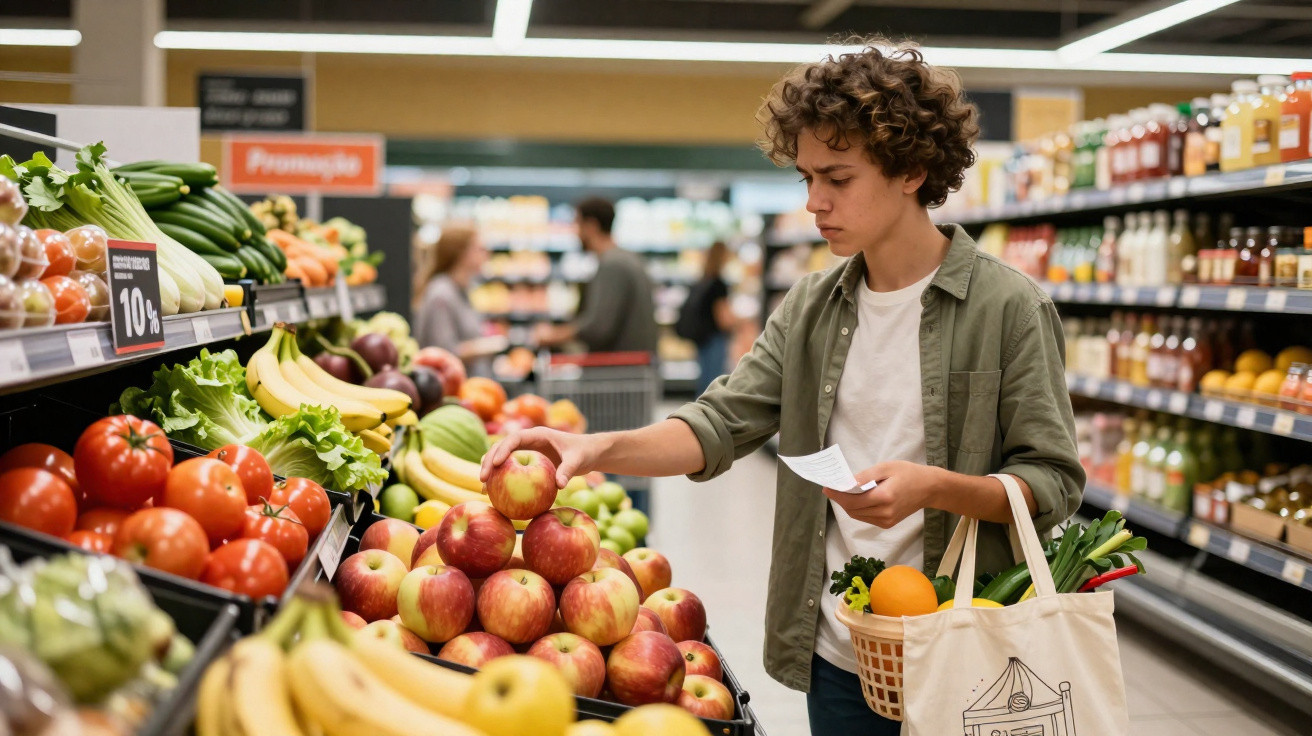
When shoppers weigh tomatoes or pack a kilogram of bananas, they instinctively check the price label. Many feel that this particular part of the trolley is becoming more expensive faster than everything else. Retail figures show that fresh produce still sells well – and generates surprisingly high revenues for supermarkets.
Fruit and vegetables: small products, a huge revenue driver
Households buy fresh produce regularly. In 2025, the average household put around 163 kg of fruit and vegetables in its shopping trolley, roughly 3 per cent more than in 2024. An average of €3.10 was paid at the till for each kilogram. For supermarket chains, this category has long been far more than simply a source of vitamins.
Shoppers tend to focus on a limited number of familiar varieties: bananas, apples, oranges, tomatoes, carrots and courgettes. These everyday staples repeatedly bring customers into stores. For large supermarkets, the fresh produce section can:
- account for up to one third of total fresh-food revenue
- represent around 6 to 8.5 per cent of a hypermarket's overall turnover
This makes it one of the most important levers for a retailer's financial results. It is also ideal for “shaping” prices, because shoppers have fewer direct ways to compare them than they do with branded goods.
Why fruit and vegetables seem so expensive
There are, of course, genuine costs involved before a tomato reaches the shelf. These products require intensive labour: harvesting, sorting and packing are often carried out by hand. Transport, refrigeration and the share that spoils in store and has to be discarded also add to the bill.
Together, these costs mean that a kilogram can rarely be sold for one euro on a permanent basis. Delicate produce such as berries and lettuce can quickly generate losses when demand changes or the weather does not cooperate.
Fruit and vegetables are expensive to produce – but that still does not explain every price gap in the supermarket.
Even with these real costs, some products show a striking difference between the purchase price and the retail price. This is where the pricing strategy of major supermarket chains comes into play.
How supermarkets use fruit and vegetables to cross-subsidise other departments
Retail chains compete fiercely on the prices of familiar branded products – laundry detergent, cola and chocolate bars. These prices are easy to compare through apps or promotional leaflets. Margins in those categories are often slim and can sometimes be close to zero.
To remain profitable, many retailers rely on cross-subsidisation. The principle is simple: some departments act as customer-drawing offers, while others make up the difference. Fresh produce is particularly suited to this strategy, as customers are less likely to compare the price per kilogram between one shop and another.
Studies frequently put the gross margin between 25 and 50 per cent for fruit and vegetables in retail. The range is broad:
- Traffic-driving products such as bananas or carrots: often priced very tightly and frequently featured in promotions
- Exotic fruit or berries: marked up substantially more
- Pre-cut products such as tubs of fruit salad or ready-made salad mixes: especially high margins
Research has, for example, found potatoes bought by retailers for a few cents per kilogram and then sold on for more than one euro. This is where the supermarket's proverbial “cash cow” is created.
Why fruit and vegetables could genuinely cost less
Part of the price is therefore driven not only by labour and transport costs, but also by internal pricing tactics. If chains achieve a 40 per cent gross margin in one department, then, in purely mathematical terms, several cents per kilogram could be saved.
Even a reduction of just a few percentage points in the retail margin could be noticeable for families – particularly on weekly shops.
Comparisons of typical shopping baskets show that farmers' markets and direct sales from farms are, on average, around 6 per cent cheaper than the major chains for seasonal produce. The difference is especially noticeable for regional fruit and vegetables.
Many people miss the 5-a-day recommendation because of the price
There is another issue: around 36 per cent of people say they do not meet the familiar recommendation of “five portions of fruit and vegetables a day”. Price is the main reason. People who need to budget tightly are more likely to choose pasta, toast and convenience food.
As a result, two aims collide: public campaigns encourage people to eat more fresh food, while pricing makes it difficult for many households to afford it.
Political and practical approaches under discussion
Various proposals are being debated among specialists to improve the situation. These include:
- Capping margins on a fixed basket of staple goods such as apples, carrots, onions and potatoes
- Providing a transparent breakdown of how much of the price goes to the producer and how much remains with the retailer
- Changing discount strategies: fewer promotions on sugary drinks and snacks, and more on fresh produce
Whether, and how, these ideas will be introduced remains uncertain. Retailers warn against interference with their freedom to set prices, while consumer advocates demand precisely such intervention.
What shoppers can do now
Even without new legislation, it is possible to make meaningful improvements to a personal food shop. Several measures come down directly to behaviour in store:
- Choose seasonal produce: strawberries in June cost less than greenhouse-grown strawberries in February.
- Compare prices per kilogram: individual item prices and colourful stickers can often be misleading.
- Use both supermarkets and markets: shoppers who use both can buy particular products where they are cheaper.
- Avoid convenience produce: sliced fruit and bagged salad mixes are convenient, but considerably more expensive.
- Keep an eye on regional produce: shorter journeys reduce transport costs – and this is often reflected in the price.
Families in particular, when they buy large quantities regularly, feel even small price differences. Anyone purchasing 5 to 7 kg of fresh produce each week can save a worthwhile double-digit amount over a year if there is a 30-cent difference per kilogram.
Why markets and farm shops often seem cheaper – and when they really are
Direct sellers operate with different cost structures. There is usually no large warehouse, central head office or lengthy transport chain between the producer and the customer. This can allow better prices, particularly for larger quantities and seasonal peak produce.
However, it is still worth looking closely. Some farm shops position themselves as premium outlets, factoring in higher wages and smaller volumes. When that happens, the picture changes and the supermarket can suddenly come out ahead.
Anyone who genuinely wants to compare prices should not be guided by the atmosphere, but by the small number on the price-per-kilogram label.
What will matter in future
Fresh produce will remain an area of tension: a crucial source of profit for retailers and a painful budget item for many households. Even small shifts in pricing calculations could make a considerable difference – both to vitamin consumption and to supermarket takings.
Those who already pay closer attention to seasonality, origin and the price per kilogram reduce the impact of silent cross-subsidisation. In the long term, only a combination of political pressure, transparency and individual shopping behaviour may ensure that a full basket of fruit and vegetables no longer feels like a luxury.













Comments
No comments yet. Be the first to comment!
Leave a Comment