Some smells hang about like a guest who refuses to take the hint. Frying oil settles into the curtains. Yesterday’s fish still murmurs from the bin. You throw open the windows, spritz the room and burn a candle smelling faintly of washing powder and remorse. Then a neighbour shares a trick your gran may well have used: push whole cloves into an orange and leave it somewhere with moving air. No gadgets. No chemicals. Only a prickly little sun scented with spice.
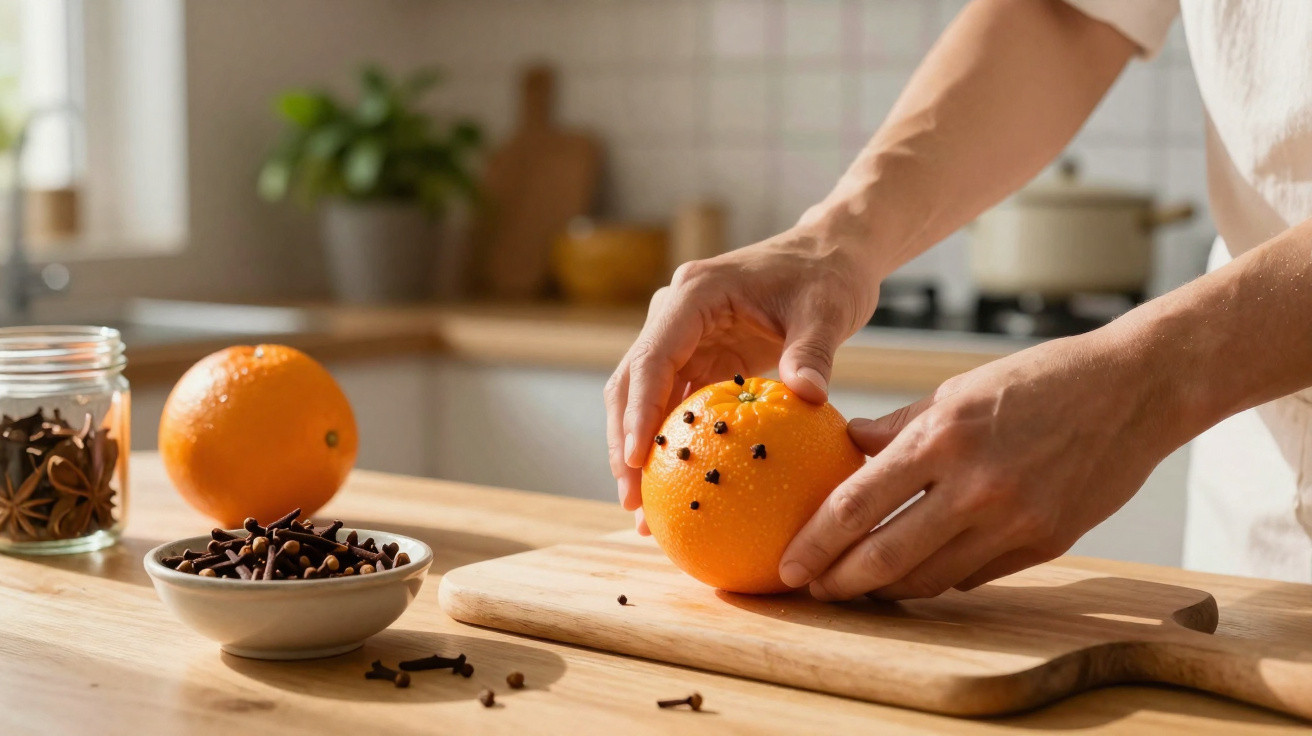
I gave it a go late one Thursday, with rain shining on the streets and the flat thick with steam and sautéed-food smells. The orange seemed far too ordinary to make any difference. I pressed in one clove, followed by another, tracing a dotted belt around its middle; their small heads caught the light like button studs. Within a minute, the room felt different. Warmth seemed to lift from the peel. It was clove smoke without any smoke. My shoulders eased, as though a window had been opened somewhere inside me. The bin no longer made itself known. The fridge stopped muttering. The air was transformed.
Why this old trick still works
Sticking cloves into an orange may sound old-fashioned, like something you would find at a village fête. Then you catch its scent at work. Citrus gives the room a clean, bright lift, while clove brings a deeper warmth that feels like an unexpected hug. This is not only for Christmas. It stands up to a Tuesday, too. A clove-studded orange gently refreshes a kitchen without demanding to be noticed. You realise it most clearly after stepping out and returning: the room smells like itself again, only softer.
At a Manchester houseshare, we once made large Friday curries whose heroic aroma filled the hallway until Monday. One of us would stud an orange with cloves and set it on the radiator cover, and by bedtime the house had shifted from cumin club to relaxed Saturday. Google Trends records small winter peaks for “clove orange” each year, suggesting that people recall the method just as rain makes the roads gleam and ovens start working harder. It becomes part of December customs, then remains useful in March when the sink starts acting up.
There is some pleasing kitchen chemistry behind it. Cloves contain plenty of eugenol, a warm, spicy-smelling compound that can soften more pungent odours. Orange peel contains limonene alongside other citrus oils that give off a fresh, zesty character. Combined, they create a layered fragrance that draws your nose away from persistent smells and binds with some of the volatile molecules left after cooking. As the orange warms, its pores release oils; the cloves diffuse gradually, making the whole thing a mild natural diffuser that is pleasing to look at.
How to make one that actually works
Choose a firm orange with unblemished, smooth skin. First, mark out an easy design using toothpicks: a band around the centre, spirals or crossed lines all work. Insert whole cloves into those prepared holes with their heads facing outwards, leaving roughly a finger-width between them so the peel can breathe. For added warmth, roll the completed orange in a little ground cinnamon and clove powder. Put it close to a mild source of heat or somewhere air passes by. A sunny windowsill, shelf above the hob or spot beside the kettle all work well.
Avoid packing the cloves too tightly together, as this can bruise the peel and make it turn sour. Choose fresh whole cloves; if they will not pierce the skin readily, they are likely stale. If your kitchen is warm, replace the orange with a fresh one every week. Let’s be honest: nobody actually does this every day. Store a jar of cloves beside the fruit bowl and make one whenever you take out the bin. We have all experienced the moment when a guest’s coat picks up the scent of last night’s garlic. Consider this your low-key reset button.
Treat it as a small ceremony rather than another job. One modest orange, a handful of cloves and two peaceful minutes can alter a room’s atmosphere.
“I treat clove oranges like a kettle-boil job - quick, forgiving, and oddly cheering,” says Anna Malik, a Leeds home cook who keeps one by the toaster.
- For a gentler fragrance: include a few cardamom pods or add a pinch of vanilla sugar when rolling it.
- For a speedy post-frying refresh: place the orange by the extractor as the hob cools down.
- For safety: keep clove oranges beyond the reach of pets and inquisitive toddlers.
- For a longer-lasting result: select small, firm fruit and turn it every couple of days.
The little orange that changes the room
When the air feels more pleasant, you start to notice little freedoms. Breakfast no longer carries the smell of last night’s frying pan. The hallway sheds its lingering resentment from the bin. A clove-studded orange will not make your kitchen feel like a spa, but it can make the space feel cared for. It fits easily alongside the rest of daily life: a fruit bowl, a plant that stays alive, a tea towel you genuinely enjoy using. Tell a flatmate, neighbour or your mum on the phone. Someone will try it that evening, dismiss it with a shrug, then message you the next morning with a one-word verdict: magic.
| Key point | Detail | Benefit for the reader |
|---|---|---|
| Choose firm fruit | Small oranges with taut skin last well and release oils consistently | Better fragrance, less mess and a longer lifespan |
| Pre-pierce the peel | Use a toothpick to make clean lines or spirals for the cloves | Quicker preparation, a tidier appearance and less bruising |
| Give it gentle warmth | Set it near a kettle, radiator cover or sunny windowsill | Encourages diffusion without overwhelming the room |








Comments
No comments yet. Be the first to comment!
Leave a Comment