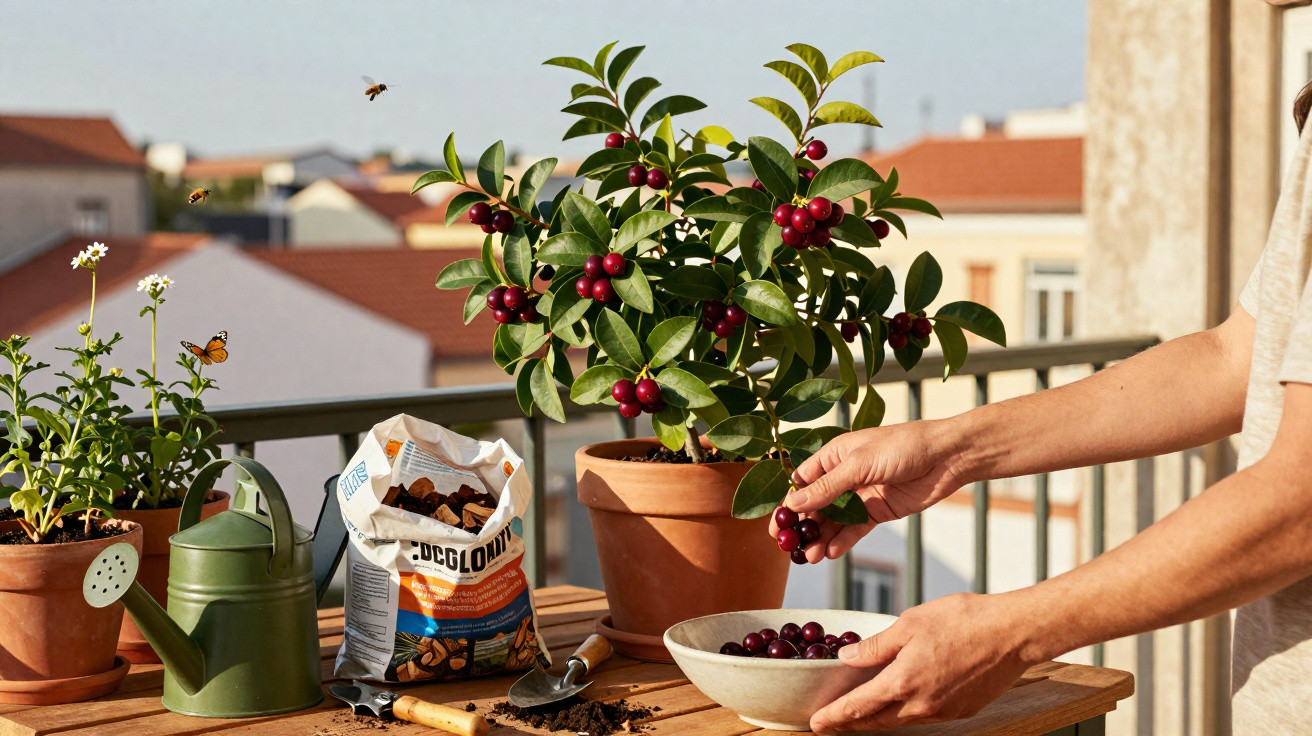
On the cramped balconies of large cities, an unobtrusive exotic shrub is beginning to attract attention while standing up to winter.
Native to the cool forests of South America, this compact fruiting plant can turn balconies, terraces and small gardens into productive, fragrant spaces that are surprisingly easy to maintain, even for people living amid concrete.
An Andean fruit shrub for any balcony
The plant behind this growing interest is murtilla (Ugni molinae), also called Chilean guava. Despite its grand-sounding name, it is a modestly sized shrub that is well suited to growing in a pot. Once mature, it seldom exceeds 1.50 m in height, making it manageable even on a small balcony.
Murtilla originates in the temperate parts of Chile and areas of Patagonia, where it developed in cool, damp and windy conditions. This is why it adapts readily to milder climates with distinct winters, without requiring a heated greenhouse or complicated equipment.
“A compact, evergreen, aromatic shrub that produces fruit: murtilla brings decoration and harvest together in a single pot.”
In appearance, it is a dense shrub with fine branching and small, glossy leaves. Rather than taking over half the balcony, it creates an elegant green mound that fits easily into sunny corners or beside a well-lit wall.
Small fruits with a tropical-fruit fragrance
The real surprise comes at harvest time. Murtilla fruits are rounded berries ranging from bright red to deep wine-red, resembling miniature blueberries but with a character of their own.
Their flavour is not immediately familiar: it suggests a combination of wild strawberry, guava and kiwi, with a gently spiced note. Some cultivars also have a hint reminiscent of baked apple.
“Those who taste murtilla describe it as a natural blend of red and tropical fruits in one tiny berry.”
The shrub is not only appealing when it is fruiting. Throughout the year, its dark-green, firm evergreen foliage remains in place rather than falling in winter. In spring, meanwhile, small white-pink, bell-shaped flowers hang along the branches.
These flowers release a sweet scent that can be noticed even by someone briefly passing the balcony. Bees and other urban pollinators benefit too, finding a source of nectar among the concrete.
Remarkable hardiness for an “exotic” plant
Temperate South American fruit is often assumed to be difficult to grow, but murtilla challenges that idea. In a suitable container, it can cope well with the cold in areas with harsher winters, provided the pot is shielded from the most severe frosts.
Growing records from European countries show that mature plants can withstand temperatures of around -10 °C for short periods. Roots are more vulnerable in a container, but positioning the pot close to a wall and using horticultural fleece on particularly cold nights is usually enough.
“For anyone who associates exotic fruit with delicate cultivation, murtilla behaves almost like a traditional garden shrub.”
The right growing medium is crucial
Although it tolerates cold, it has one clear enemy: excessive limestone in the soil. Murtilla prefers an acidic growing medium, similar to those used for azaleas, rhododendrons and blueberries.
- Use bog soil or acidic soil as the base;
- Add a little well-rotted organic compost;
- Ensure good drainage with grit or expanded clay at the bottom of the pot;
- Avoid calcareous soils or amendments containing quicklime.
With this initial care, the roots establish more successfully and the shrub responds with greater vigour, glossier leaves and more abundant flowering.
Watering, pruning and ways to harvest heavily from a pot
Murtilla has shallow roots, meaning it dries out quickly during warmer months, especially in small or dark-coloured pots that heat up more readily.
The aim is to keep the growing medium lightly moist without waterlogging it. Too much water can suffocate the roots and reduce fruit production.
“A layer of mulch on top of the pot is almost life insurance for the plant during summer.”
This mulch can be made from pine bark, dry leaves, straw or wood chips. It limits evaporation and, in the case of pine bark, also helps to keep the soil slightly acidic.
Basic care calendar
| Season | Main care task |
|---|---|
| Late winter | Light pruning, removal of dead branches and shaping |
| Spring | Organic fertiliser and regular watering |
| Summer | Frequent watering and maintaining the mulch |
| Autumn | Fruit harvest and a gentle nutrient boost |
Pruning is straightforward. At the end of winter, simply remove dead, crossing or overly inward-growing branches. The intention is to keep the shrub airy and compact, not to cut it back severely.
Late production and creative cooking
One interesting feature of murtilla is its harvesting period. In many cases, its fruits ripen from late spring until mid-autumn, depending on local conditions and where the pot is placed.
In colder areas, production often continues after other fruits have disappeared, creating an extra burst of flavour during the change of seasons.
“On the same balcony, a single murtilla shrub can provide staggered harvests, allowing you to eat fruit straight from the plant week after week.”
There are many ways to use it in the kitchen:
- Eat it fresh, picked directly from the pot;
- Make complex-flavoured jams with little sugar;
- Use it as a finishing touch in fruit salads;
- Add it to drinks and cocktails as a delicate alternative to red berries;
- Make sauces for ice cream and yoghurt.
For those who enjoy flavouring drinks, murtilla steeped in neutral alcohol or cachaça makes intensely coloured liqueurs with an aromatic profile quite unlike the more familiar raspberry or blackberry.
A biodiversity ally in the heart of the city
Introducing less common species to balconies and small gardens creates valuable microhabitats for urban wildlife. Murtilla provides nectar, pollen, shelter and, naturally, fruit.
Its combination of scented flowers, colourful berries and persistent foliage ensures a regular presence of pollinating insects and, in some cases, birds visiting in search of food.
“One well-tended pot can act as a miniature ecological service station: flowers, food and shade in just a few litres of growing medium.”
For anyone creating an edible garden, murtilla works well alongside other small fruit plants such as blueberries, strawberries and raspberries, as long as they all receive acidic growing medium and plenty of light.
What to know before choosing this miniature fruit shrub
Some terms frequently used when discussing murtilla can confuse beginners. “Hardiness”, for instance, describes a plant’s ability to withstand cold and changing weather without serious damage. It does not mean the plant is indestructible, only that it copes better than most fruits from tropical climates.
Soil acidity is another important point. Broadly speaking, acidic soils have a lower pH. Many common ornamental plants tolerate neutral or slightly alkaline pH, whereas fruit plants such as murtilla and blueberry, as well as camellias, perform better in acidic soil. It is worth using ready-made mixes for acid-loving plants or checking the pH of specific growing media.
For people with limited time, an easy comparison helps: imagine a watering routine similar to that of basil in a pot, but with a little more flexibility. If you can check the pot every two days, feel the growing medium with a finger and adjust the water accordingly, you are already close to providing what murtilla needs.
There are also subtle risks, including excessive intense sunlight in very hot areas, which can scorch new leaves. In such cases, balconies with morning sun and light afternoon shade are generally more suitable. In places with mild winters, the issue is reversed: insufficient cold slightly reduces flowering, which can lower fruit production.
On the other hand, its advantages accumulate: an extended harvest, spring fragrance, constant greenery in winter, pollinator attraction and a guaranteed talking point for any curious visitor who asks what that “unusual fruit” hanging from the pot might be.









Comments
No comments yet. Be the first to comment!
Leave a Comment