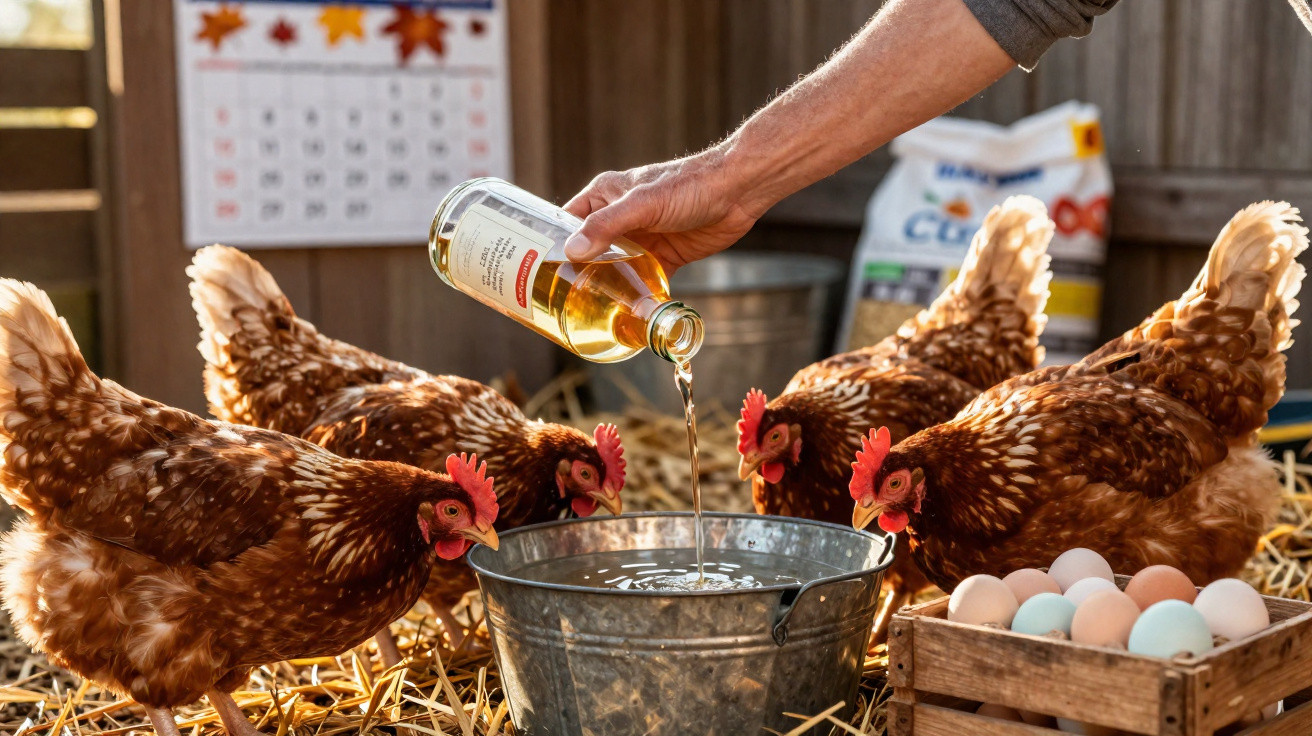
A finger-numbing chill, water left to stagnate, cracked shells… As winter draws near, hens quickly suffer when their drinker is neglected. Before November 2025, one straightforward addition to their water can help smooth the season, prevent a slump and keep eggshells strong.
For two weeks, the hens had been drinking less. Their shells were beginning to look mottled. And the smell… let us just say it gave away the lack of freshness.
A neighbour shared her approach with me, almost in a whisper, like an old-fashioned household tip: “Before November, give their water a short treatment.” I tried it without much faith. Within three days, their plumage looked glossier again. The eggshells snapped crisply under my fingers. The answer comes down to one capful.
Why water shapes hens’ winter
As daylight hours shorten, hens move around less and their drinking habits change. Water sits still, gets colder and soon develops a biofilm that can disrupt appetite and digestion. An ordinary drinker can rapidly become an overlooked microbial trap.
When egg production drops, light is often blamed. Yet the water frequently tells the real story. It may taste metallic or muddy, and hens, with their sensitive sense of smell, become wary of it.
A small-scale keeper in Aveyron showed me figures in an egg-stained notebook. In October 2023, he had recorded a 20 % fall in egg numbers over ten days, followed by a plateau. He then tried a prepared water treatment, marked in red: 5 ml of apple cider vinegar per litre for seven days. He measured a recovery the following week, along with shells that broke more cleanly. There was nothing magical about it: simply a cleaner, more consistent water environment.
We have all found a forgotten, greenish drinker and promised ourselves we would do better. Honestly, nobody truly manages that every day. That is exactly why the right action at the right time carries so much weight.
The reasoning is wonderfully practical. Slightly acidified water discourages certain deposits, improves the taste, encourages drinking and supports mineral absorption. A hen cannot make a properly formed shell when water is scarce or unappealing. A more balanced pH provides a smoother “motorway” for calcium from the feed. Winter makes matters worse: cold = inactivity = biofilm. So it is best to prepare before the seasonal shift.
It is remarkable how one small detail can make everything easier. A brief routine planned for late October avoids more drastic measures when the frost arrives.
The method: a short apple cider vinegar treatment before November 2025
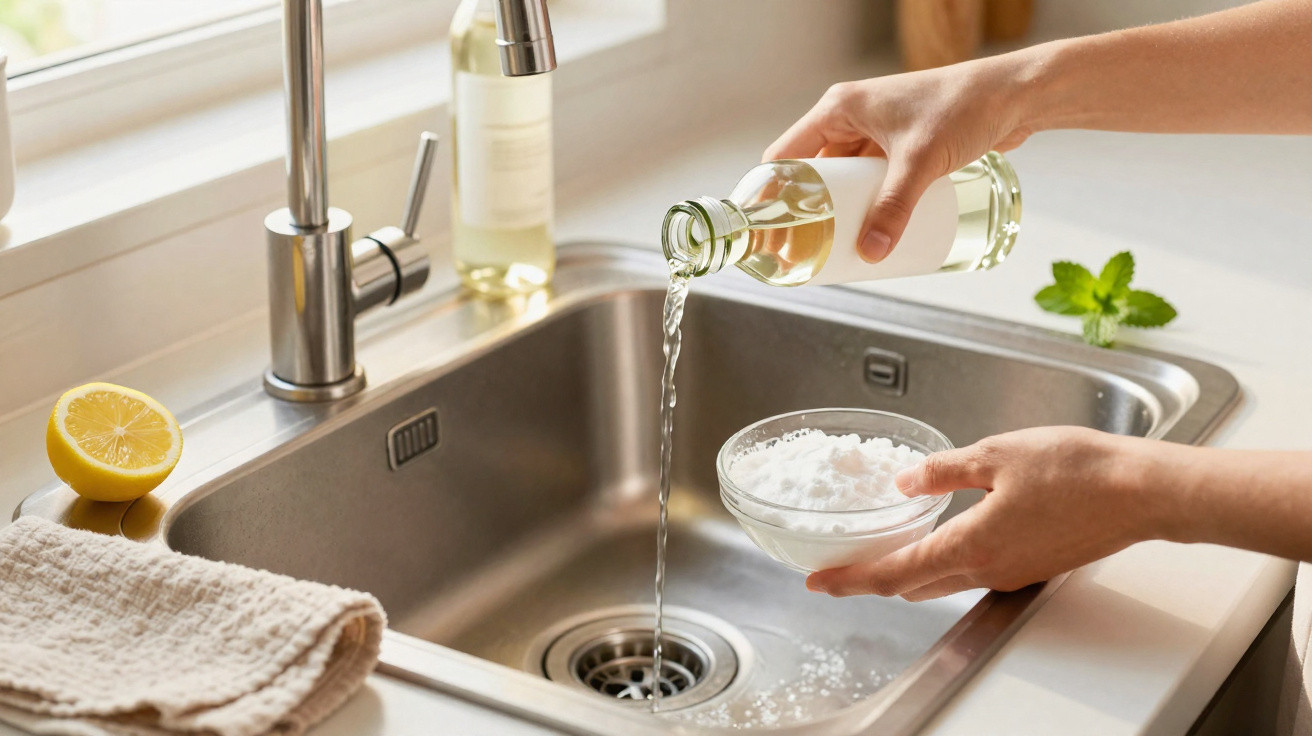
The process is straightforward. Between 15 and 31 October 2025, begin a 5- to 7-day treatment using unpasteurised apple cider vinegar: 5 ml per litre of water. Stir it thoroughly, replace the water each morning and keep the drinker in the shade. The effective dose is 5 ml per litre, no more. The flavour stays mild while the benefit remains.
This should be done ahead of time. Choose 7 days if the flock has already shown signs of a slump, or 5 days if they are in good form. Then, throughout winter, repeat it for one day a week. There is no need to turn it into a strict ritual: once it is in the calendar, the treatment becomes an easy reference point. A small step with a genuine benefit.
Here are a few pitfalls to avoid, with no judgement attached. Do not add vinegar to a galvanised drinker, as the acidity may release zinc, which is not a good idea. Never put vinegar in a galvanised drinker. Choose food-grade plastic or stainless steel instead. Do not increase the dose in an attempt to improve results: it puts hens off their water and has the opposite effect.
Do not combine this treatment with medication or an ongoing worming course. Leave three days before and after. Nor should you add essential oils to the drinker at random: they float, stick to surfaces and put strain on the liver. If you enjoy using plants, save a well-filtered thyme infusion for another, separate occasion.
One simple capful can transform the winter for your small chicken coop. During the treatment, aim for a water pH of around 4 to 5, not an extreme concoction. A kitchen pH meter is useful if you have one; otherwise, stick to the stated dose. You will often see hens returning more readily to the drinker by the second day.
One practical tip from the field: start on a Monday. Over the preceding weekend, scrub the drinker, rinse it thoroughly and photograph the clean interior. Comparing it visually a week later is more motivating than any Excel spreadsheet.
“I used to spend every winter chasing cracked shells,” says Hélène, who keeps six red hens near Nancy. “Since I started doing my treatment in late October, I have fewer breakages and calmer hens. It feels as though water becomes a pleasure again.”
A practical checklist to keep:
- Dose: 5 ml of apple cider vinegar/L, for 5 to 7 days, in late October.
- Equipment: a food-grade plastic or stainless-steel drinker, a soft brush and a clean bucket.
- Winter reminder: 1 day per week, at the same dose.
- Cleaning: rinse daily during the treatment, then brush weekly outside treatment periods.
- Avoid: galvanised metal, overdosing and risky mixtures with essential oils.
What changes day to day, and how to make the habit last
The treatment works on two levels. It improves the water and renews the hens’ desire to drink. It also creates a regular moment that brings attention back to the chicken coop: you monitor, listen and check the bedding and droppings without making a fuss. This gentle presence often matters just as much as the recipe itself.
Many keepers notice that shells have a better “ring” when tapped in the following weeks. Is that the only reason? No. Calcium in the diet, sunshine and the hens’ age all matter too. But when water is right, everything else works more effectively. You cannot win a marathon with untied laces.
For birds that are more fragile, this autumn appointment becomes a safety net. The treatment does not cure; it supports. You remain in control: one look at the comb, another at the way they walk and a final check that the drinker is clear. Simplicity does the rest.
October has that sense of transition that encourages sorting, tidying and simplifying. A late-October water treatment meets all three needs. You can pair it with a quick shell check, two handfuls of oyster shell in the feeder and protection from draughts around the drinker. It is not about perfection, only consistent care.
If the thermometer falls below zero, protect the drinker from frost by placing it on a warm brick or bringing it into the chicken coop in the morning. The routine works better when the water remains liquid. And if you miss a day, take a breath and resume the next day. Winter does not run to the second.
The ritual has a social side too. A child pouring in the capful, a neighbour stopping by and saying it “smells of apples”, the quiet pride of collecting clean eggs on a Sunday. The chicken coop gives the home a rhythm. Without fanfare, this regular task weaves a calm winter.
A well-planned water treatment sends a silent message to the flock: “Everything is ready for winter.” Keep to it without becoming rigid, observe and adjust. You may even find yourself looking forward to the faint morning scent of cider. Then, when you crack an egg whose shell resists beneath your thumb, you understand. The habit takes root, the season settles and the hens follow. Share your experience: good ideas travel quickly between gardens.
| Key point | Detail | Benefit for the reader |
|---|---|---|
| Treatment before November 2025 | 5 ml of apple cider vinegar/L for 5 to 7 days in late October | Prepares for winter, makes water more appealing, creates a simple routine |
| Suitable equipment | Food-grade plastic or stainless-steel drinker, not galvanised | Avoids taste and zinc issues, keeps the flock safe |
| Weekly reminder | 1 day per week throughout winter at the same dose | Low-key maintenance, stable drinking water, fewer broken eggs |










Comments
No comments yet. Be the first to comment!
Leave a Comment