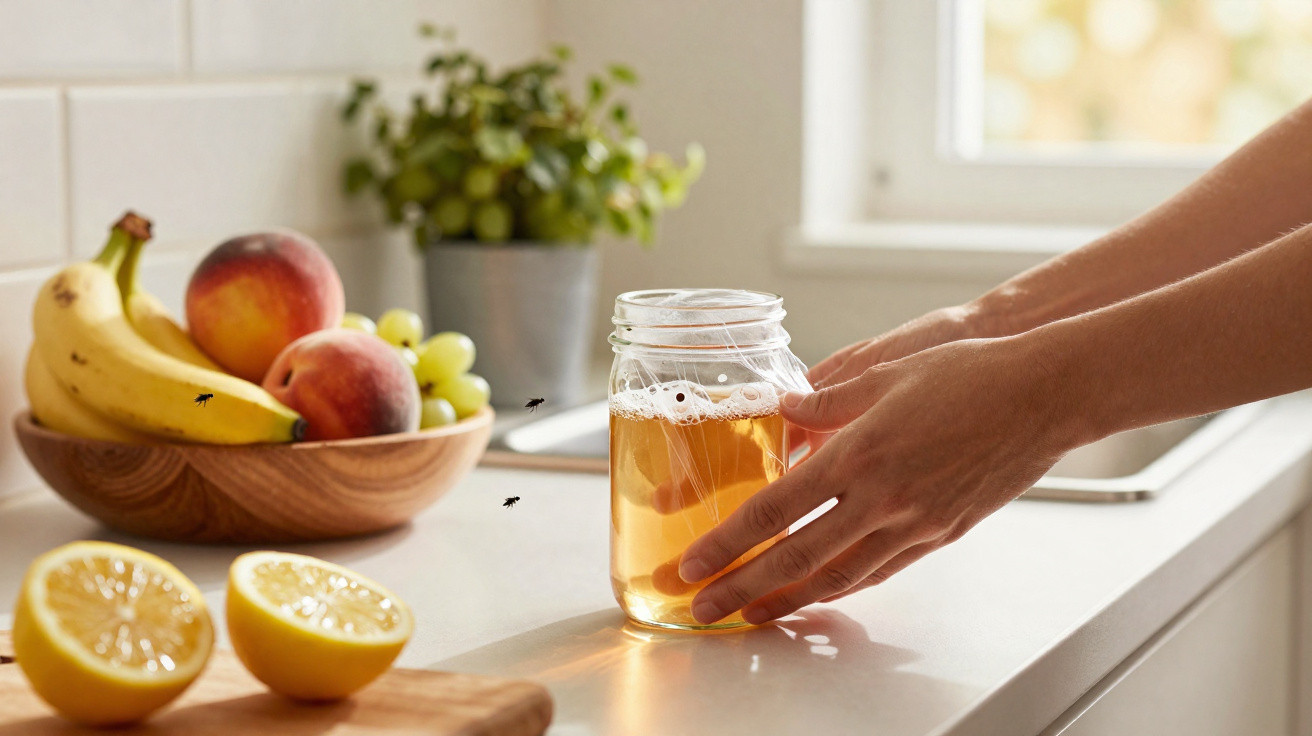
A bowl of peaches can suddenly become a launchpad, while every glass of wine turns into a landing strip. Fruit flies do not knock before entering: they slip in with the weekly shop, ride in on your basil and locate the bin before you do. Blink once and the kitchen is buzzing.
The first one showed up at 7.42am while I was cutting a pear over the sink. It hovered with an industrious air, carrying the sort of confidence that says, “I live here now.” By lunch, I was defending my sandwich, swishing a tea towel like a referee and rinsing the chopping board twice for good measure. When I picked up the compost caddy, another five rose with it, drifting like lazy confetti. We have all had the moment when an ordinary snack makes the kitchen feel like an open-air market. I grabbed the spray, missed, and watched it swagger back towards the fruit bowl. That was when everything changed.
The tiny invaders, explained
Fruit flies are not a disaster; they are simply biology doing what it does. They seek out the sharp scent of fermentation: the sweet-and-sour smell coming from ripe fruit, leftover wine, sticky jars and damp sponges. During her lifetime, one female can lay hundreds of eggs, hiding them in tiny cracks in fruit skin or in the thin layer of liquid around drains. They develop quickly, so what appears to be a sudden random swarm is normally an organised bloom that has been building for days.
This is the part many people miss: fruit flies do not need fruit itself to settle in. A splash of prosecco beneath the toaster, jam left on a jar rim or the watery residue in a plughole is enough of a feast. In a London flat-share I visited last summer, the infestation began with a lime forgotten behind the microwave. By the time we found it, it had sunk into itself like a punctured balloon. The flies had already established themselves well before anybody spotted it.
Apple cider vinegar attracts them so effectively for a reason. To a fruit fly, acetic acid has the scent of home. Heat intensifies that smell, while surface tension can keep them afloat unless a tiny amount of washing-up liquid breaks the liquid’s hold. The formula is straightforward: an odour that attracts, a shape that funnels and liquid that traps. Get that combination right and there is no need to chase them. They come willingly.
The two-minute vinegar trap that actually works for fruit flies
Take a small jar or glass, add two fingers of apple cider vinegar and microwave it for 10–15 seconds to strengthen the aroma. Mix in one drop of washing-up liquid with a gentle swirl; this disrupts the surface so the flies cannot skate across it. Stretch cling film tightly over the top, then make 6–8 small holes using a fork or toothpick. Put it beside the fruit bowl, compost caddy or sink, then leave it alone. You may hear the faint tap of wings before you notice anything. This is the two-minute vinegar trap.
Where you place it matters enormously. Position the jar a few inches from their usual take-off point rather than in the middle of the room. Replace the mixture each day if its scent weakens, and avoid adding too much soap, which can mask the vinegar smell. Realistically, nobody does that without fail every day. Instead, prepare two or three small jars, rotate them and throw away the old ones once they become cloudy. If apple cider vinegar is unavailable, balsamic vinegar or red wine vinegar will do in a pinch. They will still prove tempting.
No cling film? Make a paper funnel and place it in the mouth of the jar with its narrow end pointing inside. The flies can easily travel down it but will struggle to locate the way out. Cover food nearby while the trap is in use, as you do not want to send conflicting signals. Yes, it can work even if you feel you have tried everything else. The first few are likely to be caught within minutes, followed by the others over the next hour. Stop them in minutes is not a slogan here; it is Tuesday-night sanity.
“I set the jar by the banana bowl and walked away to make tea. By the time the kettle clicked, three were in. By the end of a sitcom, it looked like a tiny airport lost and found.”
- 1 small jar or glass
- 2–3 tbsp warmed apple cider vinegar
- 1 drop of washing-up liquid
- Cling film and fork holes, or a paper funnel
- Position it close to fruit, the sink or a compost hotspot
Keep them away without turning your kitchen into a lab
Catching them takes little time; prevention is less noticeable. Rinse wine glasses immediately after dinner rather than “later”, wipe sticky jar rims and empty the compost caddy each evening when the weather is warm. For a week, pour boiling water down the sink daily to clear the grime where larvae can hide, and scrub inside the plughole collar with an old toothbrush. If the bin liner leaks, line the bottom with a sheet of newspaper to absorb drips. Small routines can make a major difference.
Fruit handling matters as well. Let bananas ripen on the worktop, then transfer them to the fridge once they are speckled; their skins will darken, but the fruit inside will remain firm. Wash grapes and berries, but dry them thoroughly afterwards, as water is an easy-to-miss magnet. If you keep herbs in the kitchen, inspect the soil: waterlogged pots can harbour gnats that look remarkably like fruit flies. When the compost is soggy, allow it to dry out or add a thin gravel layer on top. One rule prevents plenty of trouble: wash and cover fruit.
There are several familiar mistakes, and they are all understandable. Some people position traps too far from the problem, fill them with soap or set them beneath an extractor fan before wondering why nothing is taking the bait. Others clean as though preparing for a rental viewing, yet neglect the drain: the real clubhouse. Concentrate on odour, warmth and residue. Once those are under control, the rest of the kitchen can stay peaceful.
A kitchen that can breathe again
As the swarm dwindles, the kitchen immediately feels easier to live in. You can cut a peach and hear only the knife against the chopping board. Keep one trap in place for a week as a sentinel, shifting it to newly active areas, and allow your routines to do the harder work. A warm evening does not have to mean swatting at tiny specks whenever you pour a glass. For more serious outbreaks, try a yeast-and-sugar mixture in a second jar, or remove the bottom from a plastic bottle to create a close-fitting funnel if you have run out of paper. These small, almost effortless steps create a kitchen that smells of dinner rather than fermentation. The flies can buzz off to somebody else’s fruit bowl.
| Key point | Detail | Benefit for the reader |
|---|---|---|
| Winning bait | Warmed apple cider vinegar + 1 drop of washing-up liquid | Visible results within minutes, without harsh products |
| Trap shape | Pierced cling film or a paper funnel for a single entry route | Fewer escapes, more catches and simple set-up |
| Targeted hygiene | Rinse glasses, clean sticky rims and pour boiling water into the trap | Prevents a fresh outbreak and keeps the kitchen fresher for longer |








Comments
No comments yet. Be the first to comment!
Leave a Comment