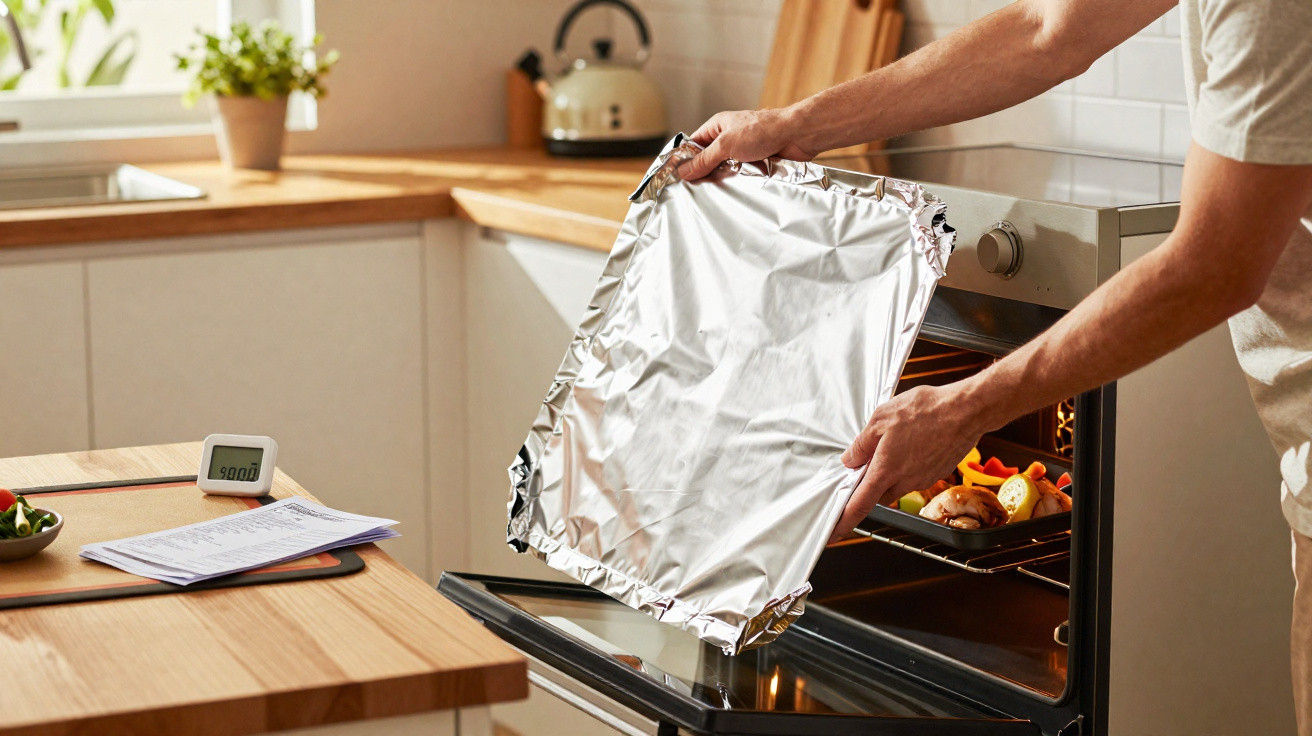
When the ticket rail starts filling in professional kitchens, a modest ritual often takes place: someone takes a sheet of foil, folds it swiftly and positions it like a mirror over a pan. It is discreet, unflashy and almost impossible for diners to notice. Still, it encourages the oven to work more efficiently rather than simply working harder - reducing cooking time, cutting energy use and preventing dinner from developing dry edges.
With two folds and a crease, shiny side facing inwards, she set up a small foil “roof” above a roast chicken. Heat that had previously been escaping into unused space now seemed directed towards the bird. Without saying anything, she turned the temperature down slightly before returning to plating, as though the technique had always been part of the routine.
Twenty minutes later, steam rose as she removed the chicken. Its skin was blistered, the juices were sealed in and the thermometer reading was spot on. More importantly, the oven fan ran less often, the kitchen felt more settled and the line seemed able to breathe again. It feels like cheating.
She referred to it as “the reflector.” To me, it is a small but powerful move.
The foil reflector that makes your oven a smarter heater
Oven heat travels in three different ways: hot air circulates, metal transfers heat through conduction, and infrared energy radiates from the walls and heating elements. The final method matters more than many people realise. Uncovered food and dark baking trays give off heat almost as readily as they take it in. A basic folded piece of foil, with its shiny side facing the food, sends some of that radiant energy back towards where it is needed.
Restaurants use this approach when time is tight. A foil “L” behind a roasting tin, or a tent positioned just above a casserole, can encourage browning at a lower temperature while helping the middle cook more evenly. There are fewer checks through the oven door, less heat lost and fewer occasions to swap pans around. The benefit may be slight from one minute to the next, but over a full service it can make a difference to both energy bills and breathing space.
The science supports this kitchen wisdom. Aluminium reflects much of the infrared energy that reaches it, much like a mirror. Reflecting that radiation back towards the food limits the energy lost into empty oven space and reduces the gap between a browned surface and a properly cooked centre. As a result, you can often lower the thermostat by 10–20°C or remove the tray several minutes sooner. In domestic ovens drawing 2–3 kW, the difference may be subtle, but it is genuine.
Using a foil reflector safely at home
Take a piece of heavy-duty foil and fold it into a rigid “L” or a shallow “roof.” Use three layers, making it approximately the size of a paperback book. Stand it on the rack above your dish or directly behind the pan, ensuring the shiny surface faces the food. It should be freestanding rather than taped in place, and it must not touch the oven walls or heating elements. You have now created a small reflector that directs radiant heat towards the food.
There are two tips that line cooks particularly value. First, use a tent during the first half of the cooking time when you want faster cooking and more moisture, then take it away for the final browning stage. Second, position the reflector to counteract hot spots. If the right-hand side of your oven cooks more fiercely, angle the foil to balance the heat. Everyone has encountered a lasagne with one half like the Sahara and the other like November.
For a toaster oven or a compact electric oven, leave at least a finger’s width of air between the foil and any coil or side wall. Keep foil away from heating elements. Do not cover the oven floor or drape foil across an entire shelf; doing so restricts airflow and may scorch components. This is meant to be a reflector, not wallpaper.
“Heat loves mirrors. Aim it and you cook smarter,” Maya told me, between basting and calling for hands.
- Put the shiny side inwards to maximise reflection.
- Set the reflector above or behind the pan, never on the oven floor.
- Once the reflector is in position, reduce the temperature by 10–20°C and monitor doneness.
- Reuse the foil by wiping it clean, flattening it and folding it again. It can last for weeks.
- If you notice scorching smells or arcing, remove the foil and reposition it with greater clearance.
What happens when the foil reflector becomes routine
After using a foil reflector for a week, several understated benefits become apparent. You open the oven door less frequently because the top browns while the centre continues catching up. That alone retains a surprising amount of heat. You no longer need to turn up the thermostat just to achieve colour, and the fan does not cycle as aggressively. There is also a quiet sense of assurance: more even casseroles, quicker roasts and fewer dried-out corners. Never line the oven floor with foil. Treat foil like a torch, not a blanket. Restaurants appreciate that level of control, while home cooks appreciate the extra breathing room on a busy evening. Let’s be honest: nobody does that every day.
Here is the technique in fuller, practical terms - the lived-in version rather than laboratory language. Begin with the pan you would normally use. For a roast or baked pasta dish, place a loose foil cap over it for the first half of cooking. This holds in enough steam to help the interior cook more quickly while the reflector above supplies extra radiant heat. Once you remove the tent, the reflector continues to return heat to the dish and crisp the top without requiring a higher setting. Lower the temperature by 20°C once the reflector is in place. Then judge the food by its appearance rather than the clock: bubbling edges, an agreeable sizzle and a golden shade that signals it is ready.
What commonly goes wrong? Some people make the reflector too large, obstructing airflow and effectively turning the upper shelf into an oven lid. Keep it small and open. Others press foil against the oven walls, creating hot spots and unnecessary trouble. Leave a gap. With a gas oven, keep the vents clear and ensure burner flames have an unobstructed route. In toaster ovens, fold the edges down to prevent pointed “antennas.” It is a gentle kitchen hack, not a dare.
There is also a persistent belief that the “shiny side vs. dull side” changes everything. It does not, although the shiny surface reflects radiant heat slightly more effectively. Use that advantage where it matters. If you are uncertain, try a small comparison: bake one tray with a reflector and one without, both at the same temperature. You will notice a difference in colour and timing. If waste concerns you, keep using the same piece of foil for weeks: wipe, fold and repeat.
Why the oven wattage matters
Electric ovens do more than heat air. They are radiant chambers: part toaster and part sauna. When you redirect heat that would otherwise pass beyond the food, the elements run less frequently and you retain warmth that you have already paid to generate. The savings will not fund a holiday, but they can accumulate: a few minutes removed from each bake, a lower setting on many evenings and less heat lost whenever the door opens. Repeat that through a winter of roasting and the figures begin to look deliberate. That is why cooks keep this trick ready to use. It is quiet craftsmanship, easier evenings and fewer disappointing edges, with more confidence whenever food comes out of the oven.
| Key point | Detail | Benefit for the reader |
|---|---|---|
| Foil as reflector | Fold a small “L” or roof, with the shiny side facing the food | Faster browning at a lower temperature and lower energy use |
| Placement | Position it above or behind the pan, never on the oven floor | More even cooking without damaging the appliance |
| Safety and reuse | Leave clearance from heating elements; wipe and reuse the foil | Peace of mind and less waste |










Comments
No comments yet. Be the first to comment!
Leave a Comment