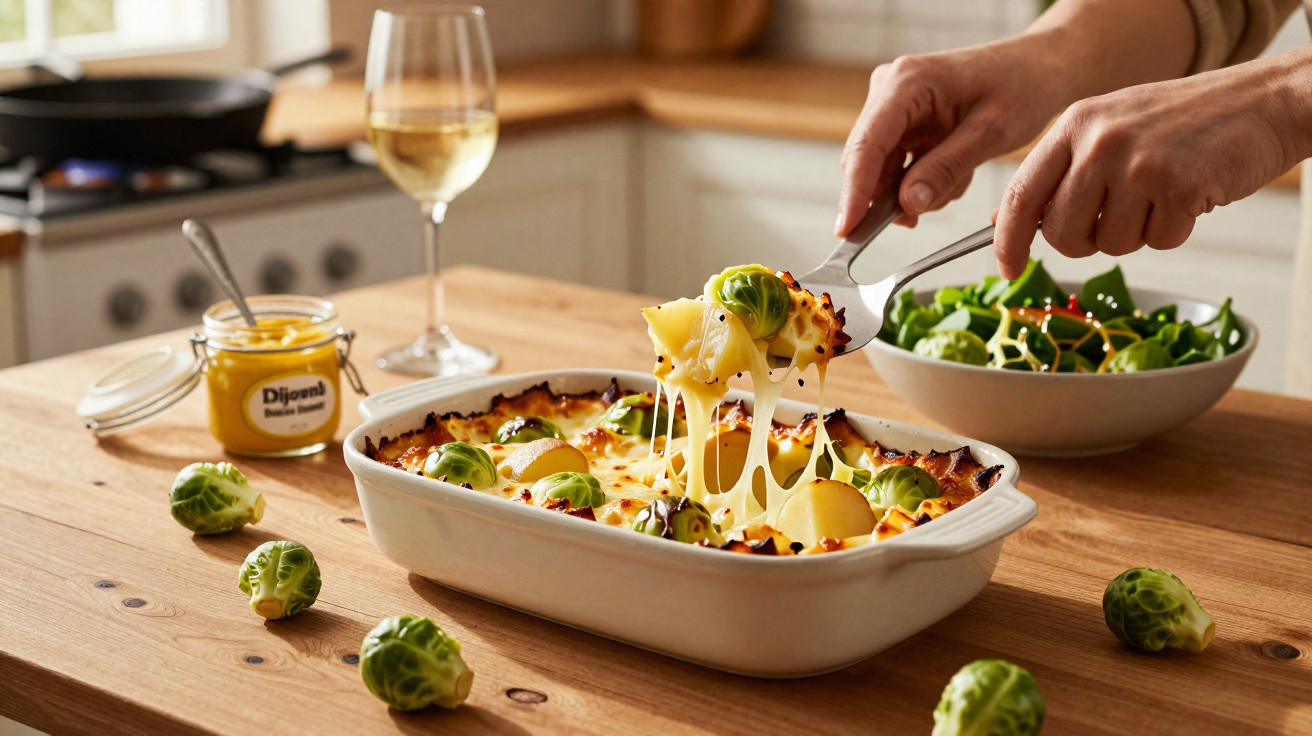
Some dishes make a quiet entrance before unexpectedly becoming a regular tradition. This creamy potato and Brussels sprout gratin is one of them: it may look unassuming in the baking dish, yet it delivers maximum comfort when it emerges bubbling from the oven and fills the kitchen with the scent of cheese and a toasted crust.
Why this potato and Brussels sprout gratin could become a winter favourite
For many people, Brussels sprouts immediately bring bitterness and childhood food trauma to mind. This version has the opposite effect: the sprouts are briefly blanched, then enveloped in a generous creamy sauce of cream, mustard and cheese. That softens their assertiveness while bringing out their nutty character.
“The combination of tender potato slices, Brussels sprouts with a slight bite and a savoury cheese topping makes this gratin an ideal Sunday dish for cold days.”
Success comes down to using good ingredients and preparing them in the right order. Anyone willing to set aside a little time will be rewarded with a dish that comfortably leaves an entire family full and content.
Essential ingredients for potato and Brussels sprout gratin
For an oven dish serving around four people, you will usually need:
- 800 g waxy potatoes
- 500 g fresh Brussels sprouts
- 300 ml cream (at least 30% fat)
- 2 tbsp wholegrain mustard
- 1 tbsp hot mustard
- 150 g flavoursome hard cheese (such as Comté or Gruyère), coarsely grated
- 30 g butter
- 1 garlic clove
- Salt, black pepper and a little freshly grated nutmeg
If you prefer, replace some of the cream with milk. The bake will be a little lighter, although it will lose some of its rich creaminess.
How to make the gratin step by step
1. Prepare the Brussels sprouts and make them milder
Start by trimming the Brussels sprouts: remove any outer leaves and cut back the stalks slightly. Next comes the key trick for reducing bitterness: blanch them briefly.
- Bring a large pan of salted water to the boil.
- Add the Brussels sprouts and boil vigorously for around 5 minutes.
- Drain them, then immediately plunge them into iced water to preserve their vibrant green colour.
- Halve the sprouts lengthways.
Blanching makes the Brussels sprouts more tender, tones down their sharpness and helps them cook more evenly alongside the potatoes in the oven.
2. Slice the potatoes thinly
Peel and wash the potatoes, then cut them into very thin slices, around 3 mm thick. A mandoline makes this much easier. The finer the slices, the creamier the gratin will be, as they almost melt into the sauce during baking.
3. Mix the creamy mustard and cream sauce
Combine the cream, wholegrain mustard and hot mustard thoroughly in a bowl. Season with salt, plenty of pepper and a little nutmeg. This is what gives the gratin not only its soft texture, but also its aromatic, gently spicy flavour.
4. Prepare the dish and layer the ingredients
The layering now determines the final result:
- Rub the oven dish with the cut side of the halved garlic clove.
- Generously grease the dish with butter.
- Arrange a tightly packed first layer of potato slices.
- Spread a layer of halved Brussels sprouts over the potatoes.
- Pour over some of the mustard cream.
- Continue layering until all the ingredients have been used.
Finish by pouring over the remaining cream and scattering the cheese generously across the whole bake. Make sure some liquid can run into all the gaps, so that nothing dries out as it cooks.
5. Oven temperature and cooking time
Place the dish in a preheated oven at 200°C, conventional heat. Bake for about 25 minutes, until the potatoes are tender and the top is crisp and golden brown.
“It is ready at the perfect moment when the edges are gently bubbling, the cheese has brown tips and a knife slides effortlessly through the layers of potato.”
For an especially robust crust, switch on the grill for the final 2–3 minutes. Stay nearby throughout, as the topping can catch quickly.
What pairs especially well with the gratin
This dish easily holds centre stage on its own, but it also works brilliantly with complementary accompaniments. In winter particularly, robust sides and drinks suit it very well.
Hearty additions from the hob or grill
Well-seasoned, lightly smoked meats are ideal. For a classic Sunday meal, consider:
- Smoked sausage such as Morteau or Montbéliard-style sausage
- Grilled pork chops or smoked pork loin
- Pork roast cooked slowly in the oven
The meat's smokiness and the mustard's heat in the gratin work particularly well together. For a more rustic presentation, put the dish straight on the table alongside a large board of sliced meat.
Lighter options with salad and wine
If you would rather add freshness to the plate, choose a crisp salad. Good choices include:
- Frisée lettuce with a punchy dressing
- Lamb's lettuce with walnuts
- A simple green leaf salad with pieces of apple
A dressing made with cider vinegar or a mild fruit vinegar offers a pleasing contrast to the rich cream sauce. Dry white wines that are not too austere work particularly well, such as Pinot Blanc or Chardonnay from cooler regions.
Tips, variations and useful kitchen tricks
How Brussels sprouts can taste truly good
Brussels sprouts divide opinion, often because they have been prepared badly. Cook them for too long and they become soft, pungent-smelling little spheres - precisely the image many people have in mind. Briefly blanched and baked under cheese, however, they reveal an entirely different side: lightly nutty, with a gentle sweetness.
For a more intense Brussels sprout flavour, brown some of the halved sprouts in a frying pan first, until their edges take on a little colour. Only then add them to the dish for layering. This intensifies the roasted flavour and makes the gratin even more satisfying.
Variations for different tastes
The basic recipe is easy to adapt. Here are a few options:
- Scatter a handful of crisp fried bacon between the layers
- Add a few rings of shallot to the dish
- Replace some of the cheese with Alpine cheese or Emmental
- Stir a little lemon zest into the cream for extra freshness
To keep it vegetarian, experiment with crisp toppings, such as a mixture of breadcrumbs, grated cheese and a little butter scattered over the gratin before baking.
Why the effort is worthwhile
Most of the hands-on work is in peeling and slicing the vegetables. After that, the oven does almost everything by itself. In return, you bring a dish to the table that does more than simply fill everyone up: it slows the day down a little, inviting second helpings, long conversations and another glass of wine.
It is practical, too, because the gratin can be made ahead without any trouble. Layer the dish in the morning, store it in the fridge, then bake it fresh in the evening. Leftovers can taste even better the next day when reheated in a frying pan, as the flavours have had more time to meld.
This recipe shows just how worthwhile it can be to choose vegetables that are supposedly “unpopular”. With a little technique, good seasoning and a touch of patience, Brussels sprouts suddenly become the star of the family table - and a grey winter Sunday turns into a wonderfully cosy evening of oven cooking.















Comments
No comments yet. Be the first to comment!
Leave a Comment