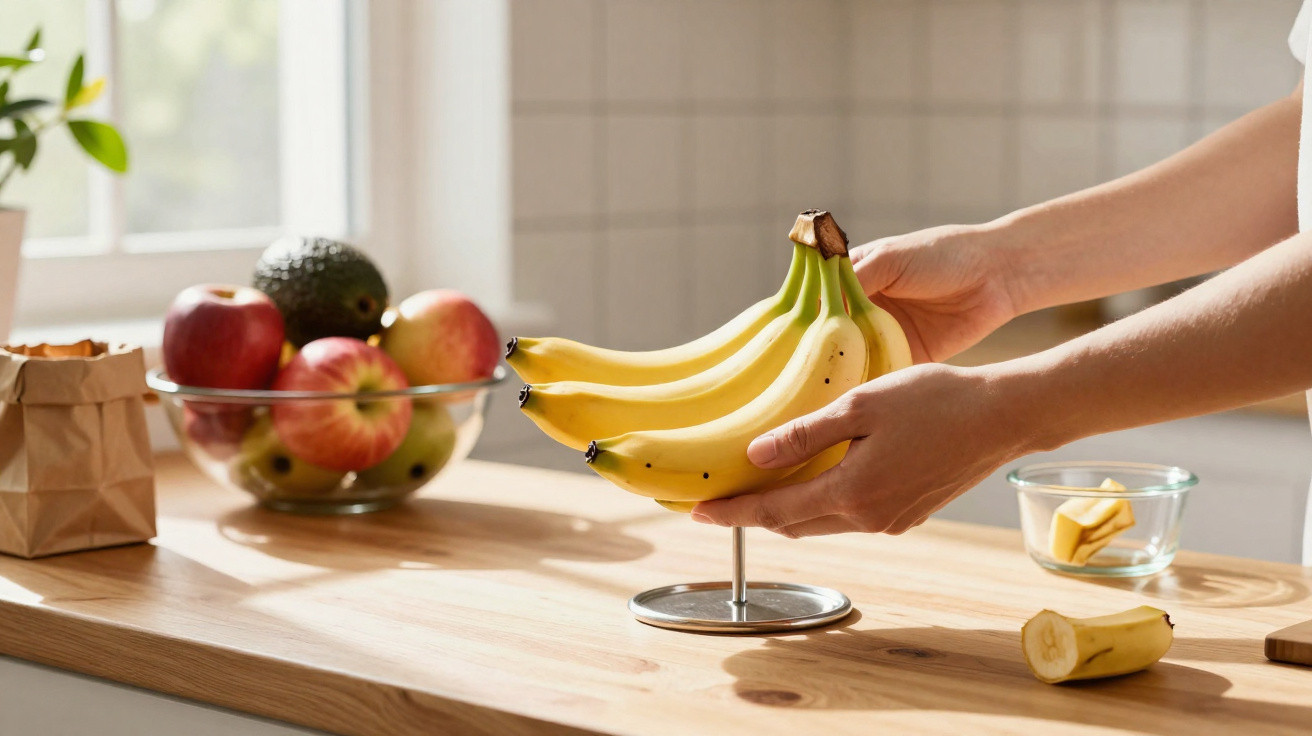
You wrap the stems in foil, tuck them into the fridge, and they still sulk. Online hacks continue to multiply, yet the fruit bowl remains a let-down. Here is the understated, testable science that genuinely gives you more time - and helps bananas stay yellow for longer.
The kettle switches off and steam fills the kitchen. A bunch of bananas droops over a wooden bowl, pressed against apples and kiwis like commuters at a bus stop on a rainy Monday. By Wednesday, pinprick marks emerge, followed by a rapid spread of brown that resembles instant ageing. My neighbour insists foil around the stems is the answer; someone else curses the fridge. Both are convinced. The bananas are indifferent. Their peel follows its own rules. When I last paid attention to a bunch ripening, the cause was not where I thought it would be. The peel is not the full explanation.
What really makes bananas brown on your worktop
Bananas respire. That is the central issue. On a warm, sunny windowsill, they breathe more quickly and drive their own ripening forward like a row of falling dominoes. We all know the pattern: a cheerful yellow bunch on Saturday becomes a weary, speckled cluster by Tuesday. Put the bowl beside the toaster or in a sunny corner near the kettle and you have made a miniature greenhouse. Fruit does not follow hacks; it responds to warmth and air.
Supermarkets have good reason to store bananas in cool back rooms before bringing them out later. Moving from 18°C to 24°C can nearly halve the time before spotting, as respiration roughly doubles with every 10°C increase. Ripening rooms use a faint dose of ethylene gas to begin the process, then keep the fruit at roughly 16–20°C so that it ripens evenly. Take that same bunch home to a humid flat, raise its temperature by several degrees, and its timetable accelerates.
Within the peel, chlorophyll disappears as brown pigments accumulate, while enzymes convert starches into sugars. In truth, ripening is a conversation between a hormone and time. Ethylene stimulates more ethylene - an autocatalytic cycle - meaning one ripe banana can encourage the entire bunch to move on. Oxygen enters and CO2 leaves. Bruising makes matters worse by breaking cells, allowing enzymes to reach their substrates and turn damaged areas black. Let the temperature fall too far and chilling injury follows: the peel darkens, the flesh becomes glassy, and the harm reveals itself once the fruit returns to room temperature. Foil cannot alter this chemistry. Nor can the fridge when bananas are still green.
Methods that actually keep bananas yellow for longer
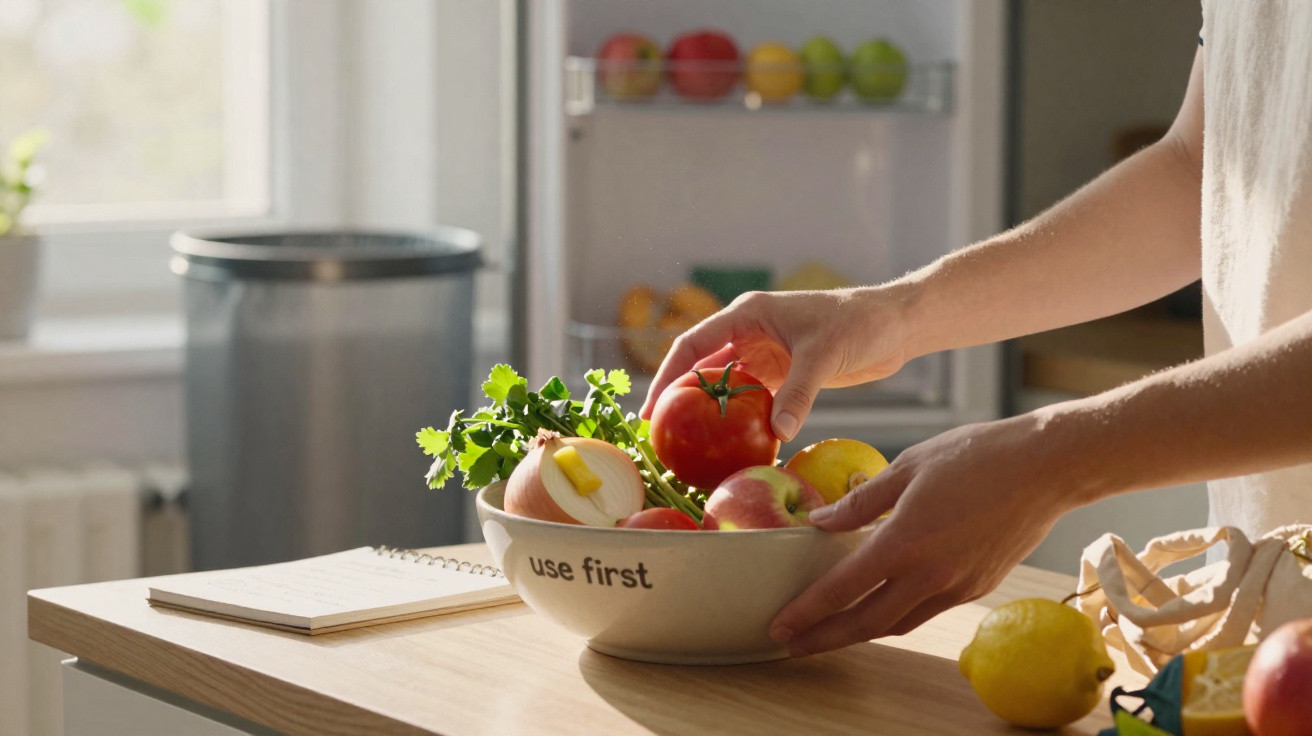
Focus on the microclimate. Target 12–14°C in a shaded spot, well away from direct sunlight, the oven and the kettle. Suspend bananas from a hook to protect their peel and improve air circulation. Maintain high humidity while keeping the air fresh: a micro-perforated produce bag or purpose-made banana bag can maintain 90–95% relative humidity while allowing gases to escape. Seal only the crown firmly with beeswax wrap or cling film rather than foil; the aim is a proper seal, not a shiny cap. Keep them well apart from apples, pears, tomatoes and avocados.
Avoid refrigerating green or barely yellow bananas, as this is when cold damage marks the peel and affects the flavour. Refrigerate them only once they are fully ripe, and only if you are happy to lose the yellow peel: the skin will brown, but the flesh will remain sweet for several days. Do not use airtight containers that hold in ethylene. Treat bananas like eggs - minor knocks can develop into brown patches. Realistically, nobody manages that perfectly every day. Even so, modest changes make a difference when you miss one or two.
For those who want to go further, place an ethylene-absorber sachet in the fruit drawer or use a small reusable zeolite pod; certain domestic fridges already contain them. Commercial storage facilities use controlled atmosphere storage and a substance called 1-MCP, which occupies ethylene receptors and delays ripening by days. You cannot reproduce that exactly at home, but you can follow the same principle.
“Yellow is about stress management,” says a postharvest scientist I called. “Keep bananas cool-not-cold, airy, unbruised, and away from ethylene bullies.”
- Sweet spot: 12–14°C, dark corner, good airflow
- High humidity, not a sealed box
- Wrap the crown tightly; skip foil
- Avoid apples and avocados nearby
- Hang the bunch; touch it less
The future of a yellow banana
A low-key race is under way to control ripening without taking away flavour. Grocers adjust oxygen and CO2 levels to slow respiration, while start-ups are trialling plant-based coatings that work like breathable raincoats for fruit. Laboratory methods are highly precise; kitchen methods are straightforward. Position, temperature, airflow and handling all matter. If a camera-ready peel is your priority, avoid early refrigeration. If you simply want extra edible days, chill ripe bananas and disregard the freckles. Science gives you the controls, while you decide the appearance and flavour you prefer. That is the genuine solution - control rather than a gimmick.
| Key point | Detail | Why it matters to the reader |
|---|---|---|
| Temperature sweet spot | Keep bananas at 12–14°C, away from sun and heat | Slows respiration without causing cold damage |
| Air and humidity | Hang the bunch; use a micro-perforated bag for 90–95% RH | Less bruising, slower peel browning, better texture |
| Ethylene control | Separate from apples/avocados; wrap the crown tightly | Delays the ethylene snowball that speeds ripening |








Comments
No comments yet. Be the first to comment!
Leave a Comment