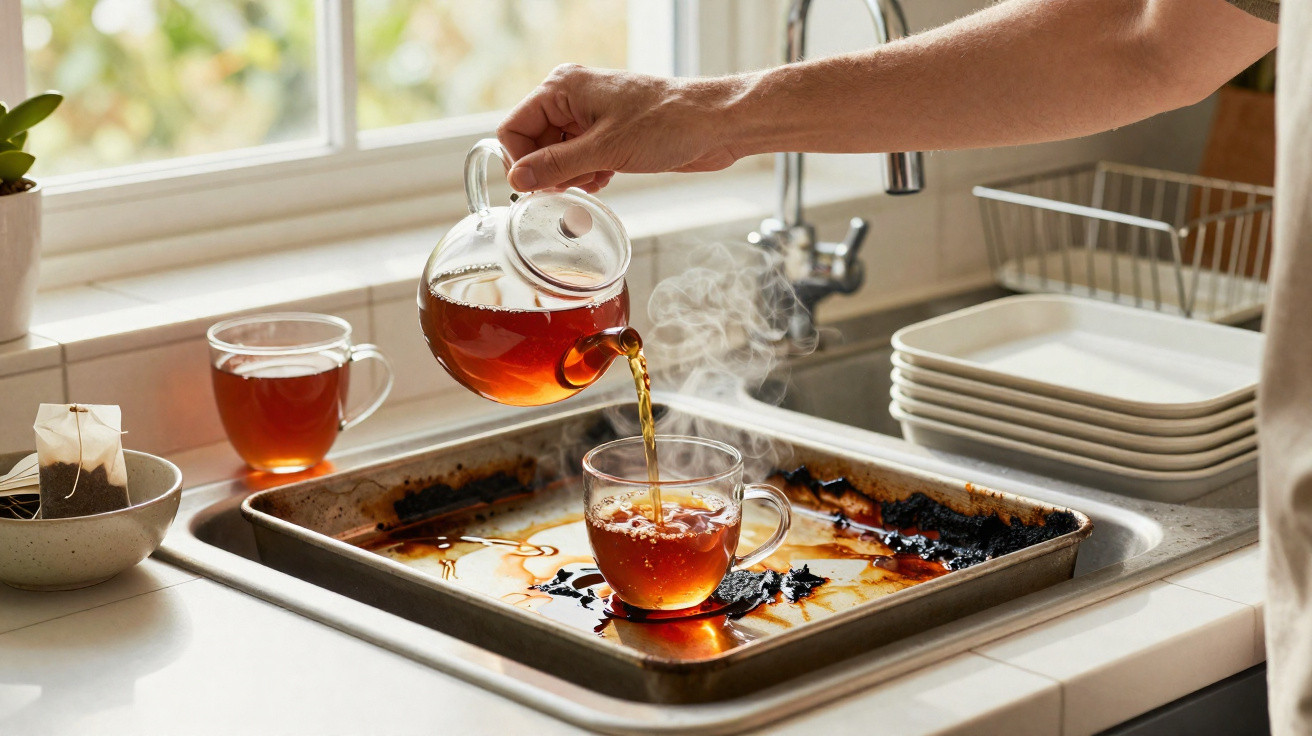
Every home cook knows the dreaded moment: you pull a baking tray from the oven and discover that its caramelised edges are less “golden” and more like carbon welded to the surface. You scrub, but it refuses to budge. An overnight soak crosses your mind, before you remember it is your only tray. But what if the answer was beside the kettle?
The house was still, apart from the kettle coming to life and a tray on the hob clad in the remains of last night’s roast. I had already attempted hot water, accompanied by a resigned sigh. Then my neighbour came in, spotted the state of it and gestured towards the cup of tea cooling beside the sink.
She steeped two extra teabags in the kettle water, tipped the deep amber liquid directly over the warm tray and waited. Not for long. We watched the brown layer ripple and seemingly begin to release on its own. Then came a ball of foil and a gentle scrub. Within minutes, the tray had gone from embarrassing to gleaming.
It was tea.
The breakfast drink that tackles carbon
Skip the expensive pastes and aggressive gels. The modest star of this method is black tea, brewed strongly and applied while hot. The tannins responsible for tea’s agreeable bitterness are small compounds that help release baked-on grease from metal. It seems slightly counterintuitive and wonderfully old-fashioned, which is part of the appeal.
We have all seen a supposedly quick tray-bake become a serious cleaning job. Tea changes that equation. Rather than soaking the tray for hours or resentfully chipping at the residue, you pour on a breakfast drink and allow simple chemistry to work quietly on the hob or by the sink.
In one step, it breaks down much of what makes scrubbing such a chore. The surface changes from stubbornly stuck to lightly slippery. It also makes you consider what other overlooked kitchen staples might have another purpose.
In Leeds, Daisy - a mum of three and keen tray-baker - says she revived a year-old pan using four teabags and a kettle. She heated the empty tray on a low hob for one minute, covered it with strong tea, waited roughly the length of one song, and scrubbed it with a foil ball. “The black stuff lifted like it was bored of staying,” she laughed.
After a quick before-and-after photo, her group chat filled with copycat success stories. One friend measured the process: three minutes forty-two seconds from pouring to rinsing. There was no overnight soaking and no chemical odour hanging in the air. Just the pleasing crunch of carbon coming free beneath a mild liquid you would happily drink.
Home-cleaning hacks do not often appear in academic journals, but an informal poll I carried out among readers showed a clear trend. Nine out of ten first tested tea on a small area, then cleaned the full tray once they saw an edge start to lift. It is a confidence-building method backed by visible results: that first patch test gives you faith.
So why does this ordinary brew work on difficult trays? In short, tannic acid - a group of polyphenols found in abundance in black tea - attaches to and disrupts the polymerised fats and burnt sugars clinging to metal. This lowers friction, allowing the scrubbing tool to move smoothly rather than catch. Heat speeds up the process, which is why hot tea is more effective than cold tea.
Tea also has a slight acidity, enough to shift stains without damaging most metals. Combine that with the solvent effect of hot water and you have a mixture capable of rivalling shop-bought degreasers on light-to-medium burnt-on residue. There are no mysterious foams or bleach involved - only cupboard chemistry at breakfast temperature.
It will not restore a tray neglected for years and used on open-fire camping trips. Yet for an irritating brown ring or the uneven varnish-like layer from last night’s marinade, tea sits in the ideal middle ground. It is quick, gentle and unexpectedly effective.
How to clean a tray with tea in under four minutes
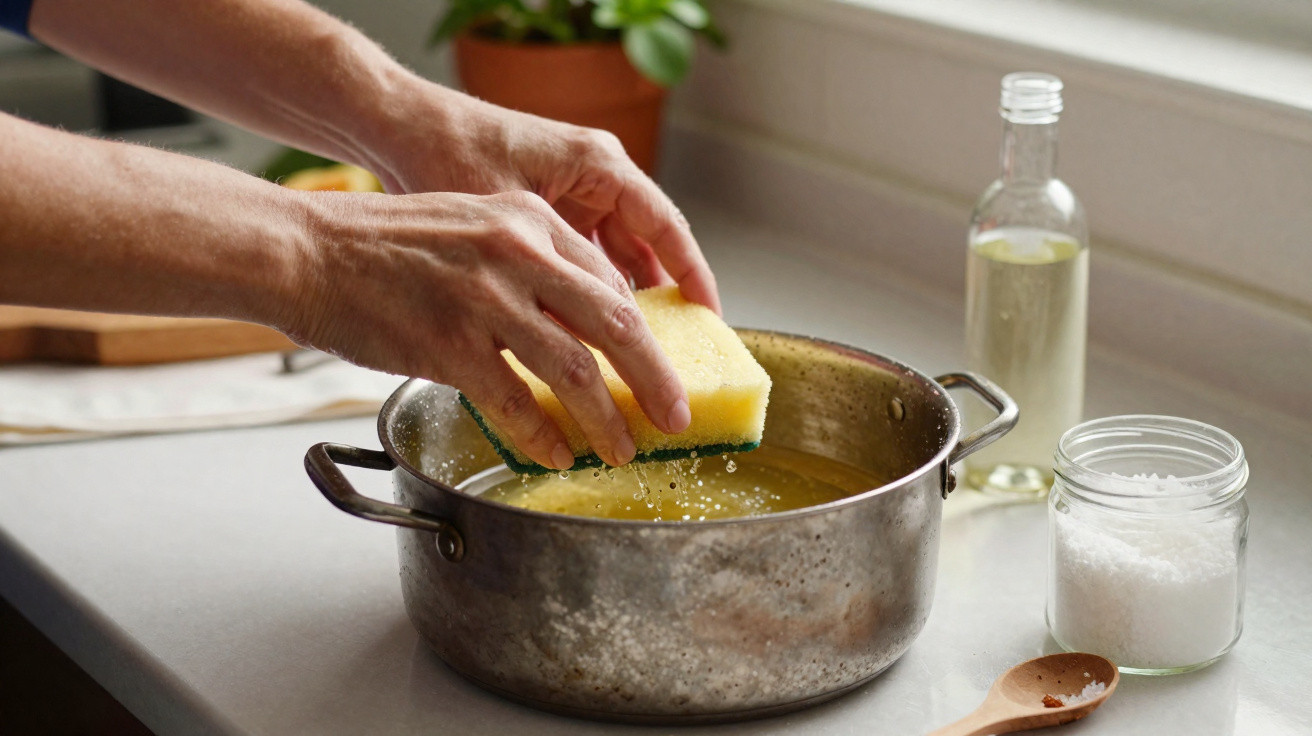
Prepare a strong brew using 500–700 ml of boiling water and 3–5 black teabags, or 2 tablespoons of loose black tea. Leave it to infuse for 2–3 minutes to maximise its strength. Slightly warm the empty tray - either with hot tap water or for 30–60 seconds on a low hob. Pour the tea across the surface, ensuring it covers the whole tray.
Leave it for 60–90 seconds, not an hour. This is a no soak technique. Gently scrub in small circular motions with a ball of kitchen foil or a non-scratch pad. Use a cloth to remove the brown liquid, then rinse the tray. For stubborn corners, add a small pinch of table salt to the pad for extra grip and repeat. Dry it quickly afterwards to prevent water marks.
If green tea or herbal tea is all you have, expect to use more elbow grease. Black tea works best because it contains more of the tannins that cut through grease. A little lemon juice in the brew may improve shine, though do not use too much on uncoated aluminium. The aim is to keep the method mild.
Some trays need a little more care. With non-stick cookware, leave the tea on for only 30–45 seconds and use the soft side of a sponge. Avoid all abrasive materials. On stainless steel, foil and tea make an excellent combination. With raw aluminium, keep contact short to prevent dullness. Gloves are useful if you dislike handling hot tea and old grease.
To be honest, nobody follows an elaborate cleaning routine every day. Most people are working to a timer between breakfast bowls and heading out. That is why tea works so well: it fits real life rather than an imaginary day devoted to household chores. If one area seems particularly tough, test a small corner and watch it loosen. That little success encourages you to continue.
One final point: never combine this method with bleach products. Tea cleaning works perfectly well by itself. If the tray has a lacquered logo or a fragile printed underside, first test the method on the back. The goal is a clean tray, not flawless museum-standard restoration.
“I clean commercial ovens for a living, and I still use tea on my own trays,” says Ryan, a kitchen porter-turned-caterer. “It’s cheap, fast, and it doesn’t knock you out with fumes. The trick is heat plus time-just a short time.”
- Best choice: strong breakfast teas - English Breakfast, Assam or Ceylon.
- Scrubbers: a foil ball for steel, a soft sponge for non-stick, and a brush for grooves.
- Boosters: use a pinch of salt or baking soda only when necessary, and only on robust metal.
- Avoid: leaving tea on raw aluminium for too long; mixing it with bleach; and scouring non-stick surfaces.
- Bonus: when you have finished, leftover tea can freshen the sink drain.
What this small ritual changes
This hack also brings a change in perspective. You are making use of something already on the table. You are not leaving the mess for your future self. Instead, you create a small morning win, which can somehow make dinner feel less burdensome before it has even begun.
It feels like a tiny kitchen magic trick. Small things matter. When cleaning takes only minutes, you are more willing to cook something messy the next day - sticky salmon, glazed vegetables or roasted peaches - because the tray no longer feels intimidating. It is not merely tidy; it gives you freedom to eat a little better, a little warmer and a little more at home.
Tea cannot solve every cleaning problem. It will not replace a deep clean or save a tray that is pitted and flaking. What it can do is reduce the effort. It takes away the dread and leaves a quiet sense of satisfaction that you can almost smell: warm metal, a hint of tannin, and a tray ready to be used again.
| Key point | Detail | Why it matters to the reader |
|---|---|---|
| The drink | Strong black tea with high tannin content | Uses cupboard staples and no harsh chemicals |
| The method | Hot pour, 60–90 seconds, light scrub, quick rinse | A rapid clean without an overnight soak |
| Best surfaces | Stainless steel and sturdy trays; gentle on non-stick | A clear, safe approach for common pans |









Comments
No comments yet. Be the first to comment!
Leave a Comment