Leaves curl, blossoms fall, and fruit remains small and green. Yet your neighbour swears by an unusual tip handed down by his grandfather, then turns up with a paper bag full of ruby-red tomatoes whose scent reaches the porch. The difference is not natural talent; it is method.
I first saw this technique on a muggy June morning, when the air carried the taste of sunscreen and freshly cut grass. An elderly gardener along the street was softly humming as he planted tomatoes in an unhurried trench, pausing only to tuck something silver beneath the roots. “Fish,” he said with a wink, rubbing his hands on his jeans. “Old-school fuel.” He planted the stem deeply, watered it once and left it alone, as though he had put a slow cooker on a low setting.
Come August, his vines resembled chandeliers laden with fruit. Mine did not. He described it as the secret hidden below the soil.
The traditional technique that supercharges tomatoes
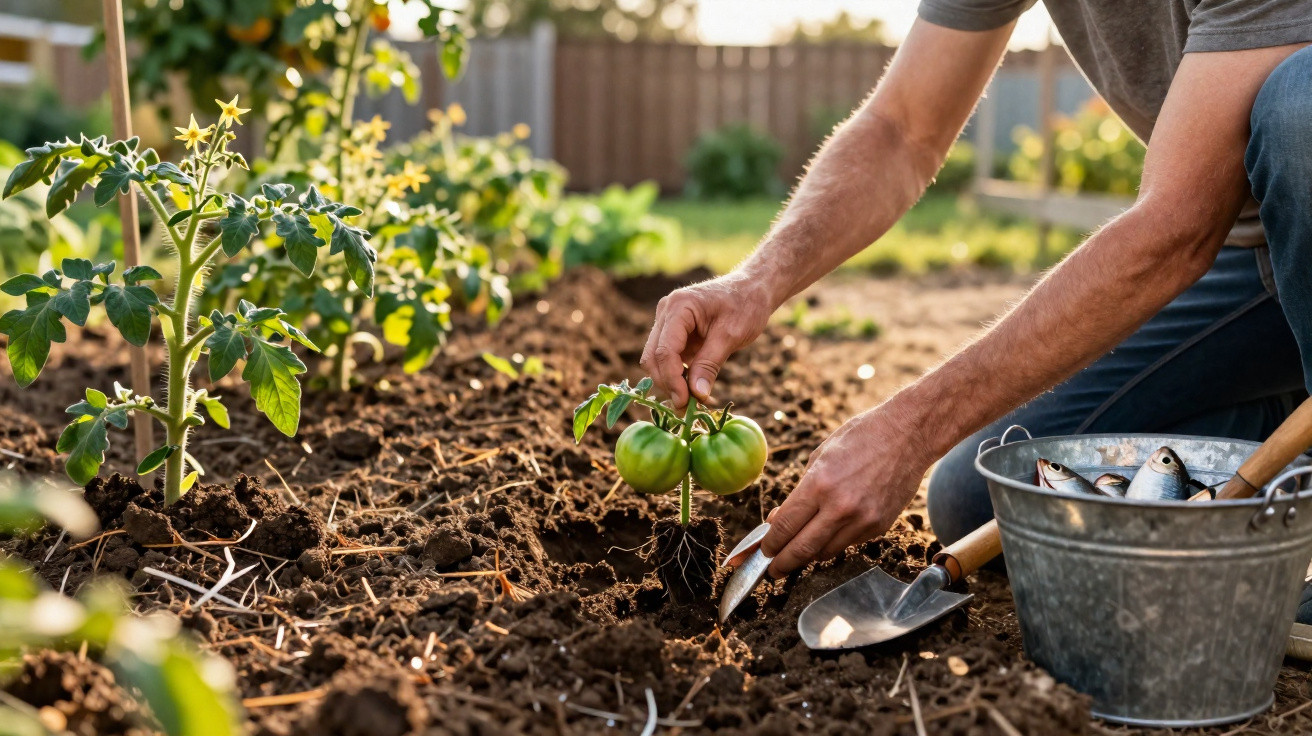
At its centre, the method is simple: place a fish head or fish scraps beneath every tomato plant at planting time, then position the plant on its side in a shallow trench so roots can form along the stem. Fish acts as a slow-release store of nitrogen, phosphorus, calcium and trace elements. Laying the stem sideways creates a larger root network. Combined, these steps work like a quiet engine: they start early, run consistently and help flowers set fruit.
One neighbour grows 12 Roma vines and records each harvest on a notepad attached to his shed. In years when he uses fish, he ends up with almost twice as many jars after his preserving weekend. The change is obvious rather than minor. Trusses carry more fruit, tomatoes reach size earlier, and the pause between the first and second flush is almost gone. We have all compared our own bowl with someone else’s and wondered what we overlooked. This could be that missing element.
The reason it works is pleasingly straightforward. Fish supplies amino acids and phosphorus precisely where roots forage, supporting cell development and flower production during the crucial period when tomatoes determine their future. Trench planting, meanwhile, allows more stem to be buried without the need to excavate a deep hole in resistant soil. Each covered node develops roots. More roots mean greater nutrient uptake, and greater uptake means more fruit. The plant is not working harder; it simply has a better structure for the task.
How to use fish and trench planting today without fuss
Prepare everything on planting day. Make a shallow trench around 15–20 cm deep and long enough for the section of stem you intend to bury. Put a fish head or roughly 240 ml of fish scraps at the far end, cover it with 5–8 cm of soil as a buffer, then lay the tomato plant sideways with its top 10–15 cm above ground. Remove the lower leaves, refill the trench and water slowly until the soil settles. Add a mulch of straw or shredded leaves. It may look peculiar for the first week, but then the results begin to show.
A few practical precautions can prevent trouble. Where raccoons or dogs visit the garden, bury the fish at least 20 cm deep and firm the soil well. For the first week, a square of wire mesh or a paving slab over each planting area can discourage digging. Do not use salted, cooked or seasoned fish. Scraps frozen and thawed on planting day work very well. If wildlife is especially persistent where you live, choose fish-based fertiliser, bone meal or a balanced organic tomato feed instead. Feed the roots and let the foliage breathe.
In truth, nobody does all this every day. You will water deeply once or twice weekly, prune lightly and otherwise leave the plants to grow. It may seem slightly odd, but it delivers.
“My grandfather said, feed the soil once and the tomatoes will feed you all summer. He wasn’t wrong.”
- Plant during a warm week, when soil is at least 16°C, to encourage strong root growth.
- Remove suckers below the first flower truss to direct energy where it is needed.
- Apply mulch immediately to retain moisture and keep roots cool.
- Water at the base in the morning, using long, slow soakings.
- Stake or tie plants early so stems grow in the direction you want.
What this could mean for your summer tomato harvest
Combining fish with trench planting can quietly transform the entire growing season. You may see shorter gaps between leaf nodes, sturdier stems and blossoms that stay in place rather than dropping during hot weather. Tomatoes also ripen more evenly because the plant is not swinging between abundance and shortage. Growth becomes consistent, and consistency is fast when you are growing tomatoes.
The second benefit is resilience. A more extensive root system copes with dry spells with fewer complaints. That can mean fewer split tomatoes, fewer yellow warning signs on foliage and less of the late-summer decline that makes a plant appear to have surrendered. The main effort takes place once, on planting day. Afterwards, you are largely guiding the plants rather than saving them. It can feel like cheating, but it is not. It is simply old knowledge in muddy boots.
There is also satisfaction in using something that might otherwise have gone in the bin. A fish head destined for waste becomes sunlight captured in a jar of sauce. That cycle gives gardeners a quiet sense of pride: one small ritual beneath the soil, followed by a season of clinking bowls on the table. Simple inputs. Big outcomes.
Some summers feel like a sprint for which you never prepared. This one might instead feel like a long walk with a good friend. Prepare once, check in now and then, and harvest regularly. The change can be seen, but it can also be felt. Once plants stop struggling, you stop rushing. You begin to notice hummingbirds on the trellis and how a ripe tomato warms your palm like a small sun. That is part of the harvest as well. Share it, compare notes with a neighbour and adjust your approach next year. Curiosity grows gardens, while results bring us back.
| Key point | Detail | Benefit for the reader |
|---|---|---|
| Deep, sideways planting | Lay the stem in a trench so that it roots along its length | Quicker establishment and stronger plants |
| Fish beneath the root zone | Position a fish head or scraps 15–20 cm below, with soil as a buffer | Slow-release nutrients for more blossoms and fruit |
| Mulch and consistent watering | Use straw mulch and deep, infrequent watering | Even growth, fewer splits and less work throughout the season |












Comments
No comments yet. Be the first to comment!
Leave a Comment