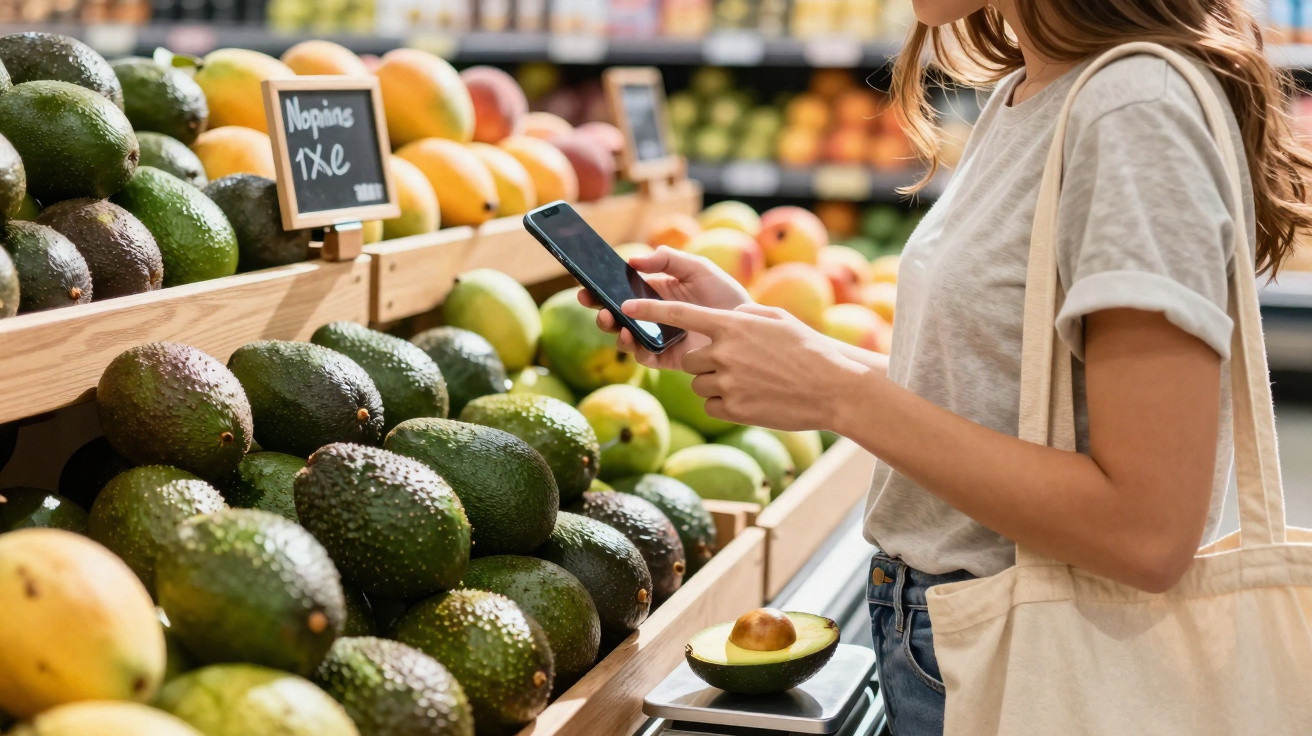
The real test comes later, when this evening’s guacamole is waiting for an unyielding, rock-hard avocado that simply will not ripen.
That small kitchen frustration points to a wider issue involving costs, waste and carbon. A new camera-and-software method is intended to make choosing better fruit simple, from the shop display to the kitchen worktop.
The hidden crisis behind a fashionable fruit
Avocados move quickly through shops, yet can deteriorate even faster. Retailers replenish supplies in batches, while households prod, guess and, all too often, throw fruit away. This creates substantial waste throughout the supply chain. Wider food-waste figures underline the issue: US estimates indicate that roughly one-third of edible food is never consumed in homes and shops. Avocados contribute disproportionately because ripeness is difficult to assess and their usable window is unforgiving.
Every creamy slice also carries a considerable environmental burden. Studies put the climate impact at approximately 2.5 kilograms of CO₂-equivalent for each kilogram of avocados. Their water requirement is also substantial, at close to 1,000 litres per kilogram. In key growing areas, extensive intensive orchards can worsen the effects of monocultures, habitat destruction and demand for limited water supplies.
“Cutting avoidable waste, even by a few percentage points, offers an immediate win for emissions, water, and household budgets.”
Why assessing ripeness is difficult
Colour provides only part of the answer, while skin colour differs between varieties. A light squeeze can help, although it may damage the fruit and is inherently subjective. When the flesh has browned internally, the skin can still appear perfectly normal. This disconnect leads to poor choices and fruit being discarded too late.
How a phone becomes an avocado ripeness tester
Researchers from Oregon State University and Florida State University developed a system that uses ordinary photographs to estimate avocado firmness, a recognised indicator of ripeness. They took photographs of avocado batches kept at room temperature over eight days, producing a dataset of around 1,400 images. A deep-learning model built on the ResNet-18 architecture was then trained to detect subtle skin features, including texture, shape, speckles and patterns of light.
“The model flagged internal damage correctly in about 84% of cases and predicted firmness closely enough to guide use-by timing.”
To make its results easier to understand, the researchers used LIME, an interpretability technique that identifies the image areas influencing the model’s judgement. They compared the results with maturity thresholds used by the California Avocado Commission, allowing a standard photograph to produce useful advice: eat it today, leave it for a day, or keep it for several more days.
What the researchers did
- Gathered 1,400 smartphone photographs during eight days of room-temperature storage.
- Trained a ResNet-18 model to estimate firmness using visible surface characteristics.
- Applied LIME to show the image areas that affected its predictions.
- Matched predictions to industry ripeness thresholds to recommend the best eating window.
| Method | What it requires | Advantages | Drawbacks | Best use |
|---|---|---|---|---|
| Thumb test | Squeezing by hand | Quick and tool-free | Subjective and may bruise fruit | Fast check in a shop |
| Colorimeter | Laboratory device | Objective colour information | Expensive, with limited insight | Quality laboratories |
| Penetrometer | Probing the fruit | Direct measurement of firmness | Destructive | Post-harvest sampling |
| Photo-based AI | Smartphone camera | Portable and non-destructive | Sensitive to lighting and requires training data | Homes, shops and sorting centres |
From the laboratory to the grocery aisle
Retailers are already beginning to test maturity-checking equipment in shops. In the UK, trial kiosks scan avocados and show their ripeness on a display, helping customers make a choice. This reduces uncertainty and discourages handling, which can itself reduce shelf life. At home, the same principle can work through an ordinary phone: aim the camera, receive a ripeness score, then decide what to make tonight and what to save for Friday.
Logistics teams could also use the technology earlier in the chain. Accurate ripeness estimates would allow them to send the most mature pallets to nearby shops and route firmer fruit to more distant destinations. The result would be fewer overripe boxes, fewer urgent price reductions and a closer match between supply and demand across the week.
“Knowing the real ripeness state helps retailers ship smarter and saves shoppers from paying for fruit that never gets eaten.”
What this means for waste, cost and carbon
Minor gains in prediction can add up when applied to millions of trays. Reducing bruised avocados on display lowers stock losses. Better decisions at home can extend the number of usable days and make it less likely that ripe fruit is forgotten until it spoils. Together, these outcomes reduce both costs and the emissions embedded in every avocado’s long route to market.
This is significant because the crop has a relatively high footprint. Preventing the loss of just one spoiled kilogram avoids its production emissions, along with the wasted water, land and transport needed to bring it to market. Technology alone cannot transform farming methods, but it can prevent avoidable losses at the points where they occur most often: shops and kitchens.
Limits, risks and sensible use
Models can be misled by lighting. Strong shadows and colour casts may alter predictions, and image quality varies between older phones. Differences between varieties, including Hass and other types, are important too, so models need diverse training data. The most reliable results should come from consistent lighting, close-up images and a clear, unobstructed view of the avocado.
An algorithm is not a substitute for basic judgement. Soft patches or a sour smell are obvious warning signs. Treat the app as a second opinion rather than an unquestionable rule.
Practical kitchen tips to use alongside AI
Photo-based checking is most effective when combined with straightforward habits that manage ripening and storage.
- Encourage avocados to ripen faster by placing them in a bag with a banana or apple. Ethylene is responsible for the effect.
- Slow ripening by refrigerating them once they reach the “ready soon” stage.
- For avocado halves, leave the stone in place, coat the cut surface with lemon or lime juice, wrap tightly and refrigerate.
- If an avocado is a little underripe, chop it finely for dishes that tolerate heat, such as scrambled eggs or sautéed bowls.
- If it is very ripe, mash it for toast, dressings or quick sauces that same day.
Other fruits may follow
The same approach could be applied to other climacteric fruits that continue ripening after harvest, such as mangos and tomatoes. Every crop has its own surface signals and ways of failing. With fresh datasets, models could learn these distinctions and provide crop-specific recommendations: ready for salsa today, suitable for sandwich slices tomorrow, or sweet enough for salad next week.
What to look out for next
Consumer apps that turn a phone camera into a freshness meter are likely to become increasingly common. Businesses may adopt handheld tools at receiving docks, alongside software that orders pallets by ripeness when planning shop allocations. Data could also improve promotions, as discounts timed to ripeness windows may cut spoilage while preserving margins.
Two further points could increase the value of these systems. The first is transparency: visual maps such as LIME, which show why a prediction was reached, can inspire trust. The second is privacy: wherever possible, scans should operate on the device, keeping photographs local and reducing data collection. That would make the process fast and uncomplicated in the aisle, while causing less stress for shoppers who simply want good guacamole on taco night.






Comments
No comments yet. Be the first to comment!
Leave a Comment