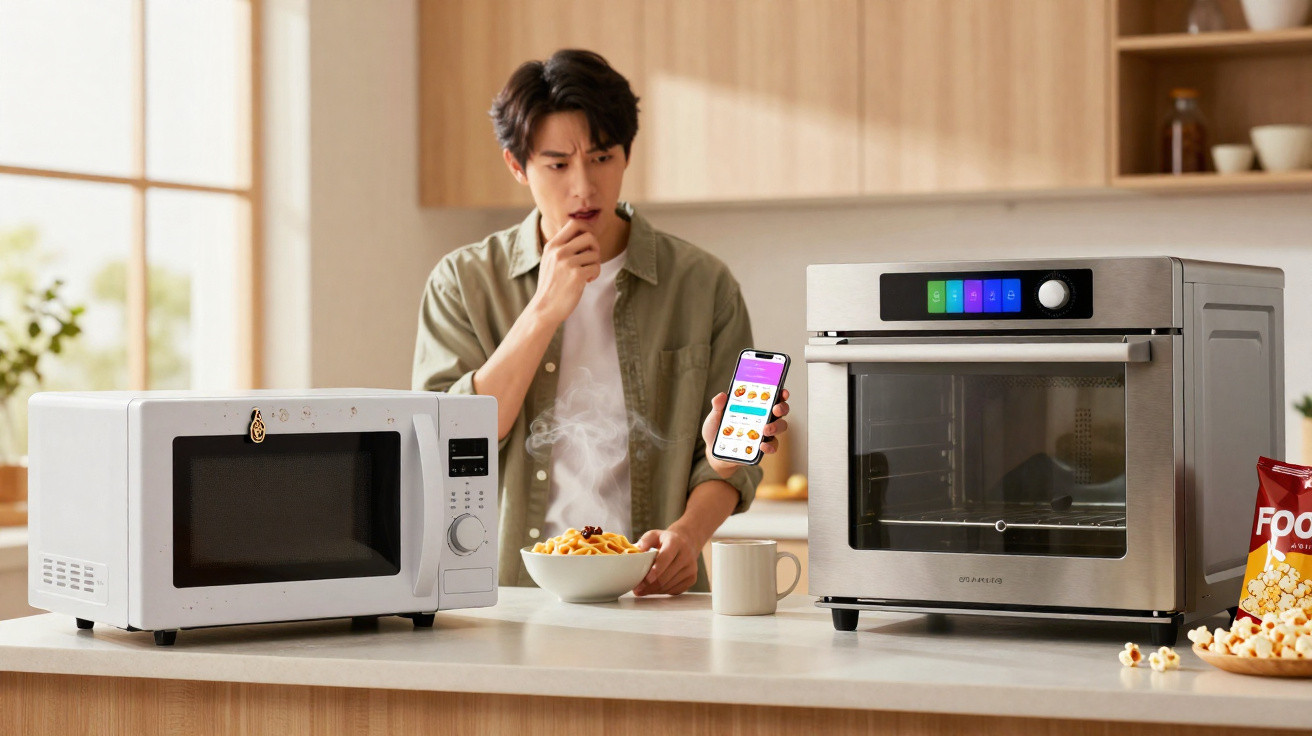
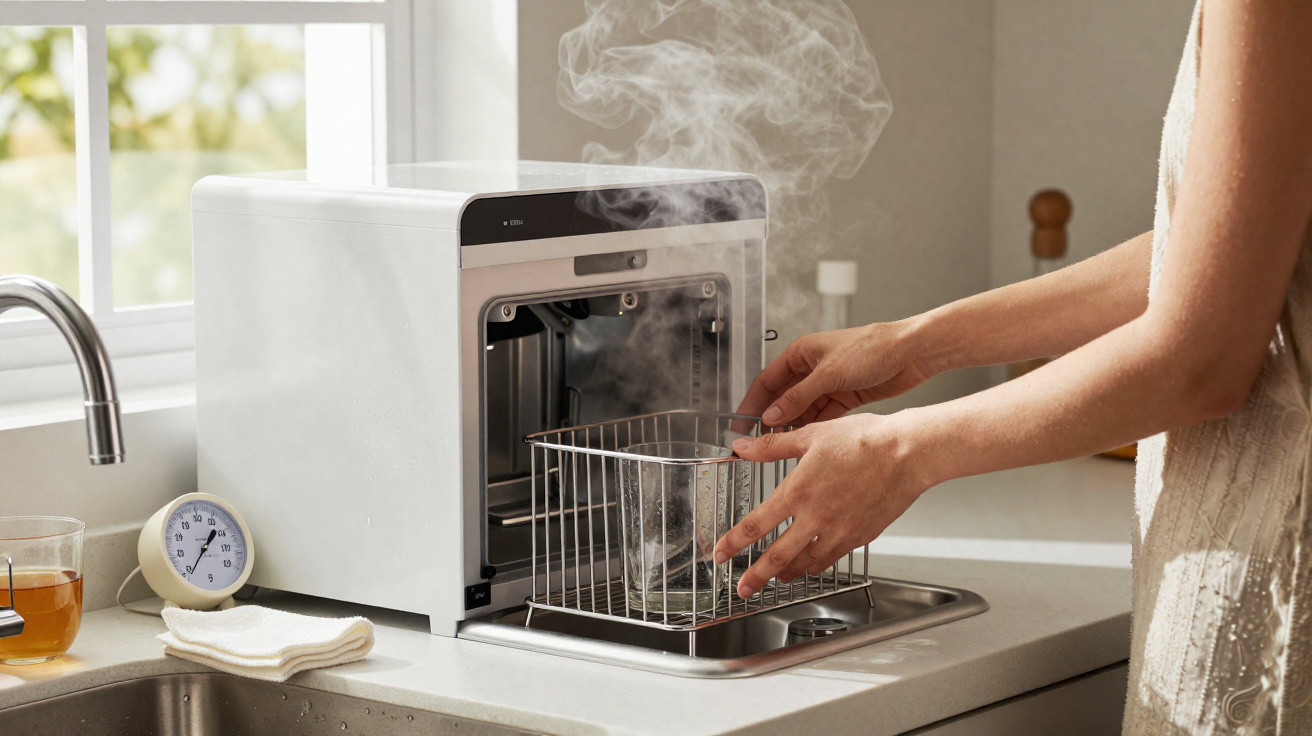
An ordinary image, almost comforting. Except that in recent weeks, this scene has become the emblem of a noisy little war in the otherwise quiet world of kitchen appliances. A new kitchen gadget, somewhere between a mini oven and an air fryer on steroids, claims to make the microwave “useless”. Sponsored videos keep appearing, influencers swear they will “never go back”, and the comments beneath their posts are ablaze.
In a Facebook group for microwave fans – yes, such a thing exists – one user writes in capitals: “STOP SAYING THE MICROWAVE IS DEAD”. Hundreds of replies sit beneath the video. Some people defend their battered old machines, while others insist this new high-tech cube reheats, grills, browns and crisps everything in record time. Amid nostalgia, genuine annoyance and marketing hype, one question is becoming increasingly difficult to ignore: could this thing really send the microwave into retirement?
Why microwave loyalists feel under attack right now
In a small London flat last Tuesday evening, the situation was almost comical. A hungry, impatient family of four gathered around a gleaming new countertop appliance, roughly the size of a microwave but seemingly twice as self-satisfied. The father repeatedly tapped its touchscreen, flicking through settings marked “Reheat”, “Crisp”, “Grill”, “Air Fry”, “Bake”. Their old microwave had been pushed into a corner and unplugged, looking oddly exposed.
That is how this change appears in everyday life: not merely as another gadget, but as a quiet change of ruler. For decades, the microwave has been the unquestioned champion of surviving busy weeknights. Frozen lasagne? Zap. Cold coffee? Zap. Leftover noodles clumped together miserably? Zap once more. This next-generation hybrid oven now promises that same speed, alongside an extra promise that lands particularly hard: your food will actually taste good.
The figures on TikTok and YouTube Shorts tell their own story. Videos using the name for this new category of “smart rapid oven” are attracting millions of views. One clip, titled “Microwave vs New Oven – Leftover Pizza Test”, places a limp, rubbery slice beside a bubbling golden piece with a crackling crust. The creator tastes both and makes an exaggerated face: “I can’t go back to the microwave now, I just can’t.”
In the comments, committed microwave users fight back fiercely. They share screenshots of energy bills, arguing that a larger heating element cannot possibly rival their 800-watt relic. Some upload pictures of 1990s microwaves that are still working perfectly: yellowed plastic, missing buttons, yet faultless at bringing last night’s curry back to life. Others simply voice what plenty of people quietly feel: “I don’t want another complicated thing on my counter. I want hot food, fast.”
The reasoning behind the dispute is straightforward. Microwaves heat water molecules from the inside out. It is quick and efficient, but harsh on texture. Bread becomes chewy, chips turn limp, and cheese settles into a rubbery layer. These rapid ovens instead use concentrated high heat and strong fans to circulate hot air around food, sometimes alongside radiant elements or smart sensors. The result is crisp rather than soggy food. Rather than pale meals that taste merely “warm” instead of fresh, you get browning, caramelisation and that pleasing crackle on the first bite.
For people who have spent years privately resenting what a microwave does to leftovers, that prospect is irresistible. For microwave devotees who prize speed, simplicity and routine, it can feel as though someone is declaring their whole way of doing things outdated – and that hurts.
How this smart rapid oven threatens your microwave’s role
Put the marketing aside and the sales pitch is simple: this appliance wants to replace three items at once. It takes over from the microwave for reheating, the oven for small bakes, and the air fryer for anything that needs to be crisp. Put in cold pizza, tap “Reheat & Crisp”, then leave it alone. Slide in a bowl of yesterday’s curry and rice, select a preset, and it claims it can heat every component evenly without drying it out or reducing it to paste.
Its advantage lies in the timing and the delivery of heat. Rather than hitting everything at maximum power as a microwave does, it divides the job into stages. There is first a gentle warming period, followed by a burst of dry heat for crisping, sometimes with brief resting phases built in. That may seem slow to anyone accustomed to a 90-second microwave blast, but once you bite into leftover roast chicken with genuinely crunchy skin, the additional three minutes hardly feel like an offence against your timetable.
One Paris-based user we spoke to has already banished her microwave to a hallway cupboard. She once relied on reheated coffee, instant noodles and soup defrosted in a hurry. Her new machine now deals with all of those tasks, as well as more ambitious food: one croissant restored to bakery-fresh condition, a tray of vegetables becoming sweet and speckled brown, and even a quick gratin that would have required half an hour in a conventional oven.
Her experience is not unusual. Retailers describe a quiet but revealing pattern: shoppers enter simply to look at the new ovens, then leave saying they will “probably ditch the microwave when it dies”. On Reddit, people post images of cleared-out microwave spaces transformed into coffee stations, while the new appliance takes pride of place on another worktop. It is not a mass rush, at least not yet. Instead, it resembles a gradual, steady move away from the humming box with which most of us grew up.
Behind this sits a subtle change in what weekday cooking means. During the pandemic, many people rediscovered proper cooking. Now that life is speeding up again, they do not want to abandon that enjoyment entirely, but neither do they have an hour for preheating, roasting, resting and washing up.
This is the point at which the “microwave killer” appliance strikes a nerve. It offers a compromise: food that feels cooked rather than nuked in 8–12 minutes. Burritos remain soft on the outside while becoming hot throughout. Lasagne bubbles on top instead of releasing a sad little cloud of steam. Frozen salmon somehow avoids tasting like an office lunch. It’s not just about time anymore; it’s about dignity on a Tuesday night. Microwave loyalists hear that message as an accusation: that their way of eating is lazy, second-rate and almost shameful. It is hardly surprising that they are angry.
Keeping your microwave relevant in a “smart oven” world
There is a quieter truth beneath the hype: choosing one side is not necessary. The people who currently appear most satisfied use both appliances, but more deliberately. The microwave is the sprinter, while the new oven is the finisher.
A typical routine works like this. First, use the microwave to bring soup, stews or saucy dishes up to temperature in a few minutes. Next, move the food to the rapid oven for a brief blast that restores texture – a browned cheese topping, a less limp crust or a little colour. Finally, eat something that feels much closer to freshly cooked food than workplace leftovers. On paper, it sounds fiddly. In reality, it is part habit and part modest improvement on what many people already do with a microwave and a frying pan.
Let us be honest: nobody really does that every day. Some evenings, you simply put the plastic container in the microwave, press a few buttons and eat in front of the television. There is no shame in it. The pressure to “optimise” every meal can be tiring.
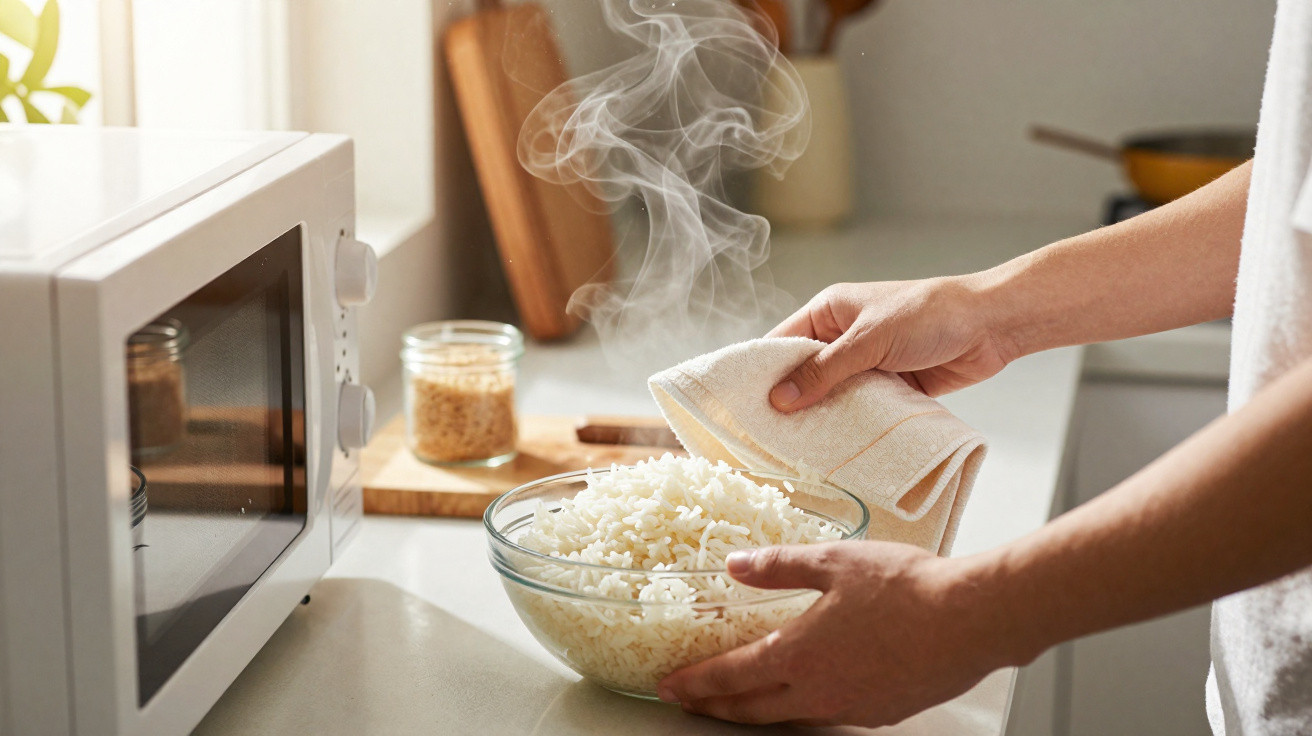
Even so, a few easy habits can help the microwave retain its place. Add a splash of water to restore moisture to rice or pasta. Cover food loosely to trap steam, rather than heating it uncovered until the edges go hard. Warm meals in shorter bursts and stir between them instead of using one long, punishing cycle. These are not influencer-style tricks. They are low-effort adjustments that can quietly make leftovers less disappointing.
Not everyone accepts the idea that the microwave is heading towards extinction. In a recent kitchen-appliance forum thread, one user captured a view shared by many:
“I bought the fancy new oven. I love it. But when I want hot coffee in 40 seconds or a warm eye mask for my sinuses at 11 p.m., the microwave is still the hero. It’s not dead. It’s just not the main character anymore.”
For anyone standing in an aisle, looking at shiny boxes and unsure what to choose, a handful of questions can cut through the marketing noise:
- How often do you genuinely cook rather than reheat food?
- Do you value texture more than outright speed?
- Is your worktop already overcrowded?
- Do you share a kitchen with children or older relatives who prefer simplicity?
- What failed last month: your microwave, or your patience with soggy leftovers?
The irritation felt by microwave fans is not solely about technology. It comes from feeling judged for how they live, eat and make it through the week. Somewhere between the old hum and the whirr of a new fan, a more candid discussion about convenience and enjoyment is beginning to take shape.
A quiet revolution humming on your countertop
Walk into any electronics shop this winter and you can sense it before you see it. The microwave aisle looks recognisable, almost weary: white, black and silver boxes with modest little windows. A short distance away, new appliances shine with vivid screens, app logos and polished lifestyle images promising perfect chicken wings and “gourmet in minutes”. This is more than a product display. It presents two versions of daily life side by side, humming at different frequencies.
The friction between microwave enthusiasts and smart-oven evangelists may sound insignificant, but it reaches something surprisingly personal. These appliances have seen our hardest days and laziest evenings. They are there when we reheat inexpensive leftovers after a break-up or warm milk for a child at 3 a.m. Describing one as “obsolete” is not merely a claim about technology. It can feel like erasing part of domestic history.
The real story, hidden behind rage-bait headlines, is less neat and more human. Some people will get rid of their microwaves and never regret it. Others will proudly keep theirs until it finally gives up with a faint electrical sigh. Many will quietly acquire both, using each machine for what it does best rather than for what a marketing campaign promised.
So, the next time a viral video announces “RIP, microwave”, you may view the humming box in your kitchen differently. Perhaps it is an ageing monarch. Perhaps it is a stubborn survivor. Or perhaps it is simply a dependable tool in a world that keeps finding new ways to make us feel out of date. The appliance challenging its throne is real. The question is whether you want a revolution on your worktop – or simply a dinner that tastes slightly less like yesterday.
| Key point | Detail | Why it matters to the reader |
|---|---|---|
| New devices challenge microwaves | Hybrid rapid ovens promise crisp, evenly heated food in minutes | Helps explain why headlines claiming the “microwave obsolete” are appearing |
| Microwave still has unique strengths | Unbeatable for pure speed, simplicity and certain everyday tasks | Reassures readers that they do not need to get rid of their current appliance |
| Best results come from pairing both | Use the microwave to preheat, then the smart oven to finish and crisp | Provides a practical, realistic way to improve meals without drastic change |











Comments
No comments yet. Be the first to comment!
Leave a Comment