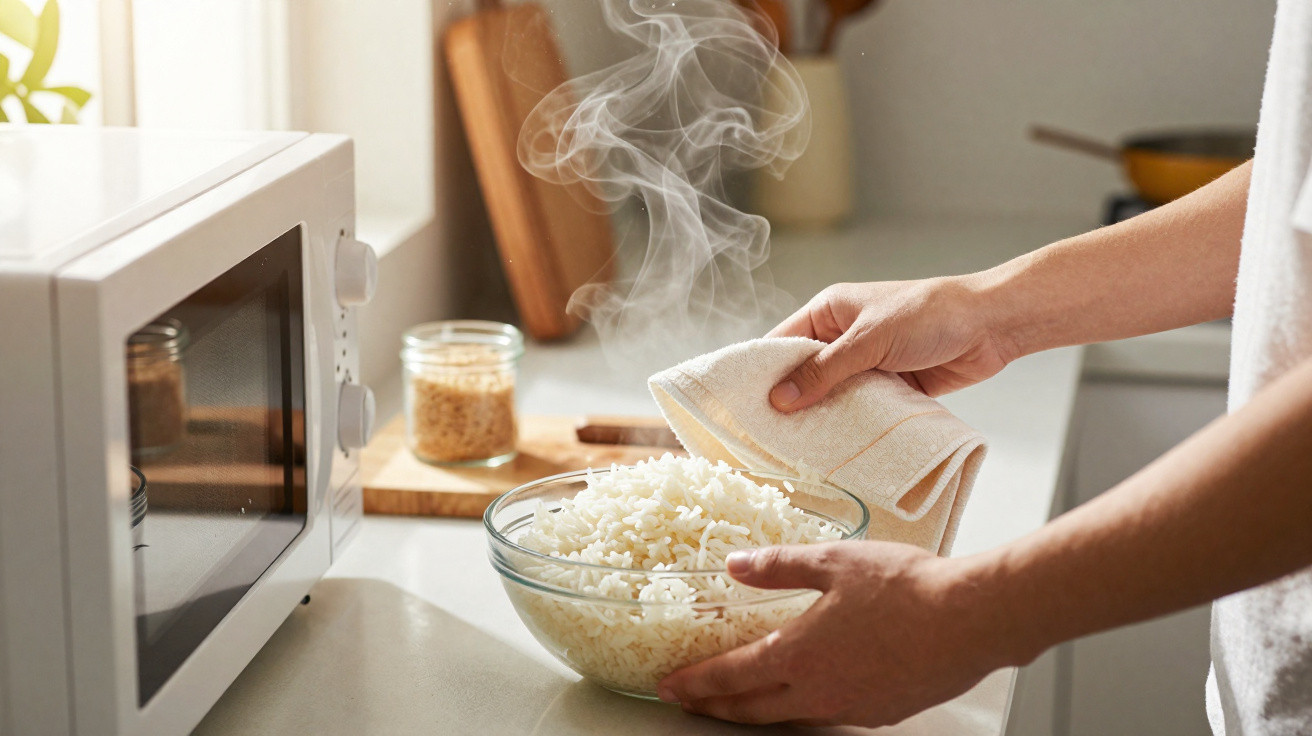
The hob spits, the lid chatters and you stand over it with a spoon, hoping the rice turns out fluffy. There is an easier, calmer approach: use your microwave, starting with a clean kitchen towel.
I first watched it happen at a friend’s Bristol flat after a late train journey, when we were both hungry. She tipped basmati into a glass bowl, selected a few settings, then did something I had not expected: she laid a tea towel over the bowl, replaced the plate-lid and left it alone. There was no ceremony. Ten minutes later, the rice separated into light flakes, every grain distinct, with a faint fragrance of starch and steam around the kitchen. There was no pan to wash and no need to keep checking. She ran a fork through it and smiled. The unassuming towel was doing the important work, and I wanted to understand why.
Why a microwave can beat the hob for fluffy rice
Microwaves are not usually thought of as delicate tools. They heat leftovers, make popcorn and warm up tea. Yet they excel at something rice needs: steady, enclosed heat. In a microwave-safe bowl fitted with a close cover, steam develops quickly and evenly. Condensation is the real problem. When droplets collect beneath the lid and fall back onto the rice, the grains sit in excess surface water and become sticky. Control those drips and you get fluffier rice.
I began trying it on tired weekday evenings, partly curious and partly determined. I tested one cup of jasmine, one cup of basmati and, on Sunday, some brown rice. Some bowls were covered with a plate, others with a vented lid, while some had a towel added after cooking. The results were as clear as the forks left in the sink: bowls rested beneath a towel were reliably lighter. This was rice that dropped cleanly from the spoon: a calm, repeatable win on a hectic day.
The principle is straightforward. As rice takes in water, its starch expands, before firming as it cools. Steam sends moisture into each grain, whereas loose condensation across the surface makes the upper layer watery. A clean, dry towel removes that surplus moisture. It acts like a small roof, catching the “rain” before it can fall back onto the rice. Because microwaves rapidly agitate water molecules, they produce steam fast and heat evenly. The towel provides the control. Fluffy rice comes from managing steam, not chance.
The microwave towel technique, step by step
Choose a deep microwave-safe glass or ceramic bowl. Rinse 1 cup (200 g) of white rice in cold water until the water is mostly clear, then drain it thoroughly. Pour in 1½ cups (360 ml) of water and add a pinch of salt. Cover the bowl with a microwave-safe plate, leaving the tiniest opening for a little steam to escape. For basmati or jasmine, cook at 70% power for 10–12 minutes. Leave it for 2 minutes, then remove the cover carefully.
Now comes the step that makes the difference. Loosen the rice once with a fork. Lay a clean, dry cotton tea towel over the bowl, keeping its edges neat, and put the plate back on top to secure it. Leave it to rest for 8–10 minutes without lifting the cover. While the grains settle and firm up, the towel absorbs the condensation. Remove both plate and towel, fluff the rice once more and serve. For brown rice, use 1 cup of rice with 2 cups (480 ml) of water, microwave at 70% power for 18–22 minutes, then follow the same towel-resting method.
A few small mistakes can undermine the result. If you do not rinse the rice, surface starch remains attached, even when using the towel. Cooking at full power means the edges finish too quickly while the middle falls behind. Opening the lid early releases steam before it has completed its work. We have all heard the microwave pinged and opened it straight away because we were in a rush. Instead, allow the towel to handle the waiting. Realistically, nobody does everything perfectly every day, but this two-minute pause can change what ends up on your plate.
Fluffy rice is about steam management, not luck. Treat the towel as protection against sogginess during the resting period rather than while the rice cooks. Choose cotton, ensure it has no metallic threads and keep it dry for this stage. If you like using a paper towel while cooking to prevent boil-over, use one that is light and damp. This is the moment when dinner begins to feel calm.
“The towel isn’t magic; it’s physics you can feel,” says a London supper-club cook I trust. “You lift the plate and it’s dry where it matters - and the grains separate like they should.”
- Basmati: 1 cup rice + 1.5 cups water, 10–12 min at 70% power, 10-min towel rest
- Jasmine: 1 cup rice + 1.4 cups (340 ml) water, 9–11 min at 70% power, 8–10-min towel rest
- Brown: 1 cup rice + 2 cups water, 18–22 min at 70% power, 10–12-min towel rest
Turning the fluffy rice trick into a habit
Perhaps you enjoy the ritual of cooking rice in a pan on the hob: the hiss and the slightly tilted lid. Save that for Saturdays. During the week, the microwave-and-towel method offers something more forgiving: dependable calm. Measure the ingredients, press a button and walk away. The towel-resting interval feels like a pause for breath. You might chop herbs, lay the table or simply look out of the window for a minute you did not think you had. Small, friendly systems make home cooking stick.
| Key point | Detail | Benefit for the reader |
|---|---|---|
| Rinse until mostly clear | Swish the rice 3–4 times in cold water to remove surface starch | A lighter texture, fewer clumps and grains that separate easily |
| Rest with a towel after cooking | Place a clean, dry tea towel over the bowl, top with the plate and leave for 8–10 minutes | Absorbs condensation, lets the starch set gently and produces fluffy rice |
| Use 70% power rather than full power | Provides even energy for steady steam; white rice takes 9–12 min and brown rice 18–22 | Stops the edges overcooking while the centre lags behind |











Comments
No comments yet. Be the first to comment!
Leave a Comment