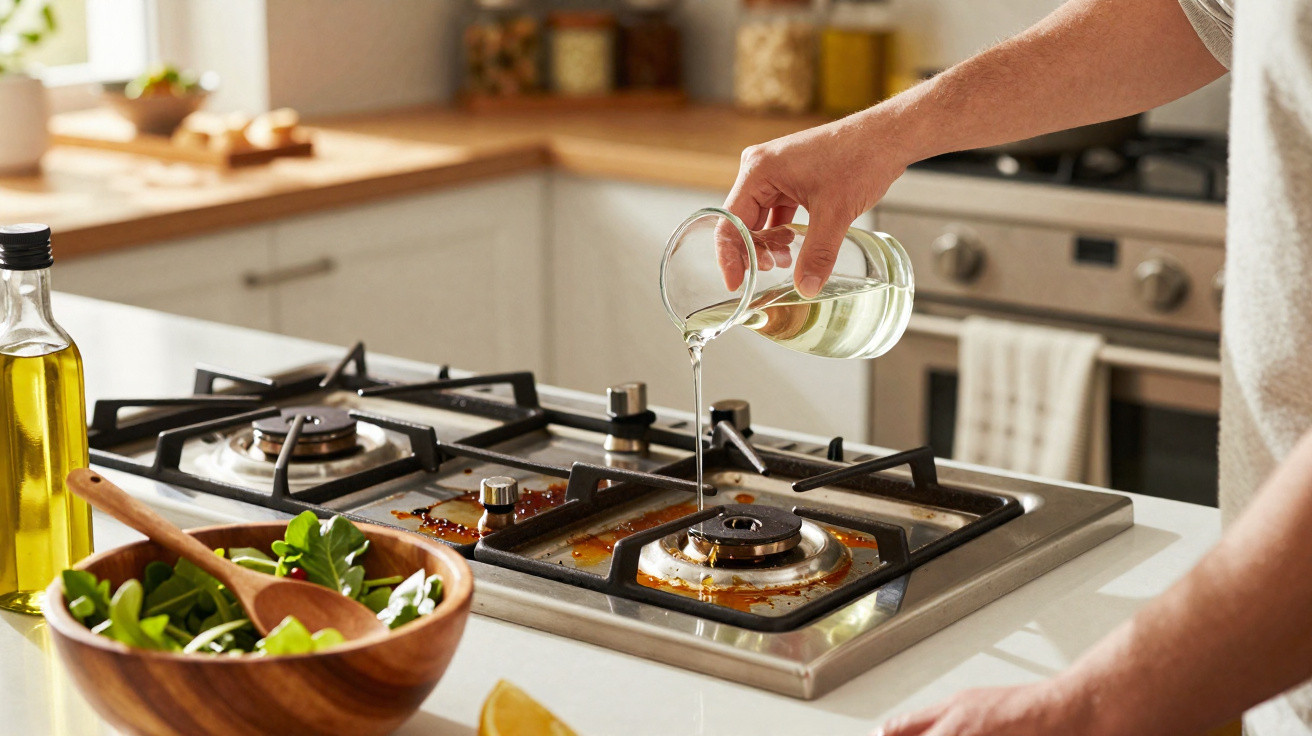
You scrub, spray and spend money, yet the hob still seems coated in a layer of yesterday’s meal. Branded degreasers promise wonders, only to leave behind a tacky film and an acrid scent that outlasts the bacon. The surprise is that the most basic ingredient in your salad dressing can cut through grease more quickly-and for less money-than that fluorescent bottle beneath the sink.
As usual, I grabbed the orange bottle, sprayed it on, waited and wiped. The surface looked less shiny, but the smear remained, like stubborn mist that would not clear.
“Try the vinegar,” my neighbour said, looking in as though she were sharing an old family remedy. I poured, heated and sprayed it, expecting it to be a kitchen joke. It smelled like a salad bar-and it worked.
The answer had been sitting in the dressing.
The understated cleaning power in your pantry
You may know it from vinaigrettes and speedy pickles, but white vinegar is also a fierce grease remover for routine kitchen grime. There is something unexpectedly pleasing about the soft fizz when it meets a warm splatter, followed by the sight of the greasy layer lifting away in a single wipe. What was dull and sticky becomes clean and squeaky.
After a fried-chicken evening, we carried out a small and suitably messy comparison: one hob grate and one partly splattered splashback were cleaned with a shop-bought spray, while the other side received a vinegar solution. The branded product took three applications, two paper towels for each round, and still left a slight citrusy stickiness. With a microfibre cloth and a rinse, vinegar removed it in one attempt, leaving the steel clean rather than scented.
The reason it works is that acetic acid reduces the pH and breaks down the bonds holding oily layers to steel, glass and glazed tiles. It also alters surface tension enough to help grease release instead of spreading around. Add the tiniest amount of washing-up liquid and the emulsion lifts-simply put, stubborn shine becomes something you can wipe away.
Using white vinegar like a professional cleaner
Combine equal amounts of distilled white vinegar (5% acidity) and warm water in a spray bottle, add one small drop of washing-up liquid, then gently swirl. Apply enough to lightly cover the greasy surface without soaking it. Leave it to sit for two to three minutes, wipe with a damp microfibre cloth, then buff dry for that sparkling stainless-steel finish.
For splatters that have baked on, spray the vinegar mixture, add a light dusting of baking soda and watch it fizz like a miniature school science experiment. Leave it for three to five minutes, then make short, gentle circles using the soft side of a non-scratch sponge. Honestly, no one manages that every day.
For glass hobs and shiny tiles, first warm the solution by placing the spray bottle in a bowl of hot water for two minutes, then clean one area at a time. Keep liquid away from burner igniters and digital controls; spray the cloth rather than the appliance, and consult the manual if you are uncertain. Do not mix vinegar with bleach-the combination produces dangerous fumes.
Practical advice, common mistakes and kitchen wisdom
With vinegar, warmth and timing make the difference. When the surface is just warm to the touch, the mixture loosens grease more rapidly, meaning less wiping for you. Faced with a complete post-frying disaster, spray it on, make a cup of tea, then return to wipe it away-the waiting time does the hard work.
Most disappointing results come from acting too quickly or flooding the surface. Wipe too early and the grease smears; use too much liquid and you get streaks. Do not be hard on yourself if the grime has built up for a week: dried, polymerised oils are tough and may require two applications rather than one. We have all had occasions when the pan wins the first round.
“In the line, we didn’t have time for ten products-hot water and vinegar took the shine back, fast,” a veteran line cook told me, shrugging like it was the oldest trick in the book.
- Choose distilled white vinegar with 5% acidity, rather than apple cider vinegar or balsamic vinegar.
- A microfibre cloth works better than paper towels for wiping without streaks.
- Keep vinegar off natural stone, including marble and granite, as it can cause etching.
- Rinse stainless steel with hot water and buff it dry for a finish that resists fingerprints.
- Mark the spray bottle with the ratio and date. Your future self will appreciate it.
What a salad bottle reveals about how we clean
There is a modest pleasure in seeing an inexpensive pantry essential outperform a brightly labelled product. It feels like winning with a secret technique your grandmother already knew-the sort of trick that never appeared in an advert. Vinegar also leaves a room with a certain quietness: no cloying perfume or unexplained residue, only clean metal and tile.
It changes your perspective, too. You begin questioning which other “specialist” products are merely everyday items dressed up cleverly. The kitchen smells of dinner rather than aerosol, and the bottle stays close at hand because it saves both time and money.
Perhaps this is about more than the hob. It is about being there at 9:43 p.m., slightly weary, and choosing the easiest solution that genuinely works. The salad trick earns its spot because it gets you back to your life sooner, with fewer bottles, fewer fumes and a surface that finally feels finished.
| Key point | Detail | Benefit for the reader |
|---|---|---|
| - | - | - |
| - | - | - |
| - | - | - |













Comments
No comments yet. Be the first to comment!
Leave a Comment