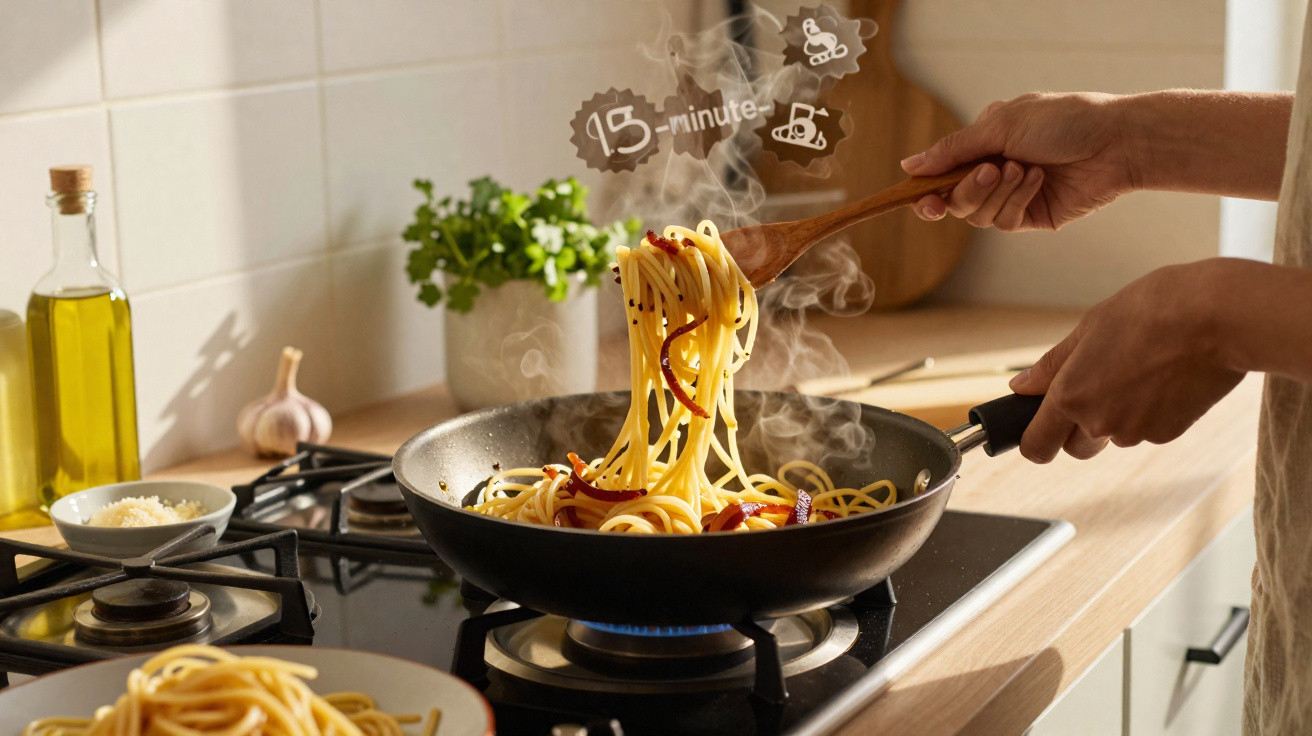
After a long winter day, very few people fancy spending hours at the hob. Yet dinner should still be warm and filling, rather than tasting like canteen food. That is where this remarkably easy pan pasta comes into its own: five ingredients, a quarter of an hour, and a result that can easily rival chilled ready-made pasta meals – only cheaper and far more flavourful.
Why this pasta dish beats ready meals
This pan pasta is appealing for three reasons: it is quick, inexpensive and made with staples that most people already have at home. There are no unusual ingredients, complicated methods or unnecessary extras.
“This dish shows how much flavour a few simple cupboard ingredients can offer when they are treated properly.”
Rather than relying on added flavourings and stabilisers, this recipe gets its character chiefly from gently fried onions and a creamy mustard sauce. Together, they create sweetness, savouriness and a gentle heat that strongly recalls slow-cooked braised dishes – but in a much quicker form.
The base: five ingredients most people have at home
Just a handful of components are enough for a generous panful of comforting food:
- 350 g cooked pasta, such as penne or spaghetti
- 2 large yellow onions
- 2 tablespoons of strong mustard, either Dijon or wholegrain
- 100 ml cream or milk
- a little neutral oil or olive oil, salt and pepper
Short, hollow pasta shapes such as penne are ideal because they hold the sauce particularly well. Spaghetti works just as well for anyone who prefers it, although the finished dish will be a little more strand-like and closer to a classic pasta skillet meal.
The onions are the key ingredient here. Although two large onions may initially sound like a lot, they provide the mild natural sweetness otherwise found only in dishes that have been braised for a long time. They are what give the sauce its rounded, full-bodied flavour.
Cream and mustard form the second flavour foundation. Mustard contributes a gentle bite and savouriness, while cream softens its heat and brings everything together into a smooth, almost velvety sauce. Those looking to reduce calories can use milk instead, but should allow it to simmer a little longer until it reaches the right consistency.
How to make caramelised pan pasta in 15 minutes
Frying the onions properly – the real secret
The most important stage comes right at the start: cooking the onions. They determine whether the finished dish tastes one-dimensional or deep and aromatic.
- Peel the onions and slice them into fine strips.
- Heat a little oil in a large frying pan.
- Sweat the onions over a medium heat until translucent.
- Increase the heat slightly, then let them gradually turn golden brown, stirring from time to time.
The onions should not turn black; instead, they need to develop a warm brown, lightly amber colour. At this point, browning processes create nutty, caramel-like notes. Rushing this step means missing out on the greatest share of the flavour.
“Patience with the onions pays off – five extra minutes in the pan can be the difference between ‘quite nice’ and ‘really good’.”
Mix the sauce straight in the pan
Once the onions are soft and properly browned, add the cooked pasta directly to the pan. It should still have a slight bite, as it will continue cooking in the pan.
Briefly combine the cream, or milk, with the mustard in a glass or mug, then pour the mixture into the hot pan. Lower the heat slightly. As everything simmers, the fat from the cream combines with the onions’ browned flavours and the pasta to form a smooth sauce.
Stir gently for a few minutes until the pasta is evenly coated. Finally, season with salt and plenty of freshly ground pepper. The pasta should look glossy rather than sit in a pool of sauce – it should be coated in a creamy layer.
Turning an everyday pasta pan into a “wow” plate
Although this dish is very simple, a few small additions can make it feel considerably more refined.
Freshness and crunch for extra contrast
For a well-rounded result, it is worth checking both the vegetable drawer and the cupboard:
- chopped parsley or chives for colour and freshness
- chopped, toasted hazelnuts or walnuts for crunch
- a squeeze of lemon juice to give the sauce more lift
- optionally, a little grated hard cheese such as Parmesan for extra savouriness
Scatter the herbs over the plate only just before serving so that they retain their green colour. Add the roughly chopped nuts on top for an unexpected texture that works especially well with the soft onions.
Side dishes that genuinely work
As the pan pasta is quite rich, it pairs very well with a crisp salad. In late winter, varieties such as lamb’s lettuce or endive are particularly suitable. A light vinaigrette made with apple cider vinegar or a mild fruit vinegar adds a little acidity, refreshing the palate between creamy mouthfuls.
Anyone wanting more carbohydrates can serve a slice of robust country bread, lightly toasted. Rub it with a halved garlic clove and drizzle over a little olive oil – it then becomes the ideal way to mop up the final traces of sauce from the pan.
Budget cooking: why leftover pasta is ideal
Another advantage of this recipe is that it is excellent for using up pasta cooked the previous day. Instead of throwing it away or eating it as a dry leftover side dish, it becomes part of a completely new and aromatic meal.
Cooked pasta keeps well in the fridge for one to two days. Tossed with a few drops of oil, it will not stick together and is perfect for pan dishes like this. The cost per serving can therefore often fall well below two euros, especially when pasta and onions are bought in larger packs.
Ways to vary the recipe
Once the basic principle is understood – caramelise onions, make a creamy mustard sauce, then toss the pasta through it – the recipe can be extended in countless ways. A few options include:
- a little bacon or diced ham for a smoky note
- frozen peas for added freshness and colour
- fried mushrooms for extra earthiness
- a spoonful of cream cheese instead of cream for more body
For a vegan version, replace the cream with an oat- or soya-based plant alternative and choose plant-based mustard. The method remains exactly the same, as does the character of the dish.
Why the flavour tastes so intense
The pronounced flavour comes from three straightforward effects: the browned compounds in the onions, the gentle heat of the mustard, and finally the fat that carries and intensifies flavour.
The Maillard reaction in the onions causes sugars and proteins to combine, creating new flavour compounds. Mustard supplies mustard oils, which heighten the perception of savouriness. Cream or milk adds fat, which binds these flavours and ensures they linger on the tongue for longer.
Anyone sensitive to heat can use less mustard or combine a mild mustard with a stronger one. This preserves the characteristic flavour without allowing it to become too dominant.
Practical tips for everyday cooking
A few habits help make this pan pasta a genuine alternative to ready meals:
- always keep a packet of pasta and several onions at home
- store mustard and cream or long-life milk as emergency cupboard supplies
- deliberately cook leftover pasta slightly al dente and keep it
- use a sufficiently large frying pan so that nothing is overcrowded
With this foundation, it is possible to put a warm, complete meal on the table quickly on stressful days, without turning to a delivery service or a plastic tray. That is precisely the appeal: little effort, a short shopping list, a big impact on flavour – and on the budget.









Comments
No comments yet. Be the first to comment!
Leave a Comment