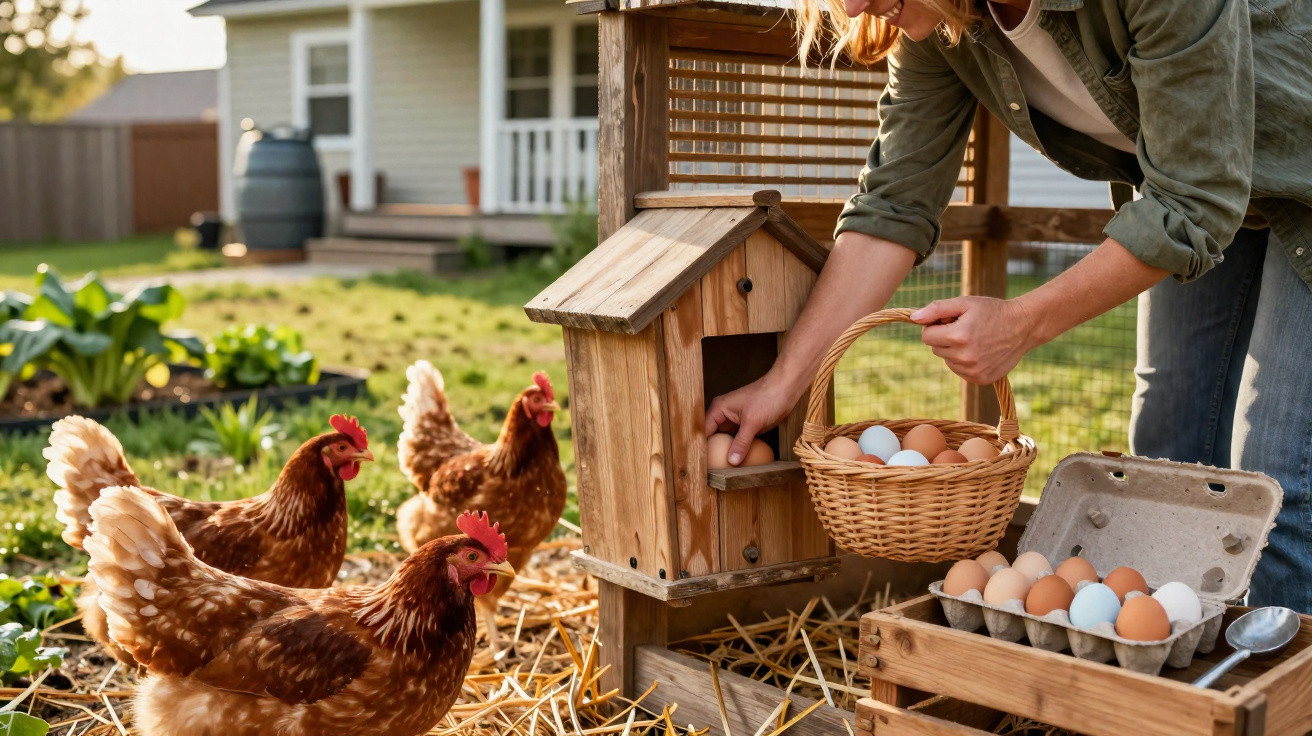
But what does it really cost?
Eggs have become more expensive in many supermarkets, and are sometimes temporarily sold out. Anyone who bakes regularly or enjoys scrambled eggs for breakfast will have noticed the difference in their budget. The prospect of a small chicken coop at the bottom of the garden can therefore seem appealing: freshly laid eggs, complete oversight of how the birds are kept, and less reliance on retailers. Yet this vision involves a very tangible expense that is often underestimated.
Why eggs have become so expensive
For a long time, eggs were considered an affordable source of protein. That is no longer necessarily the case, as several trends are overlapping:
- General inflation affecting feed, energy and transport
- Rising demand for eggs, both nationally and internationally
- Production shortfalls, for example due to disease in poultry flocks
Market analyses point to double-digit shortage rates in some years. For consumers, this means fluctuating availability, occasionally empty shelves and persistently higher prices. People who use a lot of eggs in their cooking soon start doing the sums – and often arrive at the idea of keeping their own chickens.
Unlimited garden eggs – dream or realistic option?
In purely practical terms, it sounds ideal: a small coop, a few hens, kitchen scraps for feed, and fresh eggs every morning. Many people calculate it like this: “They only eat our leftover food, so they cost virtually nothing, and then lay every day.” In reality, it is not that straightforward.
Keeping your own chickens provides fresh eggs – but they are not free egg-producing machines; they are animals with needs and ongoing costs.
Before the first hen moves in, basic equipment is essential. This upfront investment is often the deciding factor in whether the plan is genuinely worthwhile.
What does a small chicken coop really cost?
For a sound start with two to four hens, the overall cost is often between €250 and €400. That total includes more than many people initially expect.
The key costs at a glance
| Item | Typical range |
|---|---|
| Chicken coop / shelter | approx. €120–€180 |
| Hens (per bird) | approx. €10–€20 |
| Basic equipment (feeders, drinkers, fencing) | approx. €50–€100 |
| Initial feed / grain | included in the starter package or approx. €20–€30 |
Some people build their coop themselves using leftover timber or pallets, which can reduce the cost. Others choose a ready-made model from a DIY retailer or online shop. Anyone wanting a genuinely sturdy coop with good insulation, perches, nesting boxes and secure fastenings to keep out foxes and martens will quickly reach the upper end of this range.
Ongoing expenses that are easily overlooked
Once the initial set-up is complete, regular outgoings begin. These commonly include:
- Feed, including grain, layers’ mash and minerals
- Bedding for the coop and nesting boxes
- Possible veterinary appointments and vaccinations
- Maintenance of the fence, roof and coop
People who keep hens in a welfare-conscious way do not feed them kitchen scraps alone. Leftovers are a useful supplement, but they cannot replace balanced main feed. Depending on feed quality and the number of birds, these costs can add up to a double-digit sum each month.
Is it cost-effective compared with supermarket eggs?
Whether keeping chickens saves money depends greatly on household egg consumption and the way the birds are kept. A rough calculation looks like this:
- A healthy laying hen produces an average of four to five eggs per week during good periods.
- Four hens therefore provide roughly 16 to 20 eggs each week.
- Over a year, that amounts to around 800 to 1,000 eggs.
For someone who would otherwise buy only expensive organic or free-range eggs, the initial investment can become noticeably less significant after one or two years. Anyone accustomed to cheaper eggs from a discount supermarket will need considerably longer for the costs to balance out.
The real benefit of keeping your own chickens is rarely the price alone – it is also the freshness, transparency of their care and relationship with food.
Many keepers say that they use food leftovers more consciously, spend more time outdoors and see children develop a direct connection with animals. These factors are difficult to put a monetary value on, but they matter when making the decision.
Animal welfare: chickens are not egg machines
Anyone who regards hens only as “egg suppliers” is beginning with the wrong attitude. Chickens are sensitive animals, affected by stress, damp, cold and heat. They need order within the coop, places to retreat and sufficient space.
There is also an emotional dimension: over time, many chickens become trusting, follow people around the garden, enjoy being fed and noisily comment on everything. Failing to respect that character can quickly lead to husbandry mistakes.
The question must never be only: “When will this pay for itself?” – it must also be: “Can I really do right by these animals?”
Anyone acquiring animals takes on responsibility: care every day, including on bank holidays and during holidays away, as well as checks on water, feed, coop conditions and cleanliness. People who enjoy spontaneous trips or have long working days need dependable cover.
Practical tips for anyone seriously planning to keep chickens
Questions to settle before buying chickens
- Is keeping chickens permitted by the local authority and in the residential area?
- Is the garden large enough for the required run and coop?
- Are there neighbours who might be bothered by clucking?
- Who will care for the birds during illness or holidays?
It is helpful to visit someone in your circle of friends or acquaintances who already keeps chickens. This soon reveals how much day-to-day work lies behind the romantic image of country living.
Which breeds and how many birds?
Beginners are well served by hardy, calm breeds that are not overly sensitive and lay reliably. Two hens are the minimum, because chickens are social animals and should not live alone. For many hobby keepers, three or four birds are a suitable number: enough eggs, while the workload remains manageable.
More than eggs: what chickens can also do in the garden
Keeping chickens brings practical side benefits. They peck at insects, eat slugs and use their claws to loosen the soil. Some gardeners deliberately put them in harvested beds so that they can reduce weed seeds and pests.
There is also their manure: when used in suitable quantities, well-rotted and mixed with bedding, it makes a nutrient-rich fertiliser for vegetable beds and fruit trees. With sensible planning, this creates a small cycle: kitchen waste goes to the chickens, which provide eggs and manure, and the manure in turn helps vegetables grow in the garden.
Risks and limits of self-sufficiency
The dream of self-sufficiency with poultry also has its drawbacks. Chickens can become ill, bring in parasites or face threats from birds of prey and predators. A fence that is not sufficiently secure is often all a fox needs for a night-time “coop inspection”.
In addition, egg production declines as hens age. After two to three years, many hens lay less, but naturally continue to live. This then raises a question: can the bird spend its old age in the garden, or will it be slaughtered? Anyone without an answer should be honest with themselves before getting chickens.
Those who consider these points can obtain eggs from a small flock over the long term, become somewhat less dependent on fluctuating prices and take responsibility for animals at the same time. The calculation then works not merely because the eggs seem cheaper, but because everyday life changes noticeably – with a closer relationship to one’s own food and a morning “Good morning” from the coop.

















Comments
No comments yet. Be the first to comment!
Leave a Comment