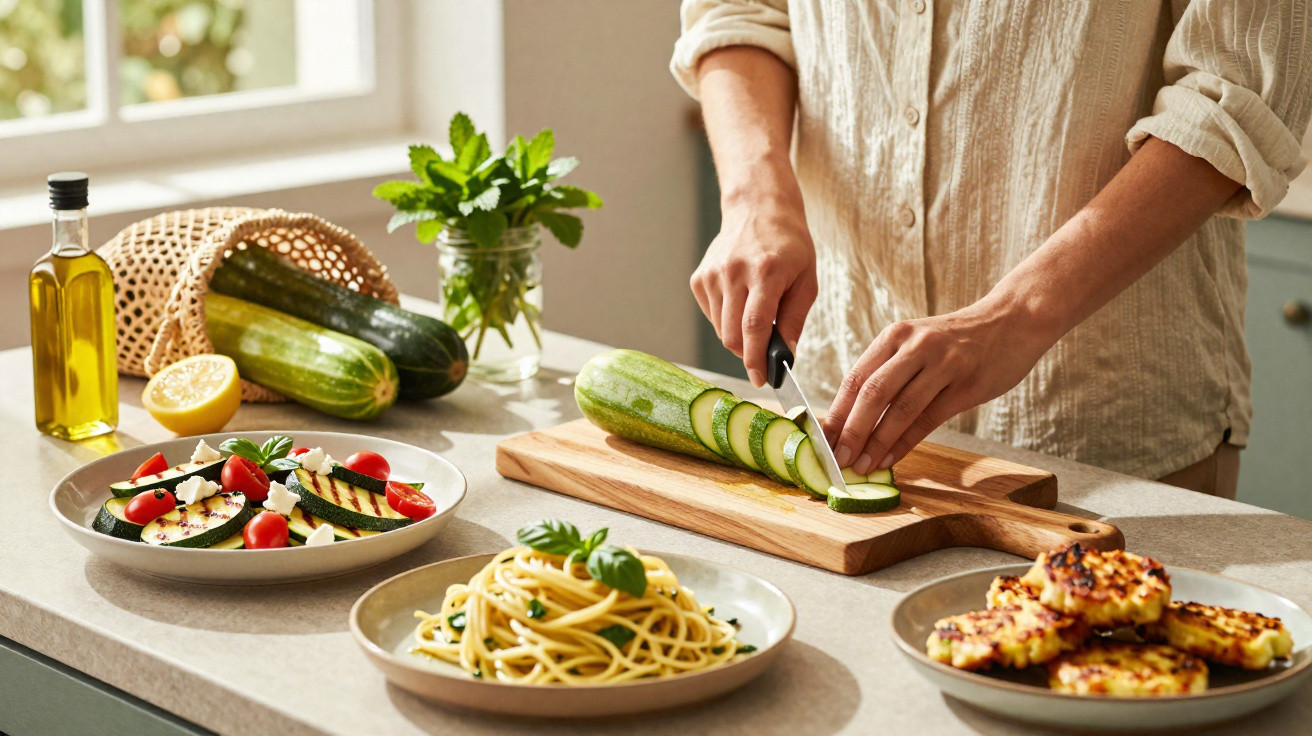
Courgettes have the answer: they cook in moments, taste delicately fresh, and can take on almost any form. They are the sort of ingredient that turns a balmy evening into a supper you genuinely want to eat.
By 6 p.m., the market stalls looked weary, yet the courgettes gleamed like tiny green boats. The fishmonger was packing away ice, someone was spraying the herbs with water, and I watched a cook shave courgettes into ribbons that looped through the bowl like a breeze. From a few steps away, I could hear the mandoline scraping and catch the scent of lemon meeting hot oil. He added mint, crushed pistachios and a restrained crumble of feta. No ceremony. No grand performance. But after one forkful, the table fell silent in the best possible way. A simple dish had prevailed. One modest vegetable had carried the whole meal. It had barely seemed to try. Imagine if supper could always feel that fresh.
Why courgettes are summer’s understated powerhouse
Courgettes contain more water than swagger, and that is exactly why they are so easy to eat on warm days. Their subtle sweetness leaves space for other flavours, including citrus, herbs, chilli and good oil. Give them a quick blast of heat, or none at all, and they offer a texture poised between crisp and tender, like a courteous handshake.
Last July, my neighbour began leaving courgettes on my doorstep as though they were love letters. One evening, I shaved them raw and mixed them with lemon zest, chilli flakes and anchovy crumbs; half the barbecue guests abandoned their burgers for that bowl. The numbers work in their favour: they are roughly 95% water and contain about 17 calories per 100g, giving you plenty of volume without heaviness.
There is a little food science behind it. Their high water content means rapid cooking, bright vehicles for flavour and less chance of a heavy dish. Because their soft cell walls loosen quickly, you can char them for mere seconds to build depth without turning them mushy. Acid helps firm their texture, while dairy softens the edges. Salt them early and they release water; salt them later and they retain their spring.
From market bag to plate in minutes
Start with the cut. Choose ribbons for raw crispness, slim rounds for a swift pan-fry, and batons when you want grill marks. For a striking dish in ten minutes, shave them into ribbons and toss with lemon juice, mint and olive oil, then scatter over toasted pistachios and a little feta. Call it Courgette Carpaccio with Lemon–Anchovy Crumbs if you wish. Melt two anchovies into oil, crisp breadcrumbs in the pan and spoon them warm across the top. It is supper with the flavour of a sea breeze.
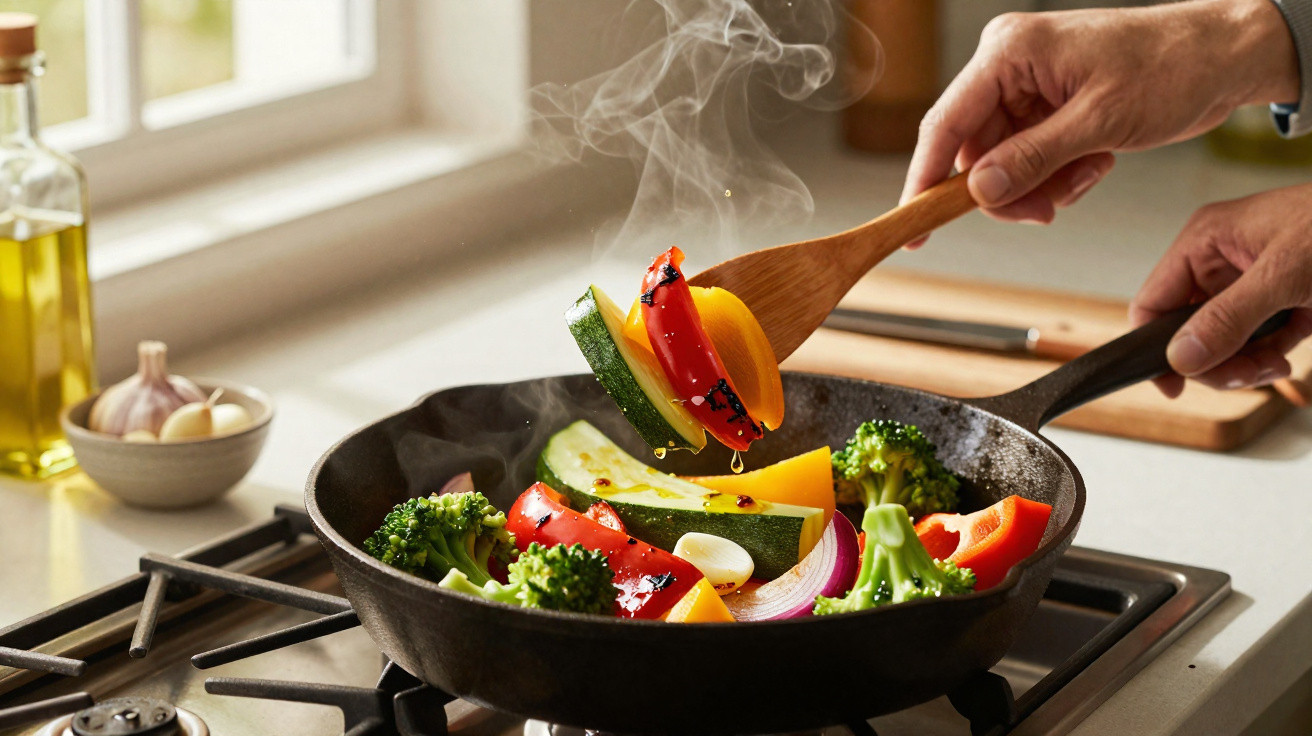
Everyone knows the disappointment of a steaming pan and courgettes collapsing into a sorry heap. The remedy is higher heat, shorter cooking and plenty of room around each slice. Briefly pat the surface dry with a tea towel before adding them to a hot pan with only a little oil. Turn them just once. Add lemon or vinegar after taking the pan off the heat, so the acidity stays vivid. Honestly, no one does that every single day. On the evenings when you do, though, the difference is remarkable.
For something cooler, blend courgettes with kefir, cucumber, basil and a squeeze of lime to make a smooth bowl that cools you from within. Name it Chilled Courgette & Kefir Soup and finish with a swirl of basil oil for flair. Alternatively, make Miso-Butter Courgette Noodles with Mint: fine strands coated with a spoonful of miso, a dab of butter and a touch of chilli crisp.
“Courgettes take on whatever mood you give them,” a chef friend told me. “Treat them fast and bright, and they’ll taste like summer air.”
- Courgette Carpaccio: raw ribbons, lemon, mint, anchovy crumbs and feta.
- Chilled Courgette & Kefir Soup: no cooking, basil oil, lime zest and bowls served fridge-cold.
- Miso-Butter Noodles: a quick sear, tossed in miso butter, then finished with mint and sesame.
The light touch that makes courgettes irresistible
Courgettes suit summer not simply because they are low in calories or quick to prepare. Their real strength is their ability to hold flavour without any effort. They act like a canvas that never competes with the painting: lemon tastes more lemony, herbs taste more herbaceous, and olive oil gets to take the high notes.
Courgettes also match whatever energy you have available. On hectic evenings, raw shaved ribbons with a cupboard crumb topping provide crunch and brightness. When you want something warm but not weighty, char rounds for two minutes, then add yoghurt, dill and lemon zest for a plate with a holiday feel. On slower nights, roast them gently with garlic, then add a cool spoonful of ricotta and a shower of lemon; once again, the room grows quiet.
Let texture guide you. For more bite, serve them raw or give them only the briefest touch of heat. For a silky finish, season lightly and cook quickly in batches, allowing them to sear rather than steam. Add acid at the end, scatter on herbs and use an oil whose aroma you can notice. There is no need to flood the pan or pursue elaborate methods. Keep each move restrained and the flavours will seem generous.
Light meals need not feel meagre. Courgettes allow you to layer contrasts-crunch against cream, warmth against coolness-while keeping every forkful easy. These three dishes are ideas rather than rules. Use mint instead of basil, almonds instead of pistachios, or ricotta salata instead of feta. Share a bowl outdoors and see how quickly the empty plates return to the table, satisfied but never heavy.
| Key point | Detail | Benefit for the reader |
|---|---|---|
| High water, low weight | About 95% water and ~17 kcal per 100g | Generous plates that still feel light in warm weather |
| Shape determines texture | Ribbons for raw dishes, rounds for a quick char, batons for the grill | Reliable results with very little effort |
| Finish intelligently | Add acid off the heat, herbs last; use a hot pan and avoid overcrowding | Cleaner flavour and a better bite |








Comments
No comments yet. Be the first to comment!
Leave a Comment