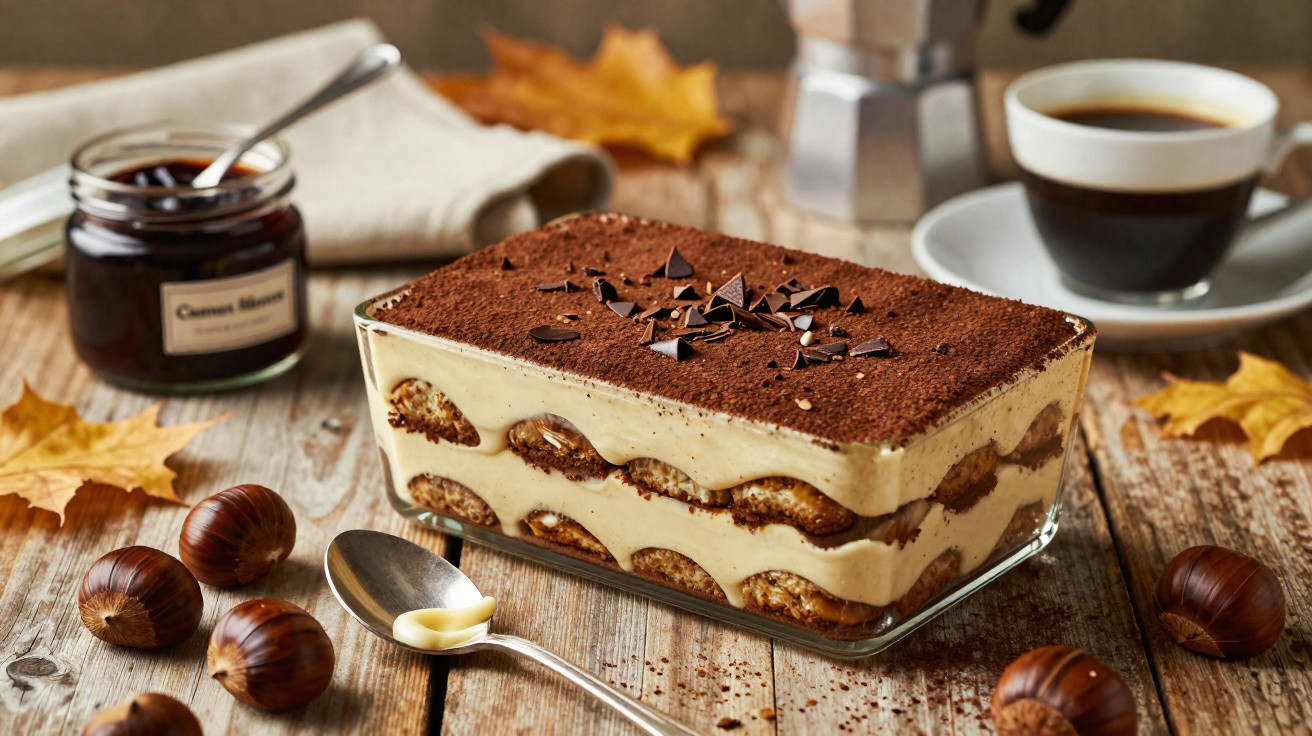
Spoon in, conversation flowing, plate empty. A dessert that tastes like autumn.
A twist on the classic is currently getting people talking: tiramisu with chestnut cream. It combines Italian-style creaminess with spiced sweetness and earns top marks on recipe websites. It is easy to make, yet makes a striking impression at the table.
An autumnal duet from Italy and the Cévennes
The familiar formula remains: sponge fingers meet strong coffee, then a light cream is layered on top. The flavour is what changes. Chestnut cream lends the mascarpone mixture a warm, nutty depth reminiscent of woodland, firewood and the Cévennes. On French platforms, user ratings range from 4.7 to 4.8 out of 5 stars; one small sample records 17 ratings. That is notable for such a niche recipe.
Ratings close to 5/5 and glowing comments: many describe it as “pure indulgence”, a dessert that stays in the memory.
Quick to make, with no specialist equipment
For six portions, all that is needed is a whisk, two bowls, a spatula and a dish. The layering takes 25–30 minutes. Chilling is where the magic happens.
Chill for at least four hours, preferably overnight: this allows the coffee, chestnuts and mascarpone to meld, while the texture becomes both firm and creamy.
| Portions | 6 |
| Preparation time | 25–30 minutes |
| Resting time | 4–12 hours in the fridge |
| Difficulty | Easy |
| Cost (basic version) | under €8 in total |
How to make tiramisu with chestnut cream
The quantities can be altered according to how sweet the chestnut cream is. Anyone preferring less sweetness can reduce the sugar in the cream and let the chestnuts do more of the work.
- Mascarpone: 250 g
- Chestnut cream: about 150 g, adjusted according to sweetness
- Eggs: 3 (yolks and whites separated)
- Sugar: 2–3 tablespoons
- Sponge fingers: around 200 g
- Strong coffee or espresso: about 300 ml, cooled
- Unsweetened cocoa powder: 2 tablespoons, for dusting
Optional: a splash of dark rum or coffee liqueur, chopped marrons glacés
Whisk the egg yolks and sugar until creamy, fold in the mascarpone, then stir through the chestnut cream.
Beat the egg whites to stiff peaks and gently fold them in.
Briefly dip the sponge fingers in coffee and arrange the first layer in the dish.
Spread over the cream and, if desired, scatter with crushed marrons glacés.
Add a second layer of biscuits, followed by a second layer of cream.
Chill, then dust with cocoa before serving.
Variations that delight – and divide the purists
The options range from celebratory to “lighter”. A dash of rum intensifies the coffee notes and gives it a party-ready edge. Small pieces of marrons glacés add points of texture. There is also a leaner interpretation using Greek yoghurt: for instance, 150 g of chestnut cream with 300 g of yoghurt. It tastes pleasantly fresh, but changes the dessert considerably – less velvety and more distinctly yoghurt-led.
When mascarpone is replaced, the result moves stylistically away from classic tiramisu. It can still be delicious, but it has a different profile.
Professional kitchens offer further inspiration. One patisserie version uses a pure chestnut purée component with heated egg yolks (sabayon), producing a finer texture that holds for longer. Others rely on longer chilling times of at least four hours, preferably more, so the roasted coffee flavours and the sweetness of the chestnuts come together harmoniously.
What it costs – and where the price rises
The basic version remains remarkably affordable: many households budget less than €8 for around six portions. Costs rise once extras are added.
- Madagascan vanilla: about €9.90 for two pods
- Marrons glacés: roughly €18–30 per kilogram
- Coffee liqueur such as Kahlúa: about €15 per bottle
For an original gift, layer the dessert into Weck jars. It looks festive and avoids the stress of cutting portions at the table.
Still niche, but with a real wow factor
It may not sit at the top of the click charts, but the response around the table is all the stronger. Some guests first think of a bûche, while others imagine a lavish cream dessert. Hardly anyone immediately says “tiramisu”. That is precisely where the fun lies – something familiar suddenly tastes new.
Unexpected, warm and balanced: chestnut cream gives the dessert an autumnal twist that lingers.
Practical tips for reliable results
- Brew the coffee strongly and allow it to cool completely. Hot liquid makes the biscuits soggy.
- Dip the biscuits only briefly. They should be moist, not saturated.
- Control the sweetness: taste the chestnut cream first, then add sugar accordingly.
- Child-friendly: leave out the alcohol and add a little vanilla or cocoa to the coffee instead.
- For a clearer flavour: a pinch of salt in the cream brings out the chestnuts.
- Structure: a thin first layer of cream anchors the biscuits to the base and stops them from “floating”.
- Transport: layer it in a shallow, tightly sealed dish and dust with cocoa only shortly before serving.
Safety, storage and alternatives
Raw egg presents a risk for vulnerable people. For a safer option, use pasteurised eggs or prepare the yolk mixture as a warm-whisked sabayon over a bain-marie. A version without egg can be made with mascarpone and whipped cream; the result is milder and more stable.
Leftovers keep well, covered in the fridge, for up to 24 hours. Freezing works surprisingly well in small portions. Defrost gently in the fridge so that the cream does not split. For those sensitive to alcohol, use espresso and sugar syrup, perhaps with a little maple syrup for a caramel-like note. Anyone avoiding caffeine can choose decaffeinated espresso or strong chicory coffee.
Buying guide to chestnuts
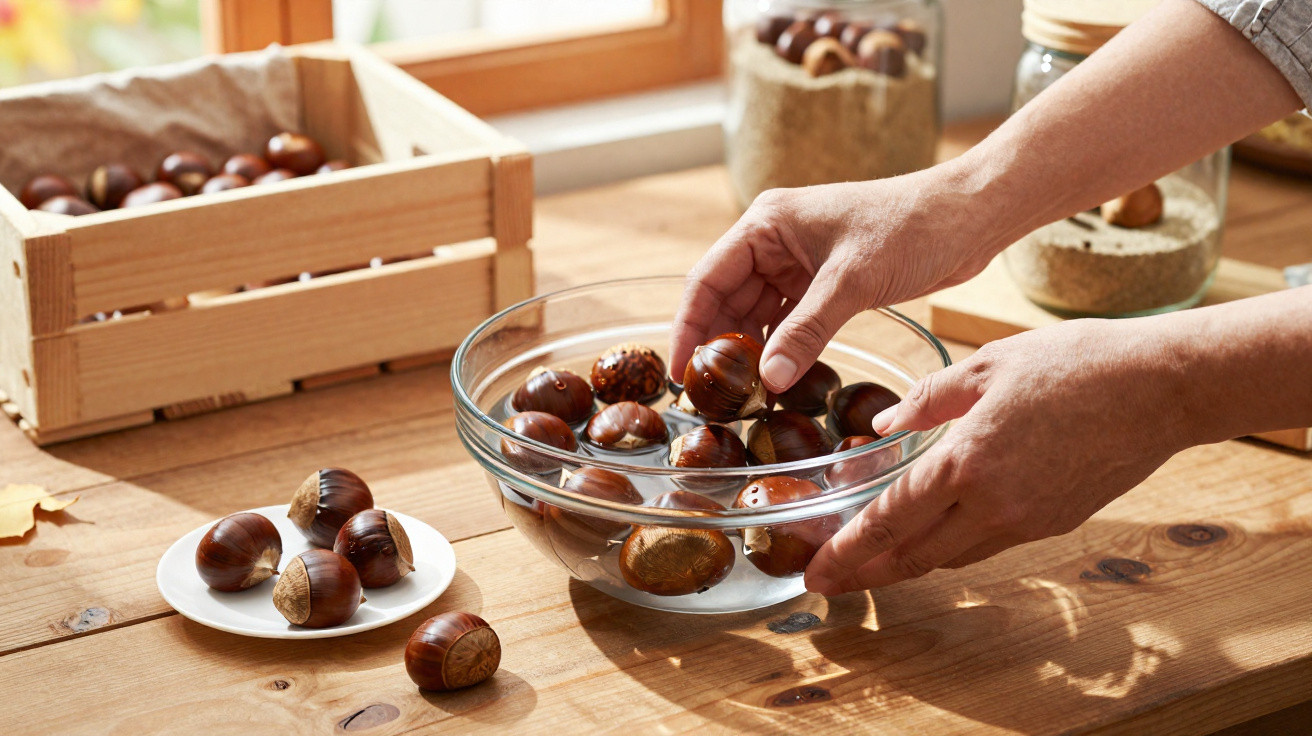
Chestnut cream differs from plain chestnut purée: the cream is already sweetened and spreadable. Purée offers a more intense, earthy flavour, but requires more careful sugar adjustment in the cream. Roasted, finely chopped sweet chestnuts provide crisp accents. A little grated lemon zest adds freshness if the dessert becomes very sweet.
Small adjustments, big impact: the sweetness of the chestnuts, the bitterness of the coffee and the richness of the mascarpone – depth comes from balance.












Comments
No comments yet. Be the first to comment!
Leave a Comment