A frozen lasagne at 21:07. Lukewarm coffee at 08:12. Then comes the microwave’s familiar ding, effectively saying, “Here, this will do.” You rest against the worktop, flick through your phone and watch the dish rotate beneath its unforgiving yellow light. It does the job. It is quick. Yet it hardly feels like cooking.
Now picture the very same kitchen at the same late hour, but without a spinning plate or chewy edges. A compact appliance, roughly microwave-sized, hums quietly as it transforms cold leftovers into a meal that smells like dinner again. Crisp on the outside, tender within and ready in minutes. You do not need to stand over it or make an educated guess. Its display calmly shows how it is treating your food.
That appliance is already here. And many people in the industry believe it could soon send the microwave to the loft.
The quiet countertop revolution
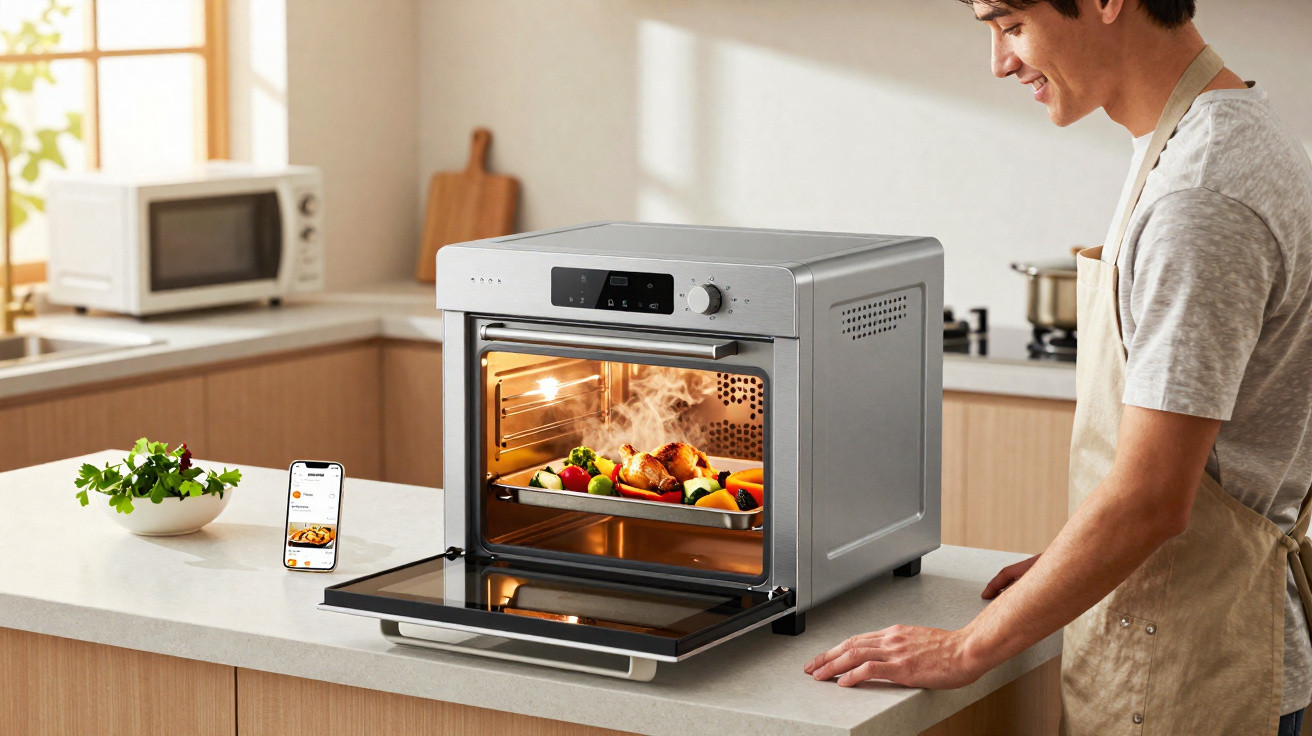
The next-generation appliance attracting everyone’s attention is not a sci-fi oven designed for a showroom. It is an emerging category combining air-frying, convection, steam and smart sensors in one small unit. Think of an appliance that bakes like an oven, crisps like a fryer and steams like a professional combi oven, all within the space occupied by an old microwave.
Tap the touchscreen, place yesterday’s roast chicken inside and let the appliance take over. There is no need to select “medium high” or estimate a cooking time. It scans, weighs and adapts, applying heat and steam in the right sequence. The result does not taste as though it has been revived from the dead. It tastes freshly cooked.
That difference alone reshapes the way people view reheating food.
The change is already visible in everyday kitchens. Air-fryers were the first warning: across Europe and the US, they moved from a niche product to a mainstream appliance in only a few years, with some studies placing adoption at more than 40% of households. Users repeatedly make the same point: “We barely use the oven anymore.” Now imagine that same shift targeting the microwave’s role directly.
Manufacturers are introducing multifunction smart ovens designed to occupy precisely the spot where microwaves currently sit. One London family we spoke to replaced their 10-year-old microwave with a smart combi appliance featuring air-fry and steam functions. In two weeks, the parents were reheating pizza with genuine crunch, grilling salmon after work in 10 minutes and showing their teenager how to warm pasta without turning it to mush.
The microwave had not stopped working. It simply no longer seemed sensible.
A straightforward physics issue sits behind this shift, and it is one the microwave never fully addressed. Microwaves excite water molecules within food, heating it from the inside out. This is why the plate can remain cool while the edges become tough and the centre is occasionally still frozen. Convection, air-frying and steam begin by working on the exterior, producing airflow, evaporation and texture.
Next-generation appliances pair these cooking methods with sensors and algorithms. They measure humidity, temperature and, in some cases, weight, then change modes during the cycle: a brief burst of microwave-style energy to heat the centre, followed by dry hot air for crispness and a quick injection of steam to retain tenderness. This combination is what can make yesterday’s chips taste freshly cooked rather than microwaved into sadness.
For the older appliance, the logic is unforgiving: once people experience the difference with ordinary food, speed by itself is no longer enough.
Using a next-generation smart oven in everyday life
The key to hybrid ovens is to approach them less as a gadget and more as a miniature restaurant chef. Begin with a routine you already know: reheating leftovers. Rather than pressing a random combination of buttons, choose the dedicated “reheat plate” or “crisp reheat” setting. Arrange the food in one layer on a shallow tray or rack, giving the appliance enough room for air to circulate.
Most people are struck by how quickly food can taste fresh again. A pizza slice needs five to seven minutes to regain a proper crust rather than becoming limp. Roast vegetables recover their char instead of resembling steamed baby food. Test it with a meal you would usually microwave, focusing on aroma and texture as well as the time shown on the clock.
That is the moment when the appliance begins to justify its space.
A frequent error is treating a next-generation oven exactly like a microwave on the first day. You put in a bowl, enter “2:00” and anticipate the usual rush of overheated edges. It will not behave that way, and that is precisely the benefit. Use the presets. They are not empty marketing claims; they are effectively cooking programmes developed through hundreds of tests in laboratory kitchens.
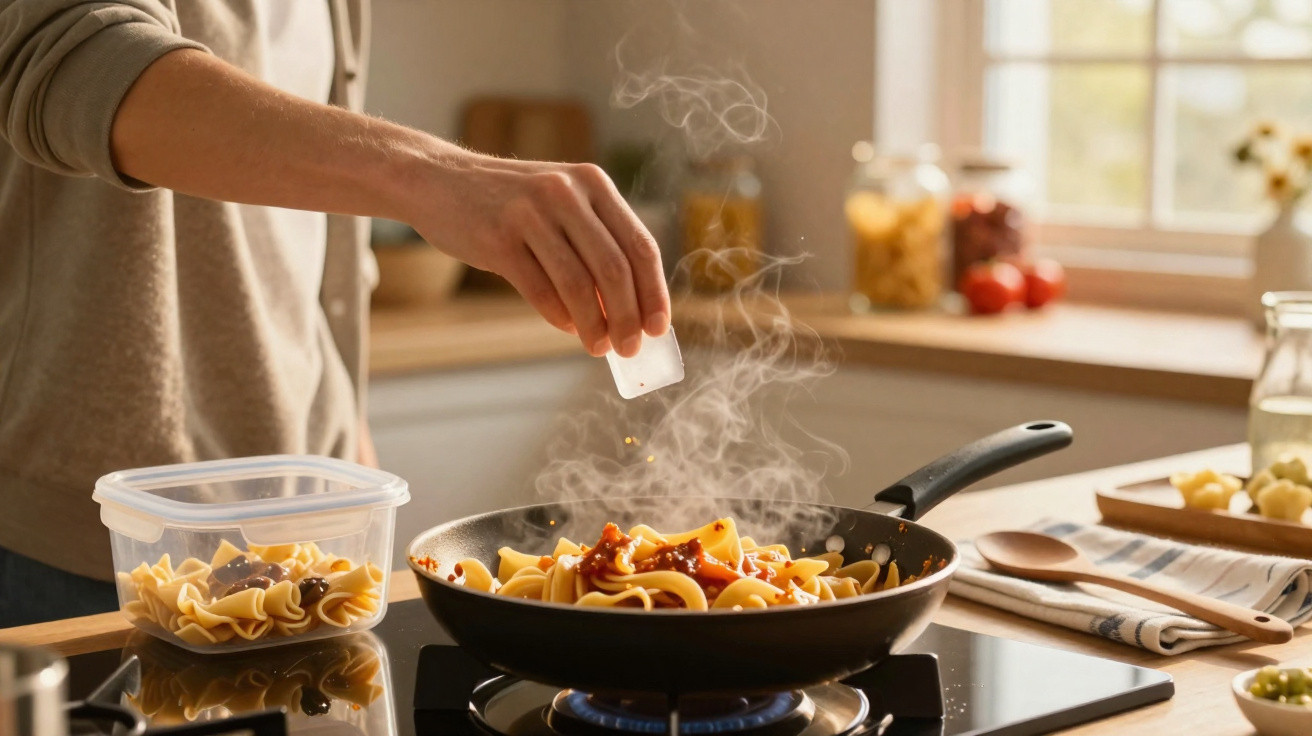
Overfilling it is another pitfall. Stacking containers or heaping food into a deep dish obstructs the air and steam, leaving you with food that is hot and soggy rather than fast and crisp. Think like a restaurant pass rather than a storage tub. Lay food out, leave space around it and stir midway through when reheating dishes such as curry or stew.
And then there is cleaning. Let’s be honest: nobody truly does it every day. Even so, wiping the interior after strongly scented foods such as fish makes a major difference, as these appliances circulate air rather than merely sending waves through a still box.
“The turning point was leftovers,” admits Clara, 34, who replaced her microwave with a compact combi-oven last year. “Once I realised my Sunday roast tasted almost better on Tuesday, the microwave went into a cupboard and never came back.”
There is also an effect that people do not always anticipate: more cooking from scratch on weekday evenings. When a proper dinner with texture and colour feels achievable in 15 minutes, takeaway food becomes less tempting. The appliance acts as a shortcut to better meals, not simply warmer meals.
- Reheat food on a rack or tray rather than in deep plastic tubs to preserve its texture.
- Choose “crisp” or “air-fry” settings for pizza, chips and breaded food.
- Use steam or “gentle reheat” for meals containing sauce or rice.
- Keep one tray that fits the appliance perfectly and use it for everything.
Will the microwave actually vanish?
Visit any major appliance exhibition and the shift is immediately clear: the microwave is no longer centre stage. The headline products are compact combi ovens, AI-assisted cooking and countertop appliances that connect to your phone. Brands promote them as healthier, tastier and more energy-efficient than the buzzing box many of us grew up with.
For urban renters, the calculation is straightforward. Space costs money. When one appliance can grill, bake, air-fry, steam and reheat food properly, retaining a separate microwave can feel like owning two smartphones “just in case.” Some early adopters even give theirs away when moving home, pleased to recover a corner of the worktop while improving their late-night snacks at the same time.
At a deeper level, this change touches on a feeling many people have quietly experienced: guilt about food. After a long day, the microwave can be both a saviour and a symbol of surrender, reducing the previous evening’s effort to something bland and disappointing. Next-generation appliances do not solve life’s problems, but they can make that moment a little easier.
We have all had that moment when we open the microwave door already knowing the meal will disappoint. These new ovens make it feel more like a “second chance” than “damage control”. You still press a few buttons and walk away, but return to crisp chicken skin, bubbling cheese crusts and grains that have not become paste. It is a modest improvement that does not feel modest when you are tired, hungry and scrolling at the table.
Will every household abandon the microwave? Probably not. Student kitchens, office break rooms and hotel corridors will always have places for cheap, familiar appliances. Yet the momentum is shifting in family houses, shared flats and compact city apartments. The microwave emerged when speed alone seemed like progress. This new generation of appliances reflects a different mindset: we still want food quickly, but we are tired of eating as though that is all that matters.
The real story is not an appliance war. It is a question we seldom ask aloud: how much do the tools we use every day quietly influence how we eat, talk and spend time at home? A small black box in the corner taught us to expect food in 90 seconds without asking questions. Its successor is teaching an entirely different lesson: even on a Tuesday night, reheated food need not taste like a compromise.
| Key point | Details | Why it matters to readers |
|---|---|---|
| Real reheating time vs microwave | A smart combi or air-fry oven will reheat a plate of mixed leftovers in 6–10 minutes, compared with 2–3 minutes in a microwave, but with crisp edges and even heat instead of soggy or cold spots. | You trade a few extra minutes for food that actually tastes cooked, which can mean eating more leftovers instead of throwing them away or ordering in again. |
| Energy use per typical meal | Tests on 1–2 portions show many compact combi-ovens use 0.15–0.25 kWh per reheated meal, roughly similar to a microwave, because short preheat times offset slightly higher power draw. | If energy cost is on your mind, you’re not paying a big penalty for better texture; in some cases, you may even save compared with firing up a full-size oven. |
| What you can stop using | A single next-gen device can take over from a microwave, toaster oven and basic air-fryer, especially in small kitchens where one 30–40 cm unit is easier to live with than three. | Consolidating appliances frees up counter space, simplifies cooking decisions and can make a small flat or student studio feel much less cluttered. |












Comments
No comments yet. Be the first to comment!
Leave a Comment