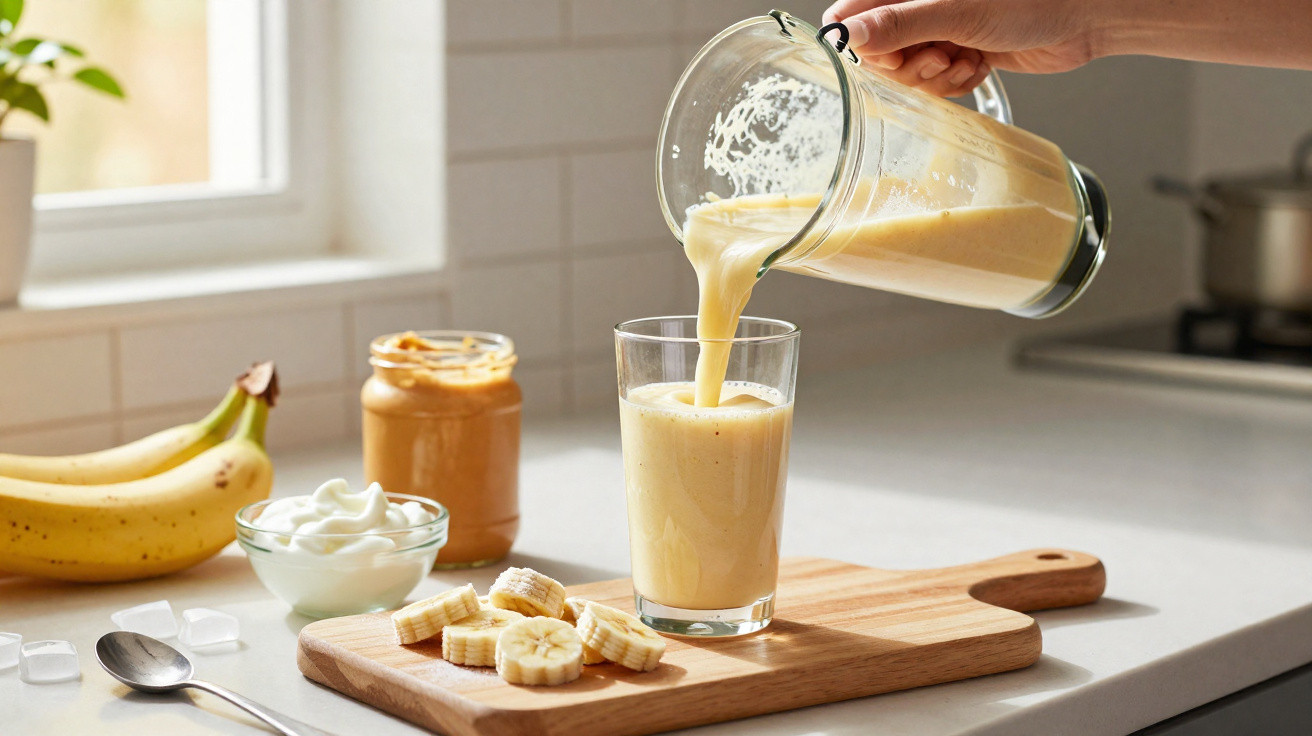
Frozen banana slices in place of ice cubes may sound almost laughably straightforward, but they have sparked a miniature war in British kitchens and across social feeds. Supporters insist it is the secret to denser, silkier smoothies, repeating “stop watering flavor down”, while one dietitian counters: “you are just drinking dessert”. Amid the morning scramble, the blender’s hum and an overfull fruit bowl, such a small decision can suddenly seem loaded.
I skipped the ice tray, opened the freezer and took out a tub of banana coins I had cut the previous evening. They dropped into the blender jug with a gentle rattle, like buttons in a tin, before I added oat milk and a spoonful of peanut butter.
That first mouthful was thick like a shake: cold, but without a watery finish, and unexpectedly more indulgent. I took it outside feeling faintly silly yet oddly proud, as though I had accidentally upgraded my mornings. It had the taste of a milkshake, minus the guilt I had anticipated.
By lunchtime, my group chat had split into opposing camps and my For You feed was ablaze. One camp said, “stop watering flavor down”. The other said, “you are just drinking dessert”. The intensity was ridiculous, but also strangely exciting.
It turns out this is about far more than ice cubes.
The frozen banana backlash, and why people care
The first thing you notice is its texture: it is not merely cold, but velvety. Frozen banana adds substance, the quality people normally seek from yoghurt or protein powder. Its fans value the fact that the blender is not battling ice, meaning there is no dilution as cubes melt into the drink. Creamier is the description that appears again and again. Try it once and the internet’s fascination starts to make sense.
A video of banana slices clattering into a blender bounced around my feed, with comments arriving faster than the smoothie could thaw. People praised it with “stop watering flavor down,” treating the phrase as a battle cry for taste buds supposedly oppressed by tap-water ice. Others offered tips: freeze bananas as coins rather than chunks; make portions in advance; include a pinch of salt. Then a dietitian’s stitched response landed: “you are just drinking dessert”. The remark lingered, and the debate erupted.
Beneath all that noise is a straightforward point about food science. Bananas contain soluble fibre and pectin, both of which thicken when chilled and give blended drinks a swirl close to gelato. Ice, meanwhile, is simply frozen water. It turns slushy, melts and waters everything down. Frozen fruit cools the mixture while retaining its flavour, so every sip is as consistent as the first. That is the practical explanation for why it works-and why people defend it so passionately.
How to do it right: freezing bananas for lush, ice-free blends
Choose ripe bananas first: sweet, freckled ones rather than fruit that is falling apart. Peel them, cut them into 1 cm coins, and spread them over a lined tray so they do not freeze together into one yellow block. Freeze for two hours, then transfer the coins to a bag, squeeze out the air and store it flat. For one glass, begin with a heaped cup of coins. Add your preferred milk, a handful of berries and perhaps a spoonful of nut butter, then blend from low to high for 30–45 seconds. That is your no ice melt smoothie.
Everyone knows the moment when a blender seems to sulk and will not pull the ingredients down. Add a little more liquid, use short pulses, then increase the speed. If your machine is temperamental, leave the coins in the jug for 60 seconds so the blades can get some purchase. Keep banana amounts sensible-half to one whole banana’s worth of slices per person-particularly when dates, honey or sweet yoghurt are also going in. Realistically, nobody does this every day, so pre-portioned bags make the habit easier.
Problems can crop up, and that is no disaster. If bananas brown in the freezer, oxidation is responsible: use airtight bags, remove the air and freeze them quickly on a tray before bagging. If they develop freezer burn, rotate your supply weekly and avoid storing it close to the frost vents. If your blender leaves a gritty texture, blend for longer or pour in an extra splash of milk.
“Frozen banana is a savvy swap for ice-keep portions in check and lean on unsweetened add‑ins if you want the smoothie to feel like breakfast, not pudding.”
- Cut thinner slices for easier blending, or thicker ones for more body.
- Combine with sharp fruit, such as berries or kiwi, to counter the sweetness.
- Choose Greek yoghurt or silken tofu to add protein without extra sugar.
- A pinch of salt and a dash of vanilla help flavours stand out.
Is it a smoothie or just dessert?
This is the uncomfortable middle ground people seldom acknowledge: a smoothie is both a formula and a feeling. Frozen banana embraces enjoyment-the smooth texture and rounded sweetness-which explains why its defenders are so devoted. Yet calling it dessert is not solely about the banana; it depends on the ingredients around it. Add syrupy juice, sweetened yoghurt, honey and dates and, yes, you are effectively serving soft-serve in a glass. Keep it straightforward with banana coins, milk and tart fruit, then add protein and fibre for substance, and it feels like breakfast again. A technique I like is dividing the job between two ingredients: use half banana coins for texture and half a neutral frozen vegetable, such as cauliflower, for bulk that you cannot really taste. On the morning scale, it can go either way. Budget-friendly, hugely satisfying and still entirely under your control.
| Key point | Detail | Benefit for the reader |
|---|---|---|
| - | Replace ice with frozen banana coins to thicken without dilution | A richer texture and flavour that lasts until the final sip |
| - | Offset sweetness with tart fruit and protein additions | Breakfast appeal rather than pudding energy |
| - | Freeze on a tray, then bag in portions to prevent clumps and freezer burn | Faster preparation, smoother blends and less waste |









Comments
No comments yet. Be the first to comment!
Leave a Comment