You lift the lid and last night’s gloss has disappeared. What you need is Monday-night comfort, not a midweek compromise. Oddly enough, the answer may already be sitting in your freezer.
Rain swept sideways through Glasgow that evening, stinging the back lane behind a little Italian restaurant near Sauchiehall Street. After closing, I drifted into the kitchen, where steam and garlic filled the air, and watched a chef in a worn black apron warm up a staff portion of penne. There was no microwave and no flashy performance. He used only a shallow frying pan, a low flame and one unforgettable move: he tossed an ice cube directly onto the pasta, then waited with his hands in his pockets, as though listening to a joke just before the punchline. The pasta emerged glossy and revived. He winked. And said it works every time.
How a Glasgow kitchen taught me to revive pasta
Leftover pasta is not finished; it is simply dehydrated. As cold starch rests, it firms up and forces out moisture, much like a sponge being squeezed. That is why pasta sticks together and sauces lose their lustre. The answer is not extra oil, nor is it the microwave’s brute force. What it needs is moisture and heat restored carefully, in the proper sequence. A Glasgow chef once showed me the fastest way to achieve that without ruining the texture. He called it the ice cube trick.
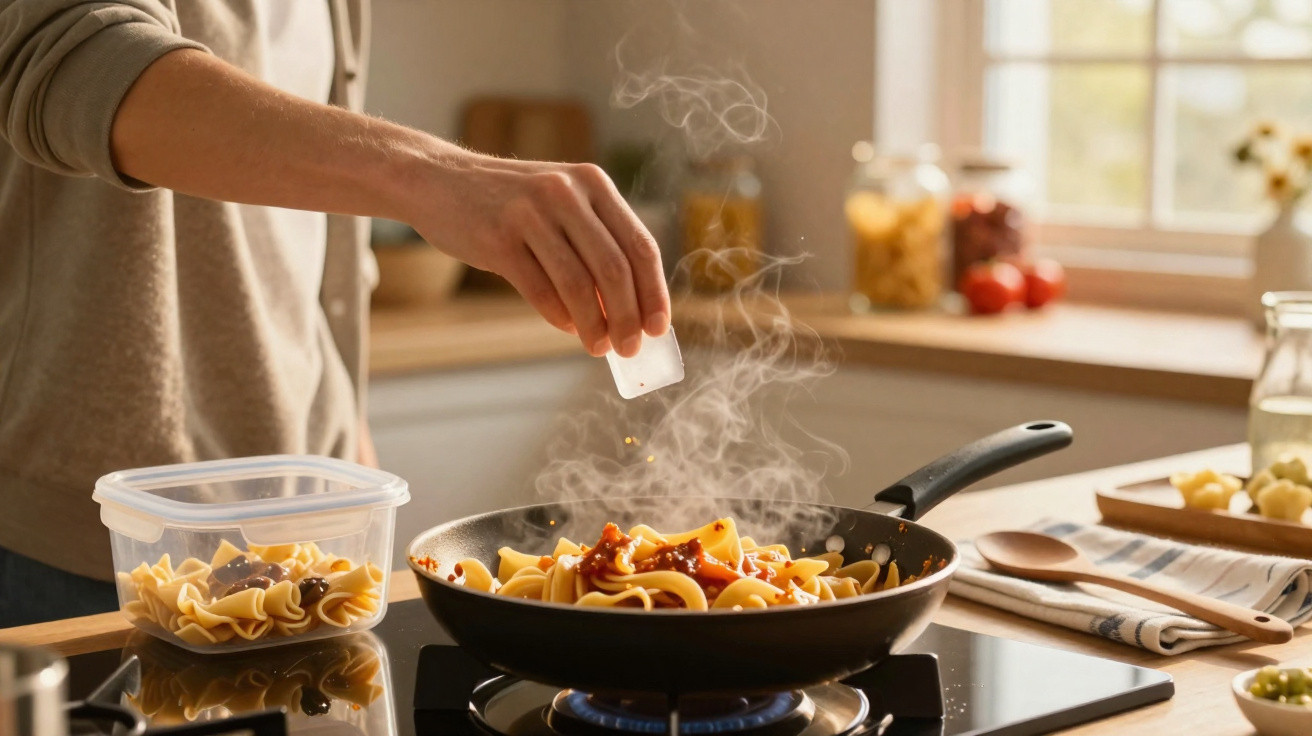
Having cooked all day, he was not doing it for effect. He emptied cold rigatoni with the previous day’s tomato sauce into a frying pan. The heat stayed low. He added a small knob of butter, followed, without fuss, by an ice cube. The lid went on for a minute. Then he removed it, tossed the pasta twice, added a spoonful of pasta water from a pot bubbling nearby, and finished with grated cheese. The entire process lasted three minutes. We have all experienced leftovers we expect to endure turning into food we cannot stop eating. This was one of those moments. And it began with a cube of frozen tap water.
Why is a cube better than simply adding water? It is all about timing. As the ice melts gradually, it supplies the pan with a controlled trickle of water. That water first creates steam, loosening the pasta and bringing the starch back into a silky suspension. You get warmth and humidity, rather than heat alone. The cube also creates a more gradual rise in temperature, preventing dairy sauces from splitting and pesto from losing its freshness. Add a little fat and some starchy pasta water, and you have an emulsion. The pasta rehydrates, the sauce comes together, and the dish looks as though it has just left the pass.
The ice cube method: how to make leftover pasta taste freshly cooked
Begin with cold pasta. Put the pasta and sauce into a wide frying pan, before it starts to sizzle. Add a teaspoon of olive oil or a small knob of butter. Use one ice cube for each serving. Set the pan over a low-to-medium heat, cover it, and leave it for 60–90 seconds. Remove the lid, raise the heat slightly and toss the pasta. Once the cube has almost disappeared, add a splash of hot pasta water-or plain water with a pinch of salt-then toss again until the sauce turns glossy. Finish with fresh cheese, black pepper and, if you like, lemon zest. Serve at once. It should smell like hope.
For cream-based sauces, keep the heat lower, add the ice cube, then stir in a little milk or reserved cream towards the end. With tomato sauces, an ice cube and a modest drizzle of olive oil restore their sweetness and sheen. For pesto, first warm the pasta with the cube and plain water, then stir in the pesto off the heat to keep the basil vivid. Even if you only have unadorned leftover pasta, the cube is useful: let it melt in the pan with a little butter and grated hard cheese, and you can create a quick, silky sauce from almost nothing.
The usual mistakes? Turning the heat too high, adding too much oil and overlooking the salt. Realistically, no one gets every detail right every day. Keep the process gentle and restrained. Think sauna rather than sunburn. Stir with a spoon and toss the pasta instead of attacking it. If it seems too tight, add a teaspoon of water and keep it moving. If it looks too loose, let it bubble for twenty seconds. Gentle warmth and steam can return weary pasta to its former self.
“An ice cube buys you time,” the Glasgow chef told me. “It melts like a metronome and keeps you from rushing the sauce.”
- One cube per person gives you control. Use two only for large, very dry portions.
- Add fresh fat at the end-olive oil, butter or mascarpone-for restaurant-worthy gloss.
- Choose pasta water when available. Its starch is your best friend.
- Keep dairy away from direct high heat so it does not become grainy.
- Grate cheese into the pan off the heat, then toss it properly.
Why this small pasta ritual feels like more than dinner
There is a quiet satisfaction in discovering that tiny adjustments can undo larger mistakes. The ice cube is a prompt rather than a gimmick: a way to treat leftovers with care without making the kitchen feel like a major undertaking. It makes a meal go further, reduces waste, rescues lunch and improves Wednesday. It can also transform how you reheat other foods, including grains, roasted vegetables and even the previous night’s curry. First a little steam, then a little sizzle. You notice it in your shoulders as soon as the sauce becomes glossy. You breathe out. For a moment, the hard edges of the week become softer.
| Key point | Detail | Benefit for the reader |
|---|---|---|
| Revive with steam | Ice melts gradually, supplying controlled moisture | Stops pasta becoming dry and clumped |
| Finish with fat | Add olive oil or butter at the end | Brings back shine and flavour |
| Use starch intelligently | A small splash of pasta water creates an emulsion | The sauce clings as though it has just been cooked |










Comments
No comments yet. Be the first to comment!
Leave a Comment