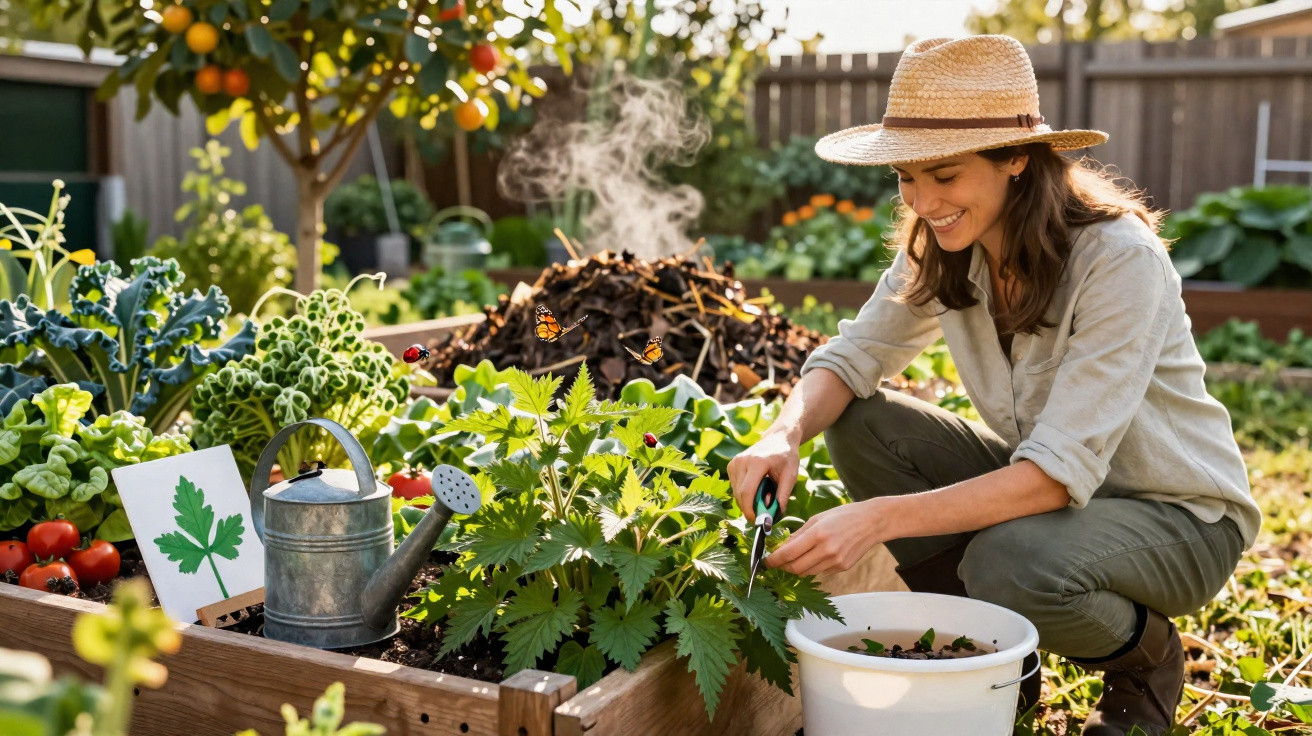
In the vegetable garden, nettles are usually seen as the enemy. Anyone who has brushed against their sting will often pull them out instinctively. Yet these unassuming, stinging leaves conceal an invaluable ally for soil, vegetable beds and garden wildlife. Tolerating nettles strategically rather than fighting them can noticeably change how a garden functions – particularly below ground.
Why nettles should remain near the vegetable bed
Nettles favour spots where the soil is already relatively nutrient-rich. Many gardeners take this as a warning sign and immediately reach for a spade. In reality, the plant mainly reveals one thing: this area has potential. Its roots open up the soil, while its foliage holds valuable nutrients that can later return to the garden cycle.
“By leaving nettles in place, you are creating a free nutrient store in the background for the entire vegetable bed.”
Put differently, the plant performs quietly beneath the surface. It absorbs nutrients, stores them in its leaves and gradually returns them to the soil – especially when it is cut back, composted or used to make liquid feed.
Nettle liquid feed: high-powered fertiliser from a bucket
The best-known garden use for nettles is the familiar liquid feed. It can replace costly specialist fertilisers and many chemical products sold at garden centres, requiring only a few simple steps and no plastic packaging.
How to make nettle liquid feed yourself
- A bucket or barrel, preferably not metal
- Fresh nettles, roughly chopped
- Rainwater or water that has been left to stand
- A little patience and a shaded location
Fill the container to around halfway with chopped nettles, then add water until the plant material is well covered. Cover it loosely so that air can circulate, and leave it for 7 to 10 days. Stirring once a day supports the fermentation process. The liquid feed is ready when bubbles no longer rise to the surface.
Always dilute it before use: use around 1 litre of liquid feed for every 10 litres of water. This mixture can be used to:
- water vegetable plants to encourage growth
- spray foliage to strengthen it
- make plants more resilient to disease
“Nettle liquid feed supplies not only nitrogen, but also potassium, calcium, magnesium and iron directly to the roots of cultivated plants.”
Many amateur gardeners report that lettuces, tomatoes and cabbages become visibly stronger and more resilient after several applications. When sprayed, the liquid can also deter aphids and spider mites.
Compost booster: why nettles belong on the heap
Anyone with a compost heap already has their own small recycling facility. Nettles act as a natural accelerator here. They add plenty of nitrogen to the heap and stimulate the decomposition process.
Roughly chopped nettles layered among grass cuttings, leaves and kitchen scraps provide:
- faster breakdown of organic material
- higher temperatures within the compost
- darker, more nutrient-rich humus
- a better carbon-to-nitrogen balance
An important reassurance for anyone who is unsure: once nettles begin to wilt and rot in the compost heap, they lose their stinging effect completely. Compost containing nettles will not sting – neither your hands nor your gardening conscience.
A habitat for butterflies and beneficial insects
What may look like “weeds” above ground is vital to the survival of many insects. Numerous butterfly species lay their eggs preferentially, or even exclusively, on nettles. Their caterpillars are specially adapted to feed on these leaves.
“Without nettles, magnificent species such as the peacock butterfly, small tortoiseshell or red admiral will soon be missing from the garden.”
Leaving a few patches of nettles around the edge of the plot creates breeding sites, food sources and shelter for these creatures. Adult butterflies later pollinate fruit trees and flowers, thereby contributing directly to improved harvests.
Spiders, ladybirds and other beneficial insects also live among the stems. They prey on aphids and other pests that might otherwise attack lettuce, beans or roses unchecked. A small “wild strip” of nettles can therefore greatly reduce the need for sprays.
A medicinal herb and super-vegetable from the corner
Nettles are more than a fertiliser factory and insect hotel. For centuries, they have also featured in soup pots and herbal remedy books. The young, tender shoots that appear in spring are particularly suitable for cooking.
Ways to use the plant
- Soups: similar to spinach soup, but with a more intense flavour
- Pesto: blend chopped nettle leaves with oil, nuts and cheese
- Tea: infuse dried leaves in hot water
- Juice or smoothies: combine small quantities with other leafy greens
The leaves provide plentiful vitamins A, C and K, as well as iron and other minerals. In folk medicine, the plant is considered beneficial for joint discomfort, tiredness and circulation problems. Many people use it as a spring course to “flush out” the body and replenish minerals.
Important: always wear gloves when harvesting, and use only clean, unsprayed sites away from roads and areas frequented by dogs.
How to keep nettles under control in the garden
The good news is that nettles do not need to be allowed to grow everywhere for you to gain their benefits. A managed coexistence is the better approach.
Tips for dedicated nettle areas
- A fixed area at the edge of the garden as a “nettle corner”
- A wild hedge or border strip running along a fence
- A large container or old mixing tub for balcony gardeners
Cutting the plants back regularly prevents them from setting seed and spreading throughout the garden. The cut shoots can go straight onto the compost heap or into the bucket for the next batch of liquid feed.
“With a clearly defined area, the nettle changes from a nuisance into a well-controlled resource.”
What really happens beneath the soil
Around their roots, nettles encourage more life in the soil. Their fine roots loosen the earth and create channels through which water and air can move more easily. Microorganisms and soil-dwelling creatures find the food and structure they need to break down organic matter.
At the same time, nettles indicate places with a good supply of nutrients. By using these areas intelligently, you can plant hungry crops such as tomatoes, squash or cabbage nearby – leaving a small gap, but keeping them close enough to benefit from the improved soil quality.
Practical combinations for the vegetable bed
Here are several useful ways to incorporate nettles into a garden plan:
- grow a strip of nettles at the vegetable garden edge rather than directly in the bed
- apply liquid feed regularly to hungry crops, and less often to weaker-growing plants
- mix composted nettles into the planting holes for tomatoes and peppers as humus
- deliberately leave part of the garden “wild” to support insects
Working this way allows the plant to serve three purposes: as a nutrient supplier, an insect magnet and a kitchen ingredient. What once seemed a nuisance suddenly becomes a building block of a robust, resilient garden system.
For many amateur gardeners, this approach may initially feel unfamiliar. The urge to keep everything “tidy” and “clean” runs deep. Yet small wild corners can bring stability during periods of heat, heavy rainfall and pest pressure. The nettle is a fitting symbol of this: it may sting briefly, but it repays the garden many times over in the long term.













Comments
No comments yet. Be the first to comment!
Leave a Comment