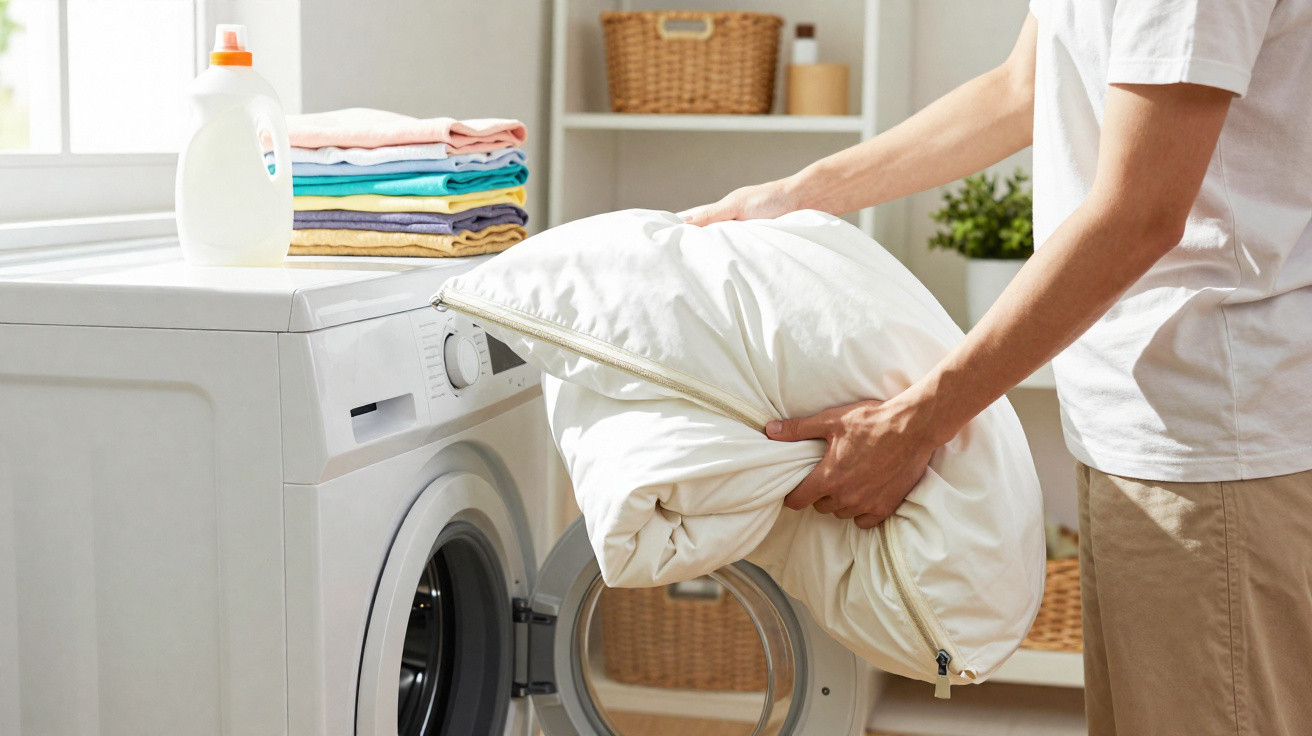
A bedding load in the washing machine can take up far more room than it appears to when wet, and this has a direct effect on the wash. Before placing sheets, pillowcases and covers in the drum, sorting the items and checking zips, buttons and the size of the load can prevent common issues and improve cleaning results.
Why sort bedding items before washing?
Sheets, pillowcases, duvet covers and towels vary in both size and weight. If they are put in together without accounting for these differences, certain items can twist around one another, preventing water and detergent from circulating properly.
Keeping particularly bulky items separate also prevents the drum from becoming too full. There must be enough room for the load to move throughout the cycle, while always staying within the capacity specified by the washing machine manufacturer.
What difference can zips make?
Duvet covers and other zipped items should be closed before they are washed. An open zip can catch on other pieces, raising the risk of snags and fabric wear as the drum turns.
It is also worth inspecting buttons, elastic and seams before starting the cycle. Damaged items may deteriorate further in the wash. Where the care label gives a specific instruction, this should take priority over general guidance.
How should bedding be prepared for the washing machine?
Before beginning the wash, shake out the items to remove anything left between the folds and check their care labels. Then close the zips and place larger pieces in the drum without packing them in too tightly.
Do not combine so much laundry that it exceeds the appliance's stated capacity. For very bulky articles, such as duvets, check the manual to confirm that the machine has a suitable capacity and cycle. If an item cannot fit with sufficient room to move, a suitably equipped launderette may be the better option.
Who needs to adjust these precautions, and when?
Washing machines with smaller drums require particular attention to the volume of bedding. A duvet that seems to fit when dry can occupy considerably more space once it absorbs water, restricting movement and placing greater strain on the appliance.
Delicate fabrics, filled items and bedding with special finishes must also be washed according to the care-label instructions. Adjusting the temperature, cycle, number of items and washing product to suit the material helps protect fabrics and avoids treating every type of bedding in the same way.

















Comments
No comments yet. Be the first to comment!
Leave a Comment