It’s that point in the year when every cough on the bus seems more noticeable, tissues accumulate in coat pockets, and the office kettle is constantly on. We’re after something fast, colourful and properly supportive for our bodies. It also needs to be delicious enough to make again the next day.
I was in the kitchen with a sore throat and a woolly-headed feeling, lit softly by the fridge while the radio murmured the morning headlines. The blender felt like a modest source of hope.
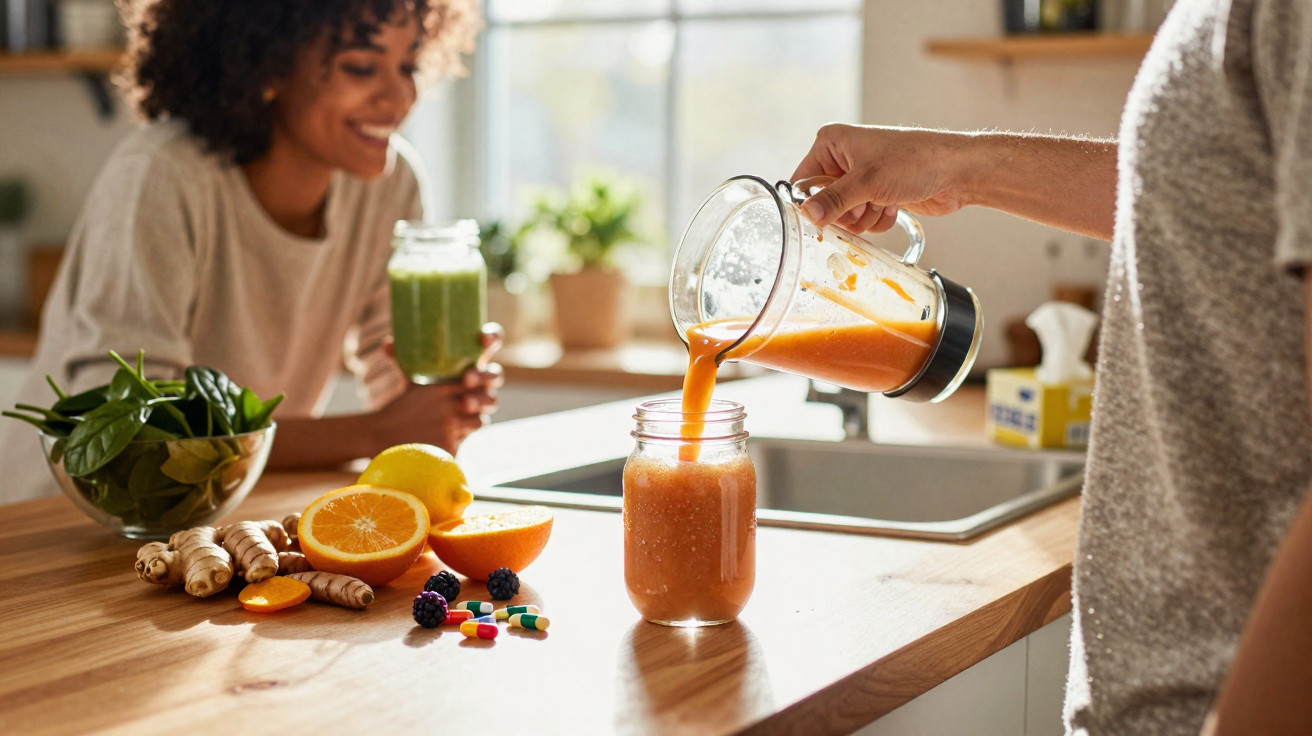
On the worktop sat a weary orange, a bumpy piece of ginger and a bag of frozen berries skidding about like a hockey puck. I peeled, chopped, estimated a pinch and poured a drink the shade of a winter sunset. That first mouthful felt as though someone had turned the lights back on.
Was it miraculous? Certainly not. Yet it was a beginning. One small adjustment can make a striking difference.
Why smoothies make sense when the sniffles arrive
When your appetite is low and every task feels uphill, getting vitamins in a drink is straightforward. Smoothies combine vitamin C, beta-carotene, vitamin E and plant polyphenols in a single glass, without forcing your way through a huge salad. They also add hydration, which is welcome when your throat feels rough.
They can be kind to an unsettled stomach first thing. A ripe banana rounds out sharp citrus, yoghurt tempers ginger’s heat, and ice makes the whole thing more inviting to drink. Include seeds or a spoonful of nut butter, and you have a drink that keeps you going for longer than juice.
A glass full of colour can lift the feel of a room. The appeal is not only nutritional; it is also in the routine of chopping, blending and pouring. It offers a minute of control when life feels more chaotic than you would prefer.
Here’s a brief scene from last week. My neighbour, who is devoted to her collection of scarves, developed a tickly cough and a sore nose. She arrived carrying a bag of satsumas. We blended one orange, one kiwi, a thumb-sized piece of fresh ginger, a small carrot, 150 ml of water and a squeeze of lemon. She wanted a drizzle of honey, so we put some in, because comfort counts.
The window steamed up as the blender whirred. It tasted vivid, like sunshine tapping on the pane. She laughed at ginger’s tingle and took the remainder home in a jar. At times, all you need is encouragement to carry on eating your fruit and vegetables.
Public surveys suggest that only around one in three UK adults reaches their five-a-day. A well-built smoothie can provide two or three portions in one glass. It is not a loophole; it is a shortcut that fits into a packed week.
There is some straightforward science behind it as well. Vitamin C in citrus helps the body make use of iron from leafy greens and seeds, making it a useful pairing in a green smoothie. A spoonful of yoghurt or a quarter of an avocado supplies fat, which supports the absorption of fat-soluble vitamins such as A and E. Curcumin in turmeric works better with a twist of black pepper.
Fibre supports the gut-where much of your immune system sits-and it remains in a blended drink, unlike in many juices. Frozen fruit is harvested when ripe and quickly frozen, so using it is not “cheating”. Your blender is more about timing than perfection.
This is neither a cure nor protection from every sneeze on the train. It is, however, a useful way to look after your body when daylight is scarce and commutes seem never-ending. That is reason enough to switch on the blender.
Five immune-savvy smoothie recipes you’ll genuinely make
Think in terms of a formula rather than a complicated process. Begin with 1 heaped cup of fruit or vegetables, roughly 150–200 g. Add 1 cup of liquid, around 200–250 ml: water, milk, coconut water or kefir. Choose 1 “anchor”: 1 tbsp of seeds, 2 tbsp of oats or a quarter of an avocado. Complete it with 1 “booster”: ginger, turmeric, spinach or a squeeze of citrus.
Build up the blender in layers. Put in liquid first, followed by soft fruit, leafy ingredients and then firmer pieces on top. Blend for 45 seconds, leave it for 15 seconds, then blend once more. The break reduces bubbles and creates a creamier drink. Add a splash of liquid if it is too thick. If it is too runny, add ice or more oats.
Turn it into an easy routine: rinse, refill, finished. Cold, sweet, and nourishing can live in the same cup.
We have all faced a nearly empty fridge and been tempted by toast… once more. The answer is to make things easier in advance. Freeze sliced ripe bananas. Keep a jar of mixed seeds beside the blender. Put a knob of ginger in the vegetable drawer and leave it there until it is needed.
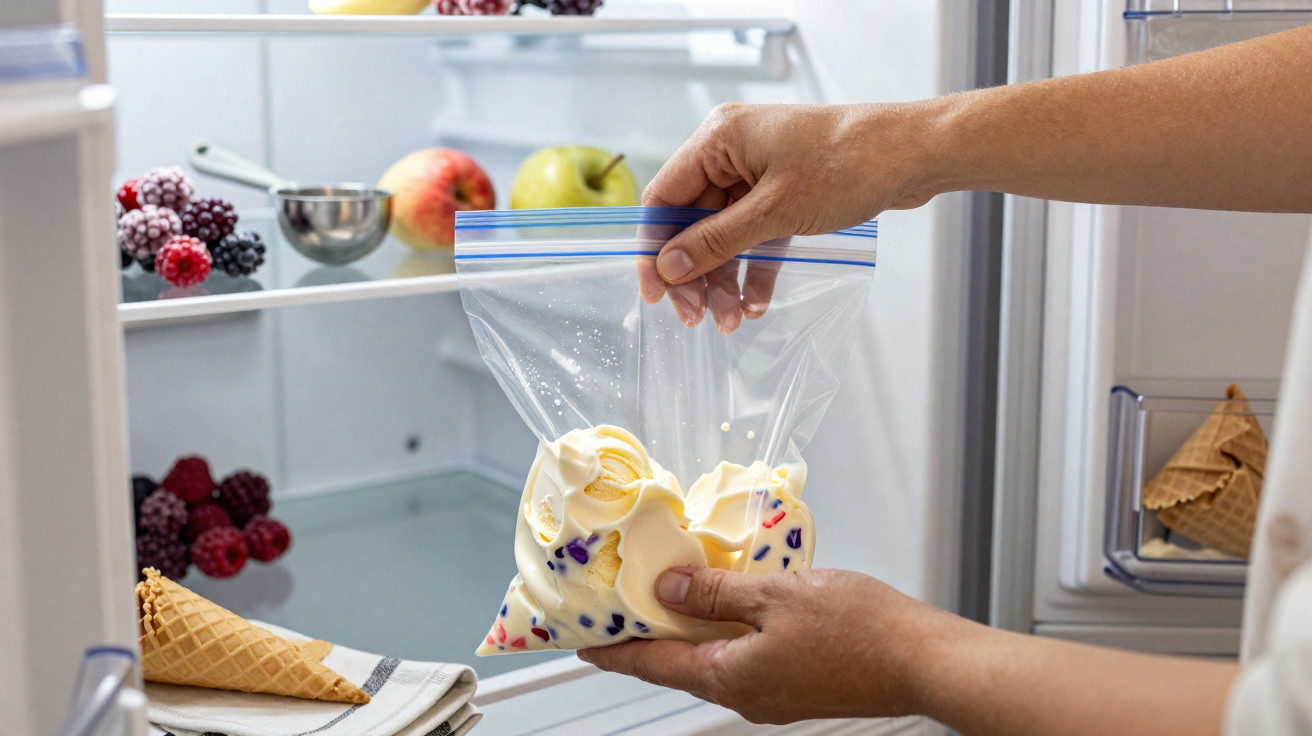
In truth, hardly anyone manages that every day. Prepare “smoothie packs” in batches at the weekend: fill zip bags with fruit and greens, then add only liquid and a spoonful of seeds. If your smoothies are overly sweet, reduce the tropical fruit and use more berries, cucumber or leafy greens. To make them more filling, add protein in the form of Greek yoghurt, kefir, silken tofu or a scoop of unflavoured protein powder.
Pay attention to the little details that transform a smoothie: a pinch of salt brightens flavours, lemon or lime balances sweetness, and a little vanilla makes it feel like pudding. If your blender struggles with kale stalks, massage them or chop them finely. Warming spices such as cinnamon and cardamom can make chilly mornings feel gentler.
“When winter bites, I think in colours: red for berries and polyphenols, orange for C and carotenoids, green for iron and folate. The blender makes that choice easy on days when I’m not.”
- Citrus-Ginger Shield: 1 orange (peeled), 1 kiwi, 1 small carrot (chopped), 1 cm fresh ginger, 1 tbsp lemon juice, 1/4 tsp turmeric + a pinch of black pepper, 120 g Greek yoghurt or 200 ml kefir, 100 ml cold water, a few ice cubes.
- Berry-Kefir Polyphenol Blend: 150 g frozen mixed berries, 250 ml kefir, 30 g spinach, 1 tbsp ground flaxseed, 1 tsp honey or date syrup (optional), 1/2 tsp vanilla.
- Tropical C Cooler: 100 g mango, 100 g pineapple, 1 tbsp lime juice, 200 ml coconut water, 1 tbsp chia seeds, 6 mint leaves, ice to taste.
- Green Iron-Lift: 1 small pear, 40 g kale (stems trimmed), 100 g cucumber, small handful parsley, 1 tbsp pumpkin seeds, 1 tbsp lemon juice, 200 ml water, extra 1/2 orange for vitamin C brightness.
- Spiced Carrot-Orange Glow: 100 g grated carrot (raw or lightly steamed), 1 orange (peeled), 1/2 banana, 2 tbsp oats, 1 tbsp almond butter, 1/2 tsp cinnamon, 250 ml milk of choice.
Make your smoothies personal and social
There is a quiet pleasure in giving someone a glass that resembles a tiny sunrise. Pass recipes on to a neighbour. Exchange bags of frozen fruit with a friend-mango for berries, berries for pineapple-and discover what works. The best smoothies are those you make on an ordinary Tuesday, rather than the ones that merely photograph well on your phone.
If you are feeling run down, stick to mild flavours: banana, oats, cinnamon and warm milk. When you are fading at 3 p.m., choose citrus, kefir and ginger for a little lift. Start with what you have, not with what you wish you had. A blender is not a lifestyle; it is a practical tool that turns five minutes into something you can feel.
Photograph the strangest, most beautiful colour you pour this week, then send it to somebody who may need encouragement. Every glass can begin a conversation. Somewhere between the whirr and the first sip, you remember that you are allowed to care for yourself through small, delicious choices.
| Key point | Detail | Benefit for the reader |
|---|---|---|
| Pair nutrients for absorption | Vitamin C + plant iron; fat with vitamins A & E | More value from the same ingredients |
| Balance the build | Fruit/veg + liquid + anchor + booster | Reliable texture, steady energy |
| Preparation beats willpower | Freezer packs, seeds by the blender, quick cleaning routine | Smoothies happen on real weekdays |









Comments
No comments yet. Be the first to comment!
Leave a Comment