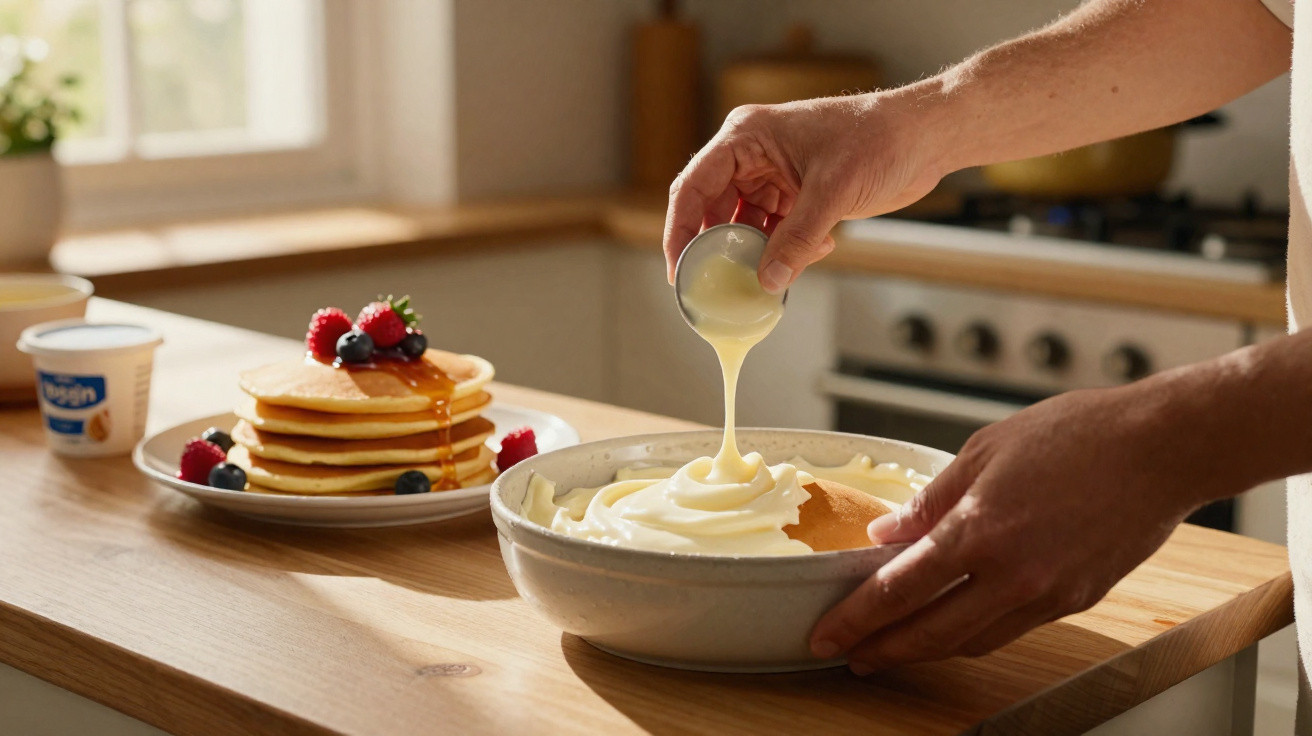
Some mornings, the pancakes would rise like something from a café; on others, they stayed pale and sulky in the frying pan, seeming to glare back at me. One Saturday, we were short on milk and the children had already begun tapping their forks like a miniature percussion band. Reaching beyond the jam, I spotted a forgotten tub of plain yoghurt - the kind bought with the best intentions before being abandoned behind the chutney. I stirred in a spoonful, thinking it might be the sort of accident that turns into a habit. What followed seemed almost unfair.
The breakfast morning when one spoon changed everything
We have all faced the moment when the kitchen becomes a small, high-pressure stage and the one thing you need has vanished. That morning, the batter had been made, the pan was heating up, and I had only half a jug of milk in a fridge that felt practically empty. The yoghurt sat neglected in a corner, so I thought, why not. It dropped into the bowl with a soft plop, and the batter first slackened, then gained body, as though it had drawn a breath.
When the first pancake hit the pan, it produced that restrained hiss you hear only from a batter with real life in it. Bubbles appeared quickly and held firm, like proud little domes refusing to deflate. After I turned it over, the underside was a sunset gold I had previously seen only online, in pictures where every meal is filtered and nobody ever burns breakfast. The room carried a faintly sharp, buttery scent: a bakery somehow flirting with a dairy farm.
That pancake dismantled my usual routine and put it back together again. Its edges were delicate and lacy but did not fall apart, while the centre was custardy rather than wet. My fork passed through silently instead of squeaking, proof that the batter had yielded rather than resisted. Each mouthful felt like a neat exchange between sweetness and sourness, and I wanted another stack simply to carry on listening.
What a spoonful of yoghurt really does
Acidity’s understated role
We tend to describe fluffy pancakes as though fluffiness were a character trait, yet it is really a chemistry experiment. Yoghurt supplies lactic acid, encouraging bicarbonate of soda to react; together, they create minute pockets of gas. The acid also prevents the gluten from becoming stubbornly elastic, leaving the batter stretchy in the right way rather than tough. Acid is the quiet engine of a great pancake.
Creaminess that transforms the crumb
Its fat and protein matter too, providing just enough support for the mixture. Yoghurt coats the starches, allowing steam made in the pan to remain trapped for longer. That produces a tender, almost pudding-like middle without any sogginess. It is not a heavy result, but a plush one - like a well-made cushion that supports you rather than swallowing you up. That is why a fork glides through as though the pancake has been patiently expecting it.
Then there is flavour, the part we claim is less important until it suddenly is not. Plain yoghurt adds a quiet tang that makes maple syrup shine instead of dominate. It gives salt something to work with, lends vanilla more backbone, and means that even a quick squeeze of lemon at the table does not feel excessive. A single spoonful brings balance to a breakfast that can otherwise wander into bland territory when your attention is elsewhere.
Pancake texture you can hear
After cooking pancakes with a spoonful of yoghurt, you begin to notice the tiniest sounds. As the batter meets the pan, the sizzle is calm rather than frantic, more like rain falling onto warm paving stone. The bubbles rise with purpose and do not sink into damp craters, so flipping them is less likely to scatter edible confetti across the hob. The edges colour more swiftly too - not burnt, simply crisp enough to frame the soft centre.
One bite is enough to notice the change without even looking. The crumb has a light spring, not the lifeless bounce caused by overmixing, but a gentle resilience. The middle is custardy rather than undercooked, with moisture that stays present instead of leaking out. That is yoghurt and heat working together rather than fighting one another.
The difference remains obvious once the plate has cooled. Pancakes made without yoghurt become firm as though they have heard a secret they cannot cope with. These remain easy-going, tender enough to eat cold over the sink later, once the house has finally exhaled and the breakfast dishes resemble an archaeological dig. On a Monday especially, that feels like a modest gift.
Which yoghurt should you use, and how much?
This was the part that made me nervous before I tried it: the fear that the texture or flavour might go completely rogue. Greek yoghurt feels especially indulgent and thickens the mixture, making it ideal for anyone who prefers a taller stack and a closer crumb. Plain natural yoghurt creates a slightly more fluid batter that spreads into tidier rounds, perfect for brightening with berries. Flavoured yoghurt is less predictable, as sweeteners and fruit purées can disrupt the chemistry, although a mild honey yoghurt has saved me once or twice.
You do not need to add a ladleful. Simply work one generous spoonful into batter you have already prepared. Mix only until it looks glossy and willing, never stiff. One tablespoon per cup of flour is the sweet spot.
The yoghurt’s fat content makes a small difference as well. Full-fat yoghurt is forgiving and supplies richness; low-fat yoghurt still does the job, though you should watch the griddle as the edges may brown more quickly. Dairy-free yoghurt can also contribute acidity and body, although coconut varieties can taste sweet and almond versions may be rather thin. The same rule applies in every case: taste the batter, then put your faith in the pan.
The small ritual that carries a week
It is the little rituals that make mornings slightly gentler. I leave a spoon in the yoghurt tub specifically for pancake days, meaning I do not need to make decisions while my brain is still buffering. I stir the batter lightly - ten slow turns rather than an arm workout - because experience has taught me that pancakes do not want to absorb your stress. Honestly, nobody truly manages this every day.
Still, it need not be reserved for a Sunday occasion. The spoonful can happen on a Tuesday, with everyone still in socks and an unanswered phone buzzing on the worktop. The batter rests while I clear yesterday’s homework from the table, and the first pancake goes to whoever shouted “Dibs!” most loudly. It is a routine, certainly, but one with soft edges - as the best routines tend to be.
If you want to make yoghurt pancakes tonight
Begin with whichever pancake batter you already rely on, whether it is homemade or a shop-bought mix that has become a household staple. Stir only until the flour has just disappeared, then stop: excessive mixing steals the lift and leaves you with rubbery breakfast. Add a tablespoon of plain yoghurt and fold it through as if concealing a secret, using gentle sweeps that leave brief marbling before the mixture settles. Warm the pan until a drop of water skates across it, lightly brush it with butter, and wait for that steady sizzle as the first pool of batter lands.
Turn the pancake once the bubbles around its edge appear set, the centre is glossy rather than wet, and the underside has the colour of toast from that excellent café you insist you do not visit. Pile them onto a warmed plate, allow the steam to curl upwards, and give the syrup a moment to soak in before you begin. I wish I had discovered this earlier. You will notice it in the way the tang raises the sweetness, and in how the last bite quietly asks you not to hurry.
Why one spoonful of yoghurt feels like permission
This is not only about chemistry; there is psychology in it as well. That spoonful suggests you are free to improvise, that breakfast is not an exam to be passed or failed. It invites you to adjust things, to choose enjoyment over perfection. A minor change becomes a gentle prompt, and the whole day seems more flexible.
I have taken that feeling far beyond pancakes, into the parts of life that reject strict instructions. The spoon has shown me to revive wilted herbs with lemon, extend soup with a knob of butter, and agree when a plan nearly works. Little changes are often the difference between almost and lovely. The yoghurt waits in the fridge as a reminder that there is no need to begin again; sometimes, you only need to stir in something kind.
Science with the taste of comfort
For anyone who wants facts to support the feeling, there are plenty available. Lactic acid relaxes gluten strands so they cannot bind too tightly, which is why the result is tender rather than chewy. Its acidity activates bicarbonate of soda effectively, generating carbon dioxide bubbles that remain in place long enough to lift the batter as it cooks. Milk proteins and sugars continue to brown through the Maillard reaction, while the yoghurt’s own solids bring more flavour to the golden crust.
Even so, science by itself will not persuade anyone to set an alarm for pancakes. What draws you from bed is the comforting weight of a warm plate, the pause as syrup gathers before soaking away, and the gentle chorus of forks against crockery. Yoghurt gets you there with fewer complications. It reduces the pressure while improving the outcome, which feels like a magic trick everyone deserves.
When the frying pan misbehaves
Not every morning looks like a postcard. The dog starts barking, the pan overheats, someone turns a pancake too soon, and you end up with a flapjack sporting a comb-over. Yoghurt still offers a buffer: a little margin for error that keeps breakfast edible and, better still, enjoyable. You learn to pay attention to the heat rather than the clock, taking the pan off the ring for a few moments when it becomes too fierce.
There is a kind of patience here that does not feel like waiting around. The batter sits while you pour juice; cooked pancakes wait in a low oven as you lay the table; you pause for breath because breakfast is not a competition. Yoghurt gives you time, the one ingredient that is never waiting on a shelf. That alone can alter everything.
A larger lesson in one small spoon
What stays with me from that first yoghurt morning is not the precise brown shade or the amount of milk I lacked. It is how much friendlier the kitchen felt, more a place for play than a laboratory demanding perfection. Pancakes became less precious and more forgiving - food you make for someone you care about, even when you are worn out. A spoon can tilt a morning.
So consider this your prompt to try it once and find out for yourself. Set the tub on the counter, pick up a spoon, and allow one small choice to make the day softer. The batter will shift beneath your hand, and you will hear that sizzle telling you that you have found something worthwhile. You will taste it too: in a stack that feels like an apology for every dry pancake you have ever dutifully eaten.












Comments
No comments yet. Be the first to comment!
Leave a Comment