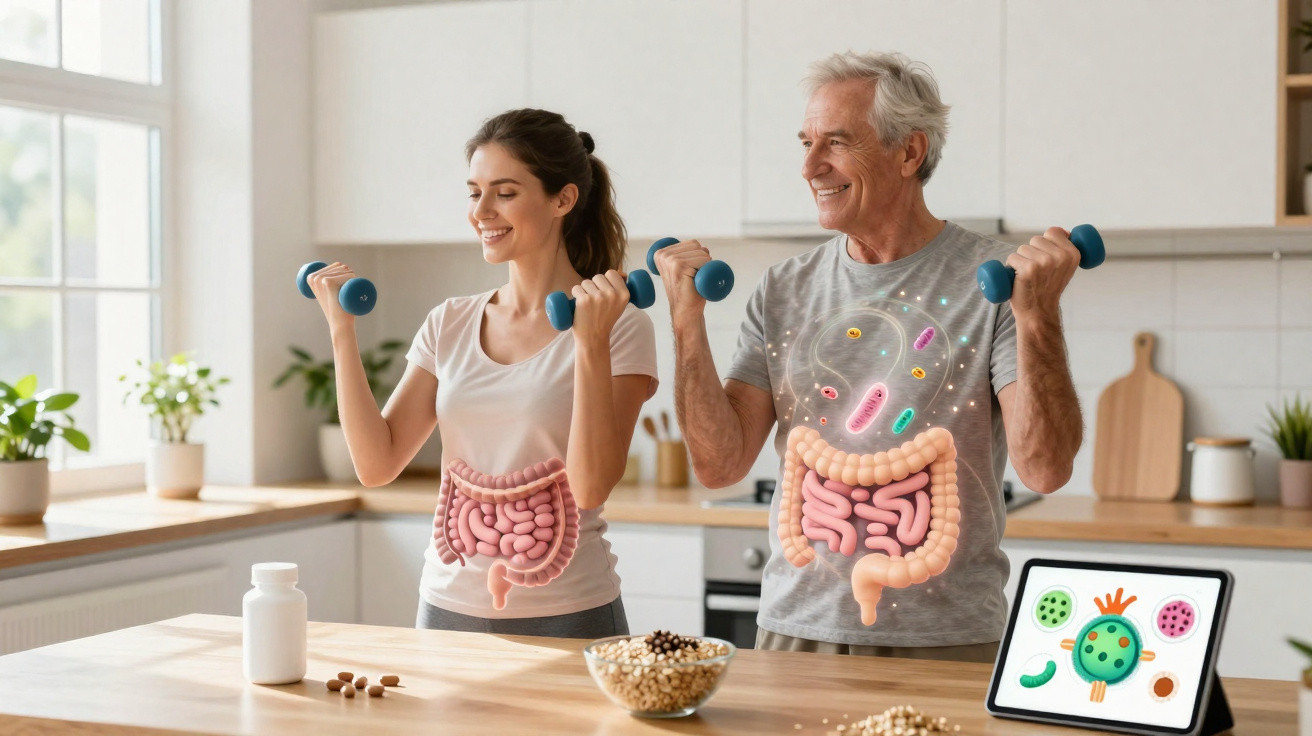
Training and protein shakes may not be enough to unlock your full strength potential. A European research group has identified a specific gut bacterium whose presence is closely linked to greater muscle strength. The data suggest that this micro-organism may act directly on muscle metabolism – and could eventually become a weapon against age-related muscle loss.
How researchers identified the strength-boosting gut bacterium
For the study, scientists examined the gut microbiomes of two very different groups: 90 healthy young adults aged 18 to 25, and 33 people aged over 65. Stool samples were used to establish the composition of the microbiome – the full community of bacteria living in the gut.
The researchers then assessed physical performance using standardised tests:
- handgrip strength measured with a dedicated grip dynamometer
- leg press testing lower-body strength
- bench press testing upper-body muscle strength
- maximum oxygen uptake (VO₂max), a measure of endurance and cardiovascular fitness
Among the many micro-organisms identified, one bacterial genus stood out: Roseburia. Within this genus, one species played the leading role – Roseburia inulinivorans. Its presence was associated with greater muscle mass and strength, particularly among older adults.
“Among older participants with detectable Roseburia inulinivorans, handgrip strength was on average around 29 per cent higher than in people of the same age without this bacterium.”
This gap is especially notable in an age group where muscle weakness is otherwise common. Interestingly, the team found no clear advantage in VO₂max, meaning pure endurance performance.
Young people appear to gain twice the benefit
The link was also clear in the younger adults. Those with particularly high levels of Roseburia inulinivorans in their gut performed better across several measures:
- greater handgrip strength
- more muscle strength overall
- improved cardiorespiratory fitness
The proportion of these bacteria in the gut differed markedly between young and old participants. In younger people, they made up as much as 6.6 per cent of the total microbiome on average. Among older adults, their share was only around 1.3 per cent. This is precisely the stage of life when muscle mass typically declines and so-called sarcopenia becomes a concern.
What happens in muscle when the gut bacterium intervenes
Correlation does not automatically prove causation. The team therefore took the next step by carrying out experiments in mice. First, the researchers reduced the animals’ existing microbiome with antibiotics. They then gave selected Roseburia species, including Roseburia inulinivorans, to different groups.
After eight weeks, a clear effect emerged: mice carrying Roseburia inulinivorans in their gut had approximately 30 per cent greater forepaw grip strength than animals without the bacterium.
“The muscle strength of animals with a cultivated ‘strength microbiome’ increased measurably – strong evidence that the gut does indeed intervene in muscle metabolism.”
A closer examination of muscle tissue revealed further differences:
- larger muscle fibres than in the control group
- a higher proportion of fast-twitch type II fibres, which are specialised for brief, explosive exertion
- changes in proteins and enzymes that are crucial to energy production in muscle
Type II fibres are particularly important for performance in sprints, jumps and heavy strength training. They therefore support precisely the movements that demand raw strength – and which often decline first with age.
How might the gut ‘communicate’ with muscle?
The study points towards a clear “gut-muscle axis”. The bacteria produce metabolic by-products that may reach muscle cells through the bloodstream. There, they appear to affect enzymes and signalling pathways that in turn regulate recovery, energy metabolism and fibre composition.
The role of inflammatory processes and the nerve supply to muscles remains unresolved. So far, the researchers have examined these issues only in passing. Chronic low-grade inflammation is particularly common at older ages and further weakens muscles – and this may be where part of the effect of Roseburia inulinivorans lies.
New hope in the fight against age-related muscle loss
As people get older, many lose not only muscle mass but also strength and stability. The consequences include a higher risk of falls, reduced mobility and growing dependence in everyday life. Doctors refer to this widespread but often overlooked condition as sarcopenia.
The current study shows that levels of Roseburia inulinivorans fall sharply during exactly the stage of life when sarcopenia becomes more common. This raises an important question: could deliberately building up this bacterium in the gut help muscles remain stronger for longer?
| Aspect | Younger adults | Older adults |
|---|---|---|
| Proportion of Roseburia inulinivorans in the gut | up to 6.6 % | around 1.3 % |
| Measured handgrip strength | high, with an additional benefit at high bacterial levels | around 29 % higher when the bacterium is detected |
| Risk of muscle weakness | lower | significantly higher |
The study authors describe the findings as a clear indication of a functional gut-muscle connection. However, they also stress that many questions remain unanswered: is the bacterium genuinely a cause of muscle wasting, or is it simply along for the ride while other mechanisms take control?
Could ‘muscle probiotics’ soon be available from the chemist?
In theory, the idea is appealing: take a specially formulated probiotic and keep muscles stronger. The available data are a first step in that direction, but a market-ready solution remains a long way off.
For instance, the animal experiments could not clearly establish whether Roseburia inulinivorans settles permanently in the gut. An effective treatment would require either stable colonisation or very regular intake. It is still unclear how well this could work in humans.
Providing the bacterium with the right ‘food’ is also likely to matter. The species mainly uses fibres such as inulin, found for example in chicory, Jerusalem artichokes, salsify and certain processed foods containing added inulin fibre. Anyone avoiding these foods may not provide the bacterium with a favourable habitat.
What you can already do yourself
There is currently no approved medicine specifically based on Roseburia inulinivorans. Even so, several basic principles can be drawn from the findings to support both the microbiome and muscles:
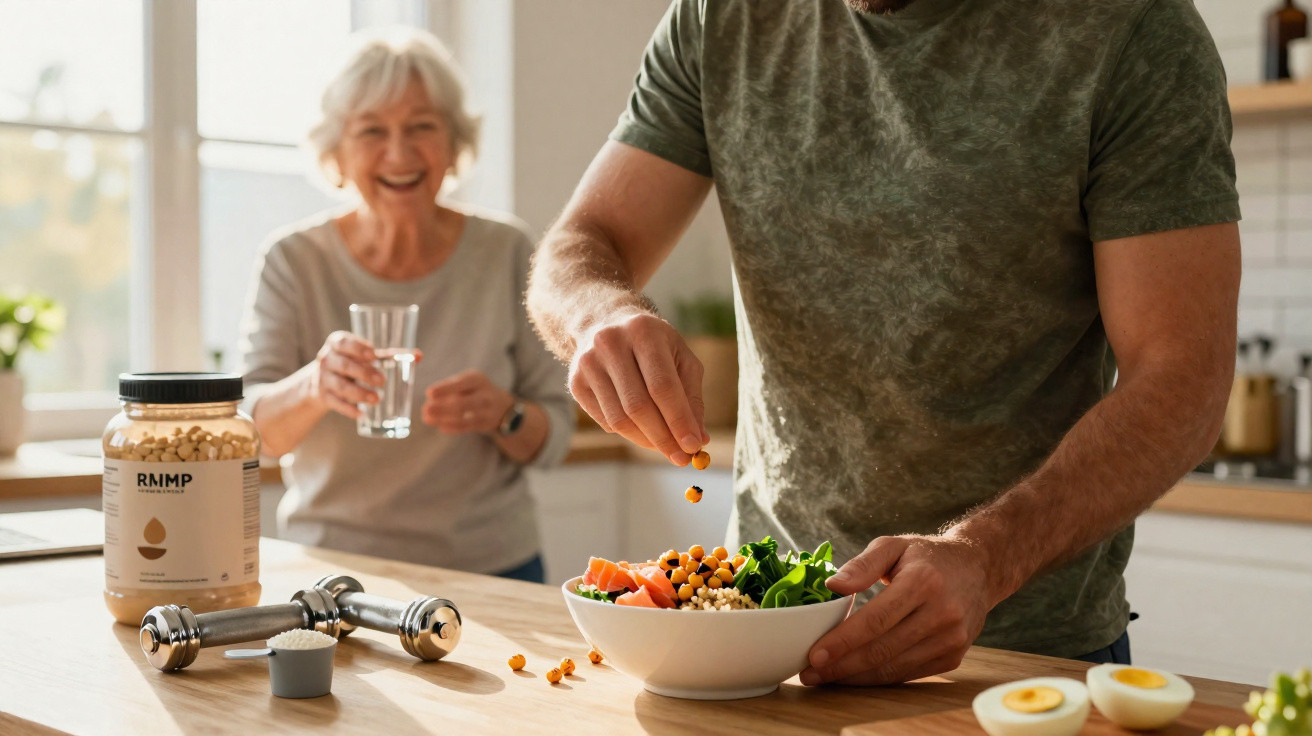
- eat plenty of fibre from wholegrains, vegetables, pulses and nuts
- do strength training regularly, ideally combined with moderate endurance exercise
- consume sufficient protein spread across the day
- use antibiotics sparingly, and only when they are genuinely medically necessary
Observational studies have long suggested that a varied, plant-rich diet can increase gut diversity and reduce inflammatory processes. Many beneficial bacteria are more likely to thrive in this environment – probably including Roseburia species.
What terms such as microbiome and sarcopenia mean
The microbiome is the complete collection of micro-organisms that inhabit our bodies, particularly in the gut. It influences digestion, the immune system, metabolism and, apparently, muscles too. Changes to the microbiome can be associated with obesity, diabetes, autoimmune diseases and now possibly muscle loss.
Sarcopenia describes the age-related decline in muscle mass and strength. Those affected become slower, weaker and more prone to falls, even if they outwardly feel merely “a little thinner”. Sarcopenia is usually diagnosed through muscle-strength tests and measurements of muscle mass, such as a DEXA scan or bioelectrical impedance analysis.
The new research adds an intriguing piece to the puzzle: if it is confirmed that specific gut bacteria protect muscles, future treatments could consist of a combination of targeted exercise, adapted nutrition and tailored “microbiome treatments”.
Anyone wanting to prepare for later life does not need to wait for laboratory pills. An active daily routine, regular muscle-loading exercise and a gut-friendly diet rich in fibre appear to benefit not only body shape, but perhaps also a small, invisible strength helper in the gut.















Comments
No comments yet. Be the first to comment!
Leave a Comment