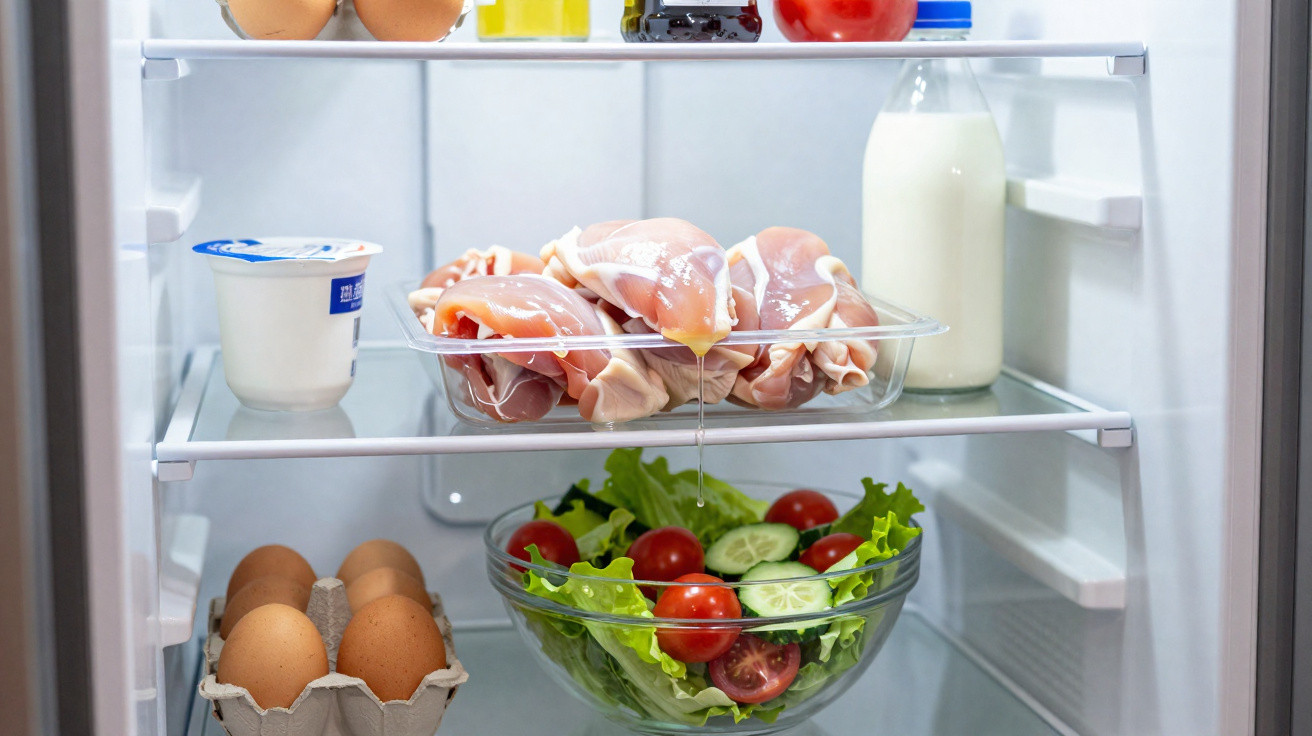
A common storage mistake, however, can transfer salmonella directly to salad, fruit and ready-made meals.
Anyone who simply puts meat, fish, vegetables and leftovers “anywhere” in the fridge is taking an unnecessary health risk. Bacteria such as salmonella and certain strains of E. coli can survive in cold conditions and seize every opportunity to move from one food to another. Often, it is not the product itself that matters most, but where it has been placed in the fridge.
Why a fridge is not automatically safe
A modern fridge slows down the growth of germs, but it does not stop them altogether. Many bacteria remain surprisingly comfortable at temperatures between 0 and 4°C. Although they multiply more slowly than they do at room temperature, they can still remain active and infectious.
This is precisely where the issue begins: many people have a false sense of security. They assume: “It is in the fridge, so it is safe.” In reality, cross-contamination can occur when raw and ready-to-eat foods touch, or when meat juices leak.
The most dangerous mistake is not out-of-date food – it is incorrectly placing raw meat above salad, vegetables or prepared dishes.
Salmonella often enters the kitchen via poultry, eggs and certain types of meat. E. coli bacteria may be found in raw mince or unwashed vegetables. Once these germs are circulating in the fridge, even a small trail of drips or a contaminated shelf can be enough to infect other foods.
The fridge habit that puts vegetables at particular risk
Many households follow a similar pattern: a pack of chicken breast is placed at eye level because it is “convenient”. Cheese sits next to it, perhaps with a bowl of washed strawberries above it and an uncovered plate of leftover pasta below. The vegetable drawer contains carrots, peppers and lettuce – and sometimes even marinated meat because “it fits so nicely there”.
It is this mix of foods that creates the risk. If the edge of a meat packet opens or its wrapping leaks, meat juices may drip unnoticed onto anything below or beside it. The foods at greatest risk include:
- salads that have already been washed and are served straight onto the plate
- tomatoes, cucumbers, peppers and fruit eaten raw
- pre-packed salads
- cold leftover meals that will not be reheated
Outer cardboard packaging or thin plastic wrapping can also carry bacteria. Placing a meat pack on the supermarket checkout belt, then in the car, then on the worktop and finally straight into the fridge can bring dirt from all of these surfaces inside.
For healthy adults, many infections are relatively mild and cause diarrhoea and abdominal cramps. For children, older people, pregnant women and people with weakened immune systems, however, a salmonella infection can be much more severe, bringing substantial fluid loss, fever and, in extreme cases, hospital treatment.
How cross-contamination happens in the fridge
Cross-contamination means that germs move from a food that was originally contaminated to another food that had previously contained few or no germs. In the fridge, this can happen in several ways:
- Leaking meat juices: liquid escapes from a packet and reaches food stored below or next to it.
- Contaminated shelves: a glass shelf or rack that has been soiled once can become a lasting source of germs if it is rarely cleaned.
- Contact in the vegetable drawer: raw meat or fish is placed in the vegetable drawer “just for a moment”, leaving lettuce and chicken close together.
- Uncovered containers: leftovers without a lid, or covered only with foil, can pick up germs more easily.
The typical unsafe arrangement is raw meat or fish at eye level or on an upper shelf, with uncovered or only loosely covered foods below that will later be eaten cold. A tiny tear in the packaging is enough to contaminate several foods at once.
Three straightforward rules for a much safer fridge
The good news is that you do not need specialist equipment or a major household overhaul. A few clearly defined rules can greatly reduce the risk.
1. Use a clear shelf-by-shelf system
Arrange your fridge by zones rather than at random:
| Area | Suitable foods |
|---|---|
| Lowest, coldest shelf | Raw meat, poultry, mince, raw fish and seafood – always in sealed containers |
| Middle shelves | Cooked food, leftovers, bakes, sliced meats, cheese, yoghurt and desserts – securely covered |
| Upper section | Delicate ready-to-eat products that will not be reheated, such as pre-packed salads and ready-to-eat snacks |
| Vegetable drawer | Unprocessed fruit and vegetables – without raw meat or fish |
| Door shelves | Drinks, sauces, jams, butter and eggs, if preferred |
This arrangement prevents meat juices from dripping onto other foods. The lowest section is the safety zone for anything that may carry a high germ load but will later be cooked thoroughly.
2. Take packaging and cleaning seriously
Raw meat, fish and seafood should always be kept in sealable containers or leakproof tubs. Thin supermarket film is not enough. Remove outer cardboard packaging before putting food in the fridge, then place the actual pack inside an easy-to-clean box.
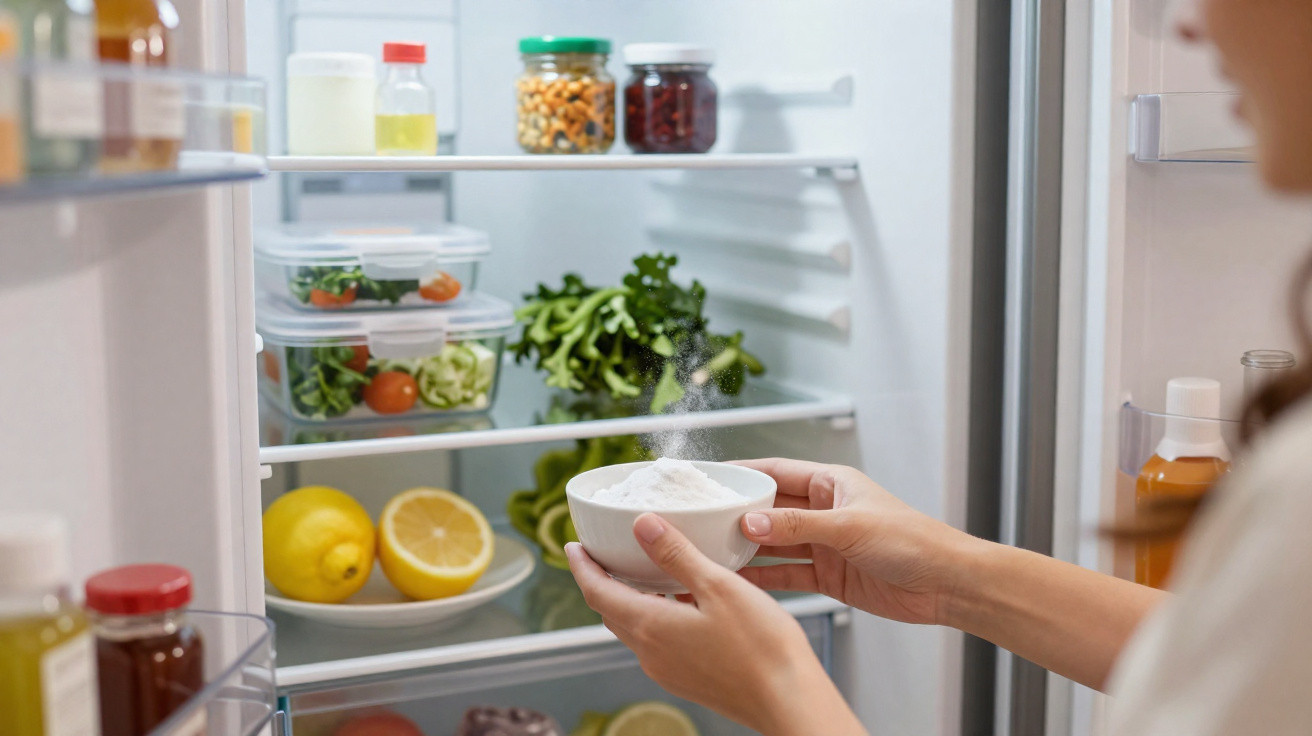
Once a month, remove all shelves and compartments and wipe them with warm water and washing-up liquid, or with a mixture of water and a little household vinegar. If you spot meat juices or spilled food, act immediately rather than waiting for the next cleaning session.
3. Store leftovers properly and use them in time
Cooked dishes and leftovers generally keep for two to three days in the fridge. After that, the risk rises even when everything is well covered. Use transparent containers so you can see what is there and do not “forget” anything.
Dishes that are especially vulnerable should be eaten promptly:
- pasta and potato salads containing mayonnaise
- dishes made with mince
- milk- and egg-based dishes
Rule: Anything you intend to eat cold should always be stored above foods that are raw and potentially rich in germs.
How to reduce the risk substantially in daily life
Many infections result from small conveniences: “I will only put the meat up here for a moment”, “I will cover the salad later”, “a few drops will not matter”. In busy moments in the kitchen, hygiene rules can quickly slip down the priority list.
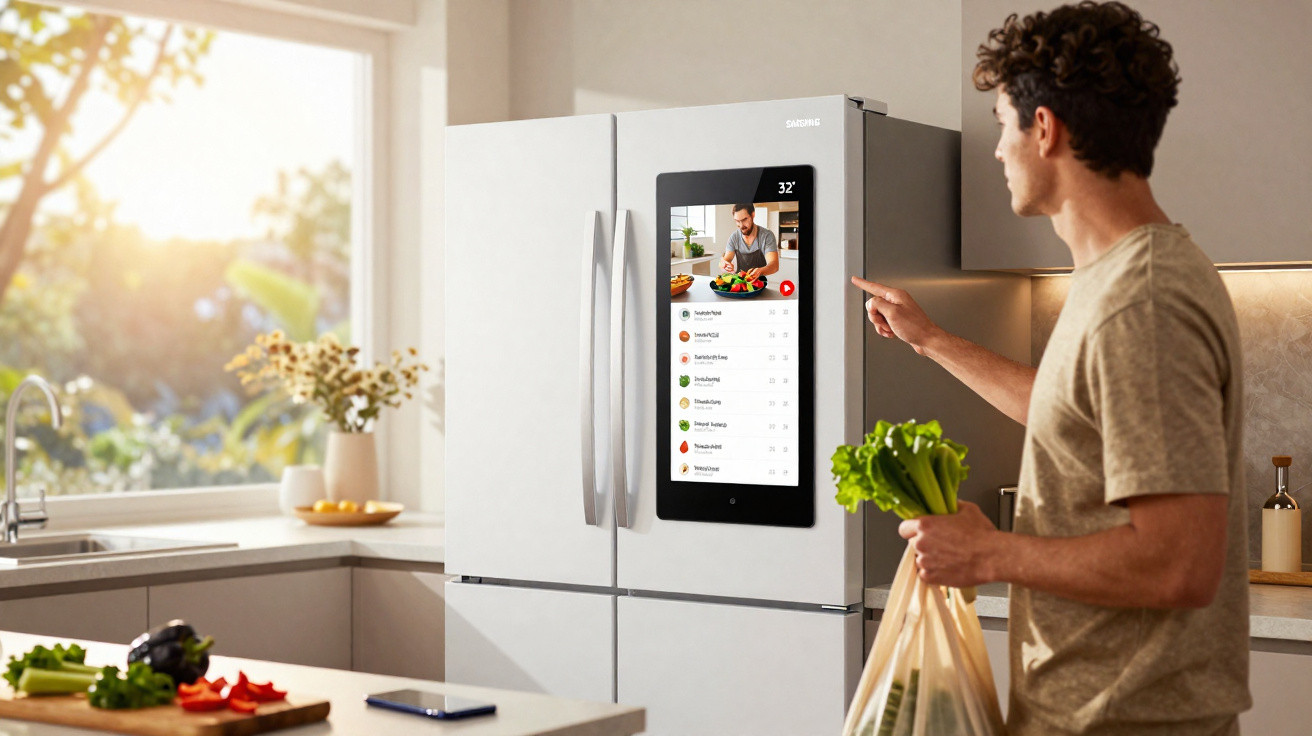
A fixed routine can help: when unpacking groceries, sort them automatically according to the zones above. Put raw products into their boxes on the bottom shelf first, then store the remaining items.
Reusable lidded containers in different sizes are practical. They contain odours, catch drips and make it easier to keep things organised. A small label with the date helps you track when an item was put into the fridge.
Why children, older people and ill people need extra protection
Spoiled or contaminated food does not affect everyone in the same way. Children lose fluids more quickly through diarrhoea, older people often have weaker immune systems, and people with chronic illnesses or pregnant women can be more vulnerable.
In households with at-risk people, additional care is worthwhile:
- Always cook mince on the same day or, at the latest, the following day.
- Do not use raw eggs in desserts for children, pregnant women or older people.
- Do not snack on cooked food cold over several days; eat it promptly or freeze it.
Taking care over storage and placement reduces the risk for the entire family. The fridge can then return to what it should be: a useful aid, not a hidden source of danger in the kitchen.








Comments
No comments yet. Be the first to comment!
Leave a Comment