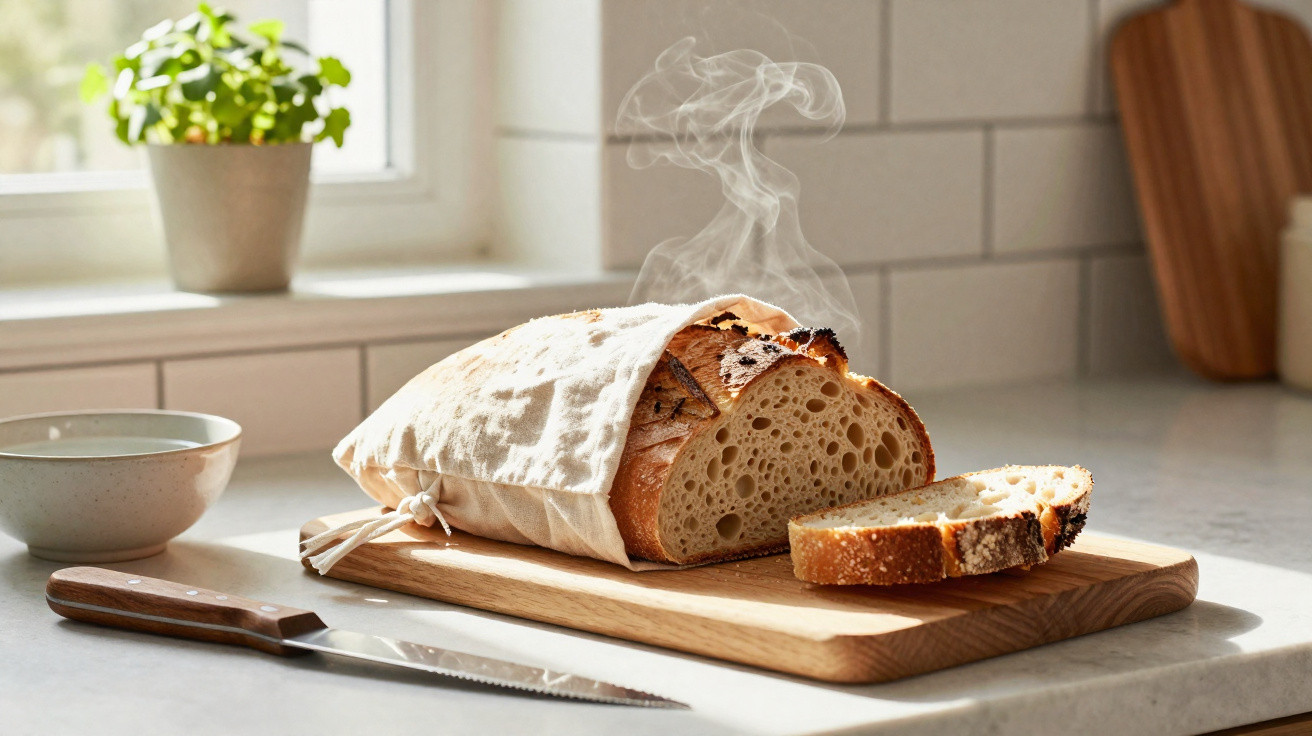
A simple, almost forgotten method can keep bread fresh for a surprisingly long time.
Many people automatically reach for a plastic bag when storing bread. The intention is understandable: keep air out and trap the freshness inside. Yet in reality, the reverse usually happens – the crust turns rubbery, the crumb becomes clammy, and the first green spots soon appear. With a few straightforward rules, however, bread can be enjoyed for several days without gadgets, specialist products or, above all, cling film.
Why bread goes stale or mouldy so quickly
Bread deteriorates for two reasons, and unfortunately each makes the other worse. First, the starch structure in the crumb changes: moisture moves outwards, leaving the inside firm and dry with that familiar stale texture. At the same time, mould thrives in warm, humid conditions – precisely the environment created when bread sweats inside a sealed container.
Fresh bread is especially likely to suffer when it is:
- wrapped while still warm;
- kept in plastic at room temperature;
- left in sunlight or directly beside the cooker;
- stored in an airtight tin with no ventilation.
There is another consideration: breads do not all behave in the same way. A white baguette dries out exceptionally fast because it has a large surface area and comparatively little moisture in its crumb. A larger country loaf with a dense crumb stays moist for much longer. Sourdough loaves generally keep best, as their mildly acidic environment slows mould growth to some extent.
“The larger, darker and more thoroughly baked a loaf is, the longer it remains enjoyable – its packaging then determines whether the days ahead are dry or mouldy.”
Why plastic bags destroy bread freshness
Plastic may appear convenient at first. The bag seals tightly, contains the crumbs and seems to keep the loaf “protected”. In fact, it creates a damp little greenhouse. The crust softens, the bread loses its characteristic bite, and mould spores find ideal growing conditions.
Cling film is no better. It fits tightly around the bread and keeps everything in place – including the moisture. This is particularly troublesome with a partially sliced loaf. The cut surface releases water, the film traps it, and a damp atmosphere develops in no time.
The fridge may sound like an alternative, but it is almost as unsuitable for bread. Low temperatures speed up starch ageing. Bread stored there may be cool, but it soon tastes as though it is a day old, even after only a few hours.
The best way to store bread without plastic
The most effective approach combines two simple elements: a breathable layer around the bread itself and a protective container that is not fully airtight.
Layer 1: Use cloth instead of film
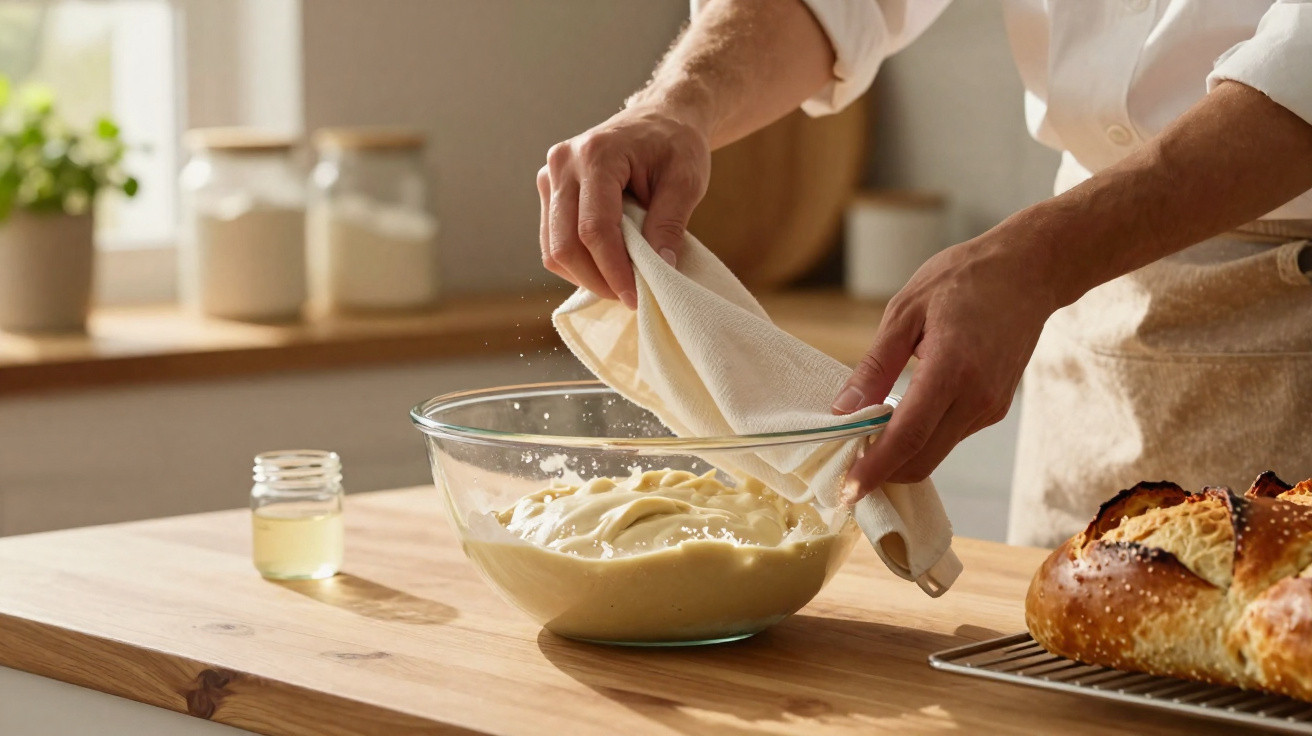
The key point is that bread needs air, but not a draught. A clean fabric bag or a cotton or linen tea towel is ideal for this purpose.
- Allow the bread to cool completely.
- Wrap it in a dry, clean cloth or place it in a fabric bag.
- The fabric should be tight enough to hold crumbs, but must not be coated.
The cloth absorbs some excess moisture without drying out the bread. The crust stays crisp for longer, while the crumb does not become clammy.
Layer 2: Choose the right bread bin
A traditional wooden or ceramic bread bin works particularly well as the second layer. Small ventilation holes, or a lid that does not close completely airtight, are important.
“The ideal microclimate for bread comes from: a cloth covering plus a bread bin in a shady, fairly cool spot – well away from the cooker and sink.”
If there is no bread bin available, a wooden bread box, a clay pot with a loosely fitted lid, or a large ceramic vessel can also work. The main thing is to keep the container away from direct heat and prevent it from warming up repeatedly.
How long do different breads keep with this method?
| Type of bread | Typical shelf life with cloth & bread bin |
|---|---|
| White loaf / baguette | 1–2 days with a still-good texture |
| Wheat mixed loaf (approx. 500–750 g) | Moist for 3–4 days, then gradually drier |
| Country loaf / rye mixed loaf | Good for 4–5 days; noticeably firmer from day 6 |
| Sourdough loaf, well baked | Flavourful for up to a week, then more likely dry than mouldy |
These figures are only guidelines. Temperature, humidity and the degree of baking also affect the outcome. Anyone who regularly buys from the same baker will gradually learn how their usual loaf behaves.
When it is clear the bread will not be eaten in time
As soon as it becomes apparent that bread will be left over, there is only one truly reliable solution: freeze it in good time. Timing matters here. Ideally, put the loaf or slices into the freezer while the crumb is still moist rather than once it has dried out completely.
How to freeze bread with hardly any loss of flavour
- Let the bread cool completely so that no condensation ends up in the bag.
- Slice it first, allowing you to defrost only the amount required.
- Put it into a thick freezer bag or reusable container, pressing out as much air as possible.
- Label it with the date to keep track of it.
Bread will usually remain good in the freezer for one month, and some loaves for up to two months. It can technically be frozen for longer, but the flavour and texture will noticeably deteriorate.
Making frozen bread crisp again
Defrosted bread can taste bland if it is simply left at room temperature. Much better results come from placing slices briefly in the toaster or in a preheated oven for a few minutes. If an entire loaf has been frozen, put it straight into a hot oven from frozen for a few minutes. The crust becomes crisp again and the crumb pleasantly warm.
Use stale bread cleverly instead of throwing it away
Even when bread no longer seems fresh, it is often still perfectly fine – simply dry. As long as there is no visible mould and it does not smell musty, it can be put to plenty of uses.
- Breadcrumbs: Toast dry slices in the oven, then grind them finely.
- Croutons: Cut the bread into cubes, bake until crisp with a little oil and seasoning, and use in salads or soups.
- Eggy bread / French toast variation: Soak it in a milk-and-egg mixture and fry until golden brown.
- Bread bake: Bake it with vegetables and cheese, or make a sweet version with fruit.
If stale bread is frequently left over, keep a small bucket or container specifically for dried bread remnants. Once enough has accumulated, breadcrumbs or croutons can be made in minutes – and the bin stays empty.
Common bread-storage mistakes – and how to avoid them
Many storage problems can be solved with small adjustments. The most common mistakes include:
- Leaving leftovers in the baker’s plastic bag: Transfer the bread into cloth as soon as it has cooled.
- Never cleaning the bread bin: Crumbs and moisture in the bin create a perfect setting for mould, so wipe it out regularly.
- Keeping bread on top of the fridge: This spot is often warm; choose a cool, shaded place in a cupboard or on the worktop instead.
- Storing different breads alongside cake: Sweet baked goods have different moisture levels, which can negatively affect the bread’s texture and flavour.
Why switching to cloth and a bread bin is worthwhile
Avoiding plastic for bread may sound like a small change, but it has several positive effects. For one thing, it reduces packaging waste: anyone who repeatedly uses the same fabric bag needs considerably less disposable material in everyday life. It also saves money in a very practical sense, because less bread ends up in the bin.
There is also a flavour benefit. Many people notice after a short time that bread kept in a fabric bag and bread bin seems more aromatic than bread left to sweat in a plastic bag. The crust is more likely to remain crisp, the loaf is easier to slice, and the pieces do not feel spongy.
Anyone who uses this method consistently for a few weeks will usually establish a new routine: bread is correctly wrapped immediately after shopping, leftovers are moved to the freezer in time, and stale bread becomes useful cupboard supplies. A standard loaf will not only last longer; it will also bring more variety to the kitchen – from a crisp breakfast to a crunchy breadcrumb coating at the weekend.






Comments
No comments yet. Be the first to comment!
Leave a Comment