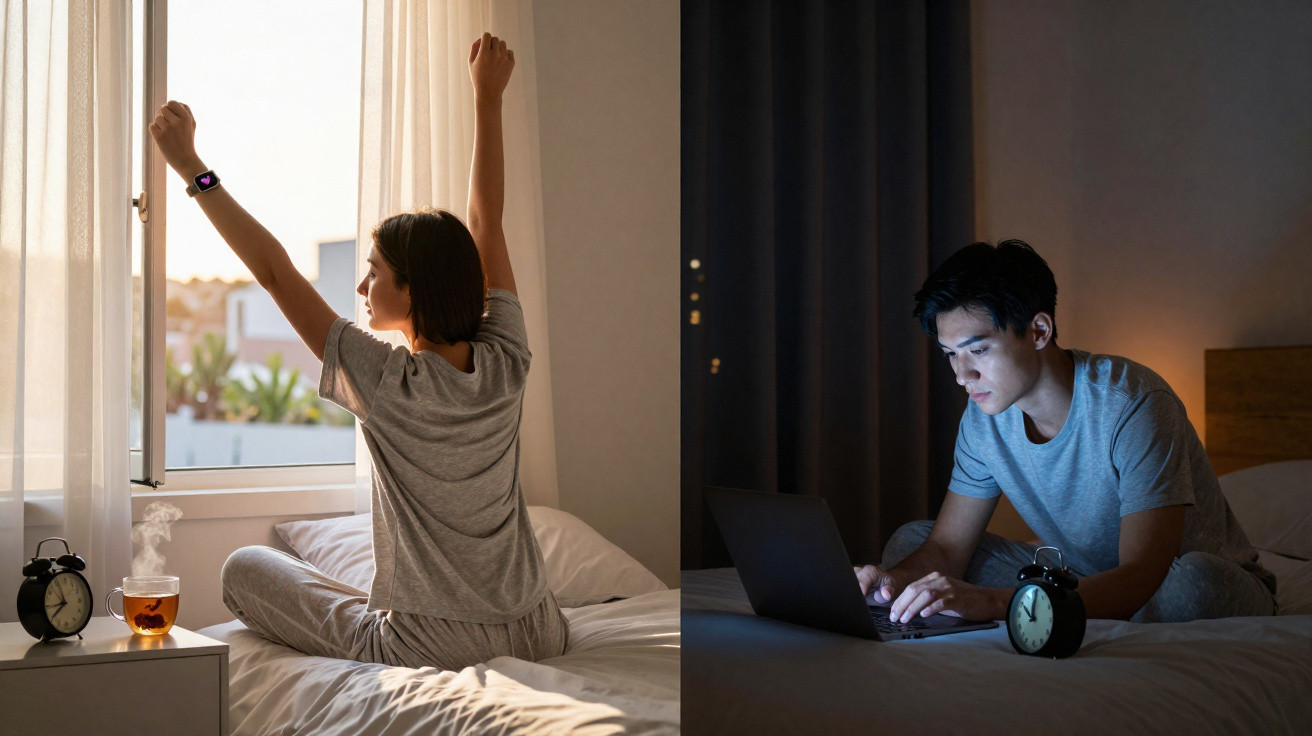
Behind the lifestyle argument, doctors identify genuine consequences for health.
The issue may appear straightforward: is waking at dawn healthier for your body than working far beyond midnight? Emerging research into our “chronotype” – whether we are naturally larks or owls – indicates that the answer matters for heart health, metabolism and wellbeing over the long term.
How science defines larks and owls
Chronotype is the scientific term for the time of day you naturally prefer to sleep and be active. Some people are alert and efficient at 7am, while others become most productive late in the evening and find early alarms difficult.
Researchers commonly use bird-based descriptions for these patterns:
- Larks: go to sleep early, rise early and function at their best in the morning.
- Owls: sleep late, wake late when their schedules permit and feel most alert in the evening or overnight.
- Intermediate types: fall between the two, with preferences that are less pronounced.
Research reported in the Journal of the American Heart Association suggests these tendencies are more than personality traits. They relate to the body's internal clock and may affect blood sugar regulation, appetite, blood pressure and even responses to medicines.
People with an evening chronotype are more likely to live out of sync with their biological clock, and that misalignment can damage heart and metabolic health over time.
What the latest research found
The research examined adults categorised as morning, evening or intermediate types. Investigators assessed sleep schedules, working hours, lifestyle behaviours and several cardiometabolic measures, including blood pressure, cholesterol and blood glucose.
A major result was that people identifying as owls were more likely to show what researchers term “circadian misalignment”: a disparity between their natural body clock and the timetable imposed by work, education or social commitments.
This misalignment was associated with:
- Poorer dietary habits, including greater consumption of sugary and ultra-processed foods.
- Lower levels of routine physical activity.
- A greater chance of smoking or drinking more heavily in certain groups.
- Less favourable cardiometabolic measures, particularly blood sugar control and indicators of insulin resistance.
The concern is not simply being a night owl, but being a night owl required to fit into an early-bird society. This ongoing “social jet lag” seems to place cumulative strain on the body.
Why sleep misalignment affects the heart
Most organs, including the heart, liver and pancreas, operate according to a 24-hour rhythm. When you maintain a regular routine, hormones including cortisol, melatonin and insulin rise and fall at relatively predictable points.
For evening types who must manage early starts, this rhythm is interrupted. They may go to bed late, get up before their body is prepared and depend on caffeine and snacks to manage the day.
Chronic lack of sleep combined with an off-kilter body clock can raise blood pressure, trigger inflammation and push the body toward insulin resistance, a pathway that leads to type 2 diabetes and cardiovascular disease.
Large population studies have associated even relatively small but repeated disruptions to circadian rhythms with increased rates of obesity, fatty liver disease and heart conditions.
Larks vs owls: who bears the greater health burden?
Who faces the poorer outcome: someone rising at 5am, or someone emailing at 1am? The newer evidence points to greater risk in evening types, particularly if they stay up late during the working week before attempting to “catch up” at the weekend.
| Chronotype | Typical pattern in a 9–5 society | Health concerns |
|---|---|---|
| Lark (morning type) | Gets up readily for work; is commonly tired later in the evening. | Risk mainly increases where total sleep is too short or disrupted. |
| Owl (evening type) | Finds early alarms difficult; sleeps too little on weekdays and longer at weekends. | Greater rates of circadian misalignment, poorer metabolic markers and more social jet lag. |
Morning types generally fit conventional office schedules more easily. On working days, they tend to achieve something closer to their preferred amount of sleep, meaning their social timetable and body clock are more closely matched.
By comparison, owls are frequently required to wake several hours before their internal clock registers “morning”. This persistent mismatch appears to be the main factor behind the higher cardiometabolic risk reported in studies.
The impact of “social jet lag”
Social jet lag is the difference between your biological timing and the timing demanded by society. If your body favours sleeping from 1am to 9am, for instance, but your job requires a 6am alarm, you are effectively living with continual mild jet lag.
Many owls attempt to make up for this sleep debt by having lie-ins at weekends. As a result, they move between two time zones in the same week: “work time” and “free time”.
Living in two time zones every week confuses the internal clock in a similar way to repeatedly flying across several time zones, without ever fully adjusting.
Studies have connected high social jet lag levels with a higher BMI, more common depressive symptoms, poorer performance at work and increased cardiovascular risk markers, irrespective of overall sleep duration.
Can a night owl become a lark?
Chronotype is partly determined by genetics. Some people are naturally more awake in the evening, while age also plays a part: teenagers and younger adults commonly shift towards later timing, whereas older adults often shift earlier.
Even so, the body clock can be adjusted to a degree. Exposure to light and everyday behaviours can gently shift its timing.
- Bright morning light can move the internal clock forward, encouraging earlier sleep.
- Reduced lighting and limits on screens late in the evening can stop bedtimes drifting even later.
- Set meal times and regular waking times can help keep the rhythm stable.
For people firmly committed to a night-owl pattern, becoming an ideal lark need not be the aim. A more achievable strategy is to reduce the difference between their natural rhythm and daily responsibilities in increments of 30–60 minutes.
Practical strategies for owls in an early-bird world
Evening-chronotype people with unavoidable early starts can reduce their health risk by changing habits around light and sleep.
- Protect sleep duration: treat at least seven hours as essential, even if this means reducing late-night scrolling or streaming.
- Shift bedtime gradually: bring lights-out forward by 15 minutes every few nights rather than attempting an abrupt one-hour change.
- Use morning light: go outdoors or sit beside a bright window within an hour of getting up to help fix your body clock.
- Set a “caffeine curfew”: avoid coffee and energy drinks for six to eight hours before your planned bedtime.
- Monitor late-night snacking: large meals near midnight may worsen reflux and blood sugar control.
Consistent, slightly earlier bedtimes combined with strong morning light can reduce social jet lag and ease the cardiometabolic burden seen in evening types.
Why chronotype matters to doctors
Cardiologists and endocrinologists are increasingly considering sleep timing when evaluating the risk of conditions including hypertension, diabetes and coronary artery disease.
Two patients may sleep for the same number of hours but have very different risk profiles if one is consistently living out of step with their body clock. Some clinics now include chronotype, social jet lag and work patterns in their standard assessments.
In time, timing may also influence treatment choices. Some blood pressure medicines, for example, could be more effective when taken at particular times that fit the patient's rhythms. Diabetes and weight-loss programmes may similarly adapt their advice differently for owls and larks.
Key terms and everyday scenarios
Several terms recur throughout this research:
- Circadian rhythm: the approximately 24-hour cycle that regulates sleep, hormone production, body temperature and digestion.
- Chronotype: your personal preference for when to sleep and be active within that cycle.
- Circadian misalignment: a long-term mismatch between your internal clock and your real-world routine.
Consider two friends sharing a flat. One is a nurse on rotating night shifts and is naturally an owl; the other is a teacher and naturally a lark. The nurse may experience both insufficient sleep and repeated changes to her body clock, increasing metabolic strain. Despite early mornings, the teacher may maintain a comparatively steady pattern that supports health, provided she does not allow stress and screens to push bedtime progressively later.
Now consider a teenager with a pronounced evening chronotype who has to start school at 7:30am. He sleeps at midnight, rises at 6am and then sleeps until 11am at weekends. Across several years, this pattern may influence his grades, mood, weight and blood sugar. The answer is not merely “more discipline”, but better alignment of school schedules, light exposure and routines with biology.
Balancing preference with health risk
Changing society to accommodate every chronotype is unlikely, but overlooking chronotype has consequences. Many people who happily call themselves night owls may not recognise that late nights combined with early commitments can raise their risk of metabolic and heart problems.
Getting up at 5am does not automatically make someone healthy, just as working late at night does not inevitably harm everyone. The important questions are: How closely does your routine match your biology? Do you get sufficient sleep? And are you adding other risks – including a poor diet, inactivity and heavy drinking in the evening – to an already strained body clock?
















Comments
No comments yet. Be the first to comment!
Leave a Comment