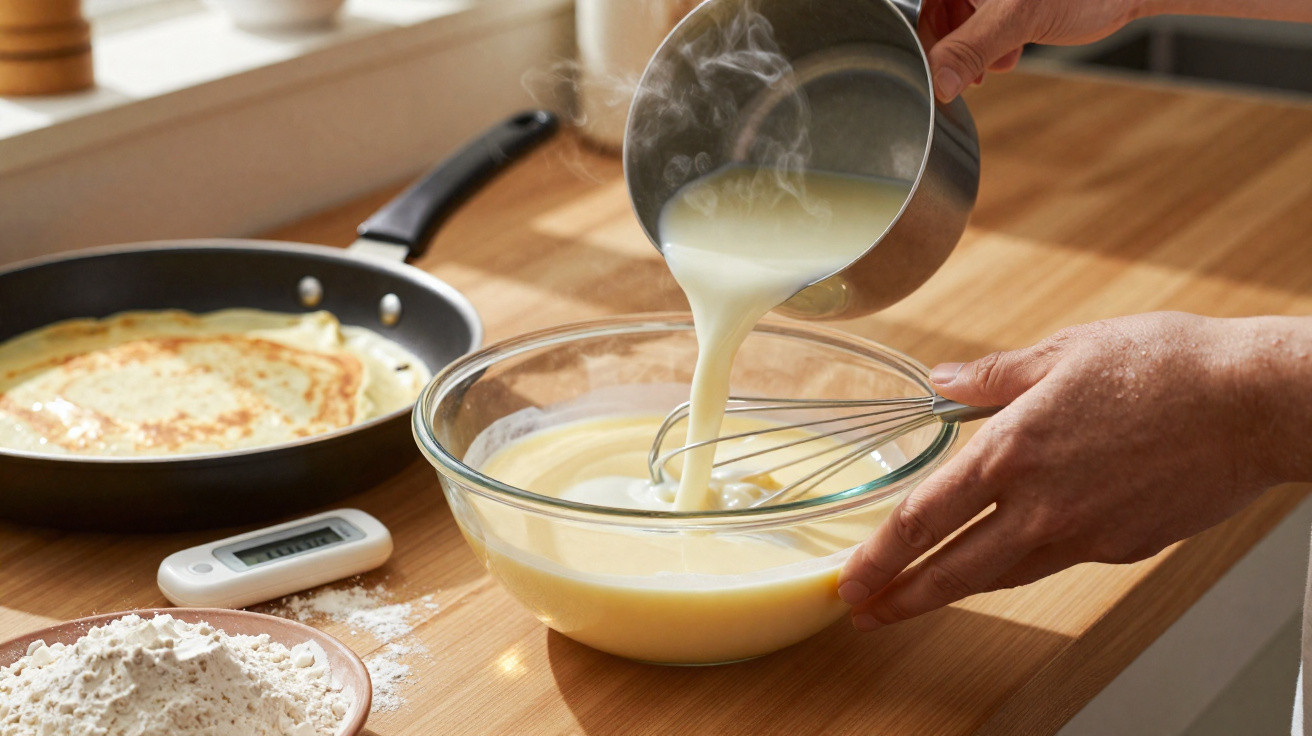
You whisk together the batter, heat the pan and cross your fingers. French cooks, however, have long maintained that crêpe batter needs a quiet rest. More home bakers are now relying on a quicker alternative: warming the milk gently. This modest adjustment is supported by genuine kitchen science, helping hurried batter perform remarkably like the traditional, slow-rested kind.
Why crêpe batter traditionally needs to rest
Traditional recipes usually instruct you to leave crêpe batter for at least 30 minutes, and sometimes for an hour. This wait is neither superstition nor culinary pretension.
The moment flour meets liquid, its starch granules begin taking in moisture. Gluten networks also start to develop at the same time. This gradual process alters the batter’s texture in ways that become clear once it reaches the pan.
Resting lets starch swell and gluten relax, giving you batter that spreads easily and crêpes that hold together without turning rubbery.
If you miss out this stage, two common problems can arise:
- At first, the batter can seem slightly gritty and runny, before thickening inconsistently.
- The earliest crêpes are more likely to tear and may cook unevenly.
Resting stabilises these changes. The flour becomes fully hydrated, tiny lumps loosen and bubbles of air rise away. The result is a smoother, more dependable batter that performs consistently from the first ladleful to the final one.
Heating the milk: a crêpe batter shortcut that works
When there is no time to wait 30 minutes, temperature can speed up the process. Warming the milk gently starts the same changes that would normally happen gradually during resting.
How warm milk affects crêpe batter
Using milk that is slightly warm rather than cold from the fridge enables the flour’s starch to absorb liquid more rapidly. Heat causes starch granules to expand sooner, achieving more quickly what resting at room temperature would do over a longer period.
Warm milk speeds up starch swelling and gluten development, giving you a smoother, more elastic batter in minutes instead of half an hour.
The difference is apparent with just 10–15 minutes of resting, and often the batter can be cooked almost immediately without a major compromise in texture.
How to warm the milk correctly
There is no need for boiling milk. Excessive heat can scramble the eggs or begin cooking some of the flour too early. The aim is milk that feels gently warm to distinctly hot, while still being comfortable to touch.
| Milk temperature | Effect on batter |
|---|---|
| Cold (fridge) | Slower starch hydration, batter benefits from longer rest |
| Room temperature | Standard recipes, 30 minutes of rest is usually recommended |
| Warm (about 35–45°C / 95–113°F) | Faster hydration, workable batter with little or no rest |
For a standard batch, heating the milk gently in a saucepan or microwaving it for 30–60 seconds will usually be sufficient. If you can place a finger in it without burning yourself, it is at the right temperature.
Using the warm-milk shortcut: a straightforward method
This approach can be incorporated into almost any ordinary crêpe recipe. The ingredient list remains essentially the same; the key difference is the milk temperature.
Step-by-step guide
- Put the measured flour in a large bowl, then add a pinch of salt and sugar if you are making sweet crêpes.
- Heat the milk until pleasantly hot, but not vigorously steaming.
- Whisk the eggs in a separate bowl before adding them to the flour.
- Begin whisking, then pour in the warm milk little by little in a thin stream to avoid lumps.
- Stir in any melted butter, oil, vanilla or splash of beer required by your recipe.
- If possible, leave the batter for 5–10 minutes while the pan heats and you prepare the table.
That short pause gives the warmed batter enough time to settle. It should be smooth and gently flowing, leaving a thin coating on the back of a spoon.
Texture check: what to expect from warm-milk crêpes
When this shortcut is successful, everyday cooks will find that warm-milk batter differs surprisingly little from batter rested for a long time.
Crêpes prepared with warmed milk generally:
- Spread more readily from the very first ladleful.
- Stay intact more easily during flipping, with less tearing.
- Remain tender but have enough structure to be rolled or folded around fillings.
Warm-milk batter often gives you that fine balance: crêpes that are soft and flexible, yet not fragile or soggy.
If the first crêpe is overly thick and cake-like, whisk in an extra splash of warm milk. If it is so thin that it breaks, mix in a spoonful of flour and leave the batter for a few minutes.
Why your mixing tools and technique still count
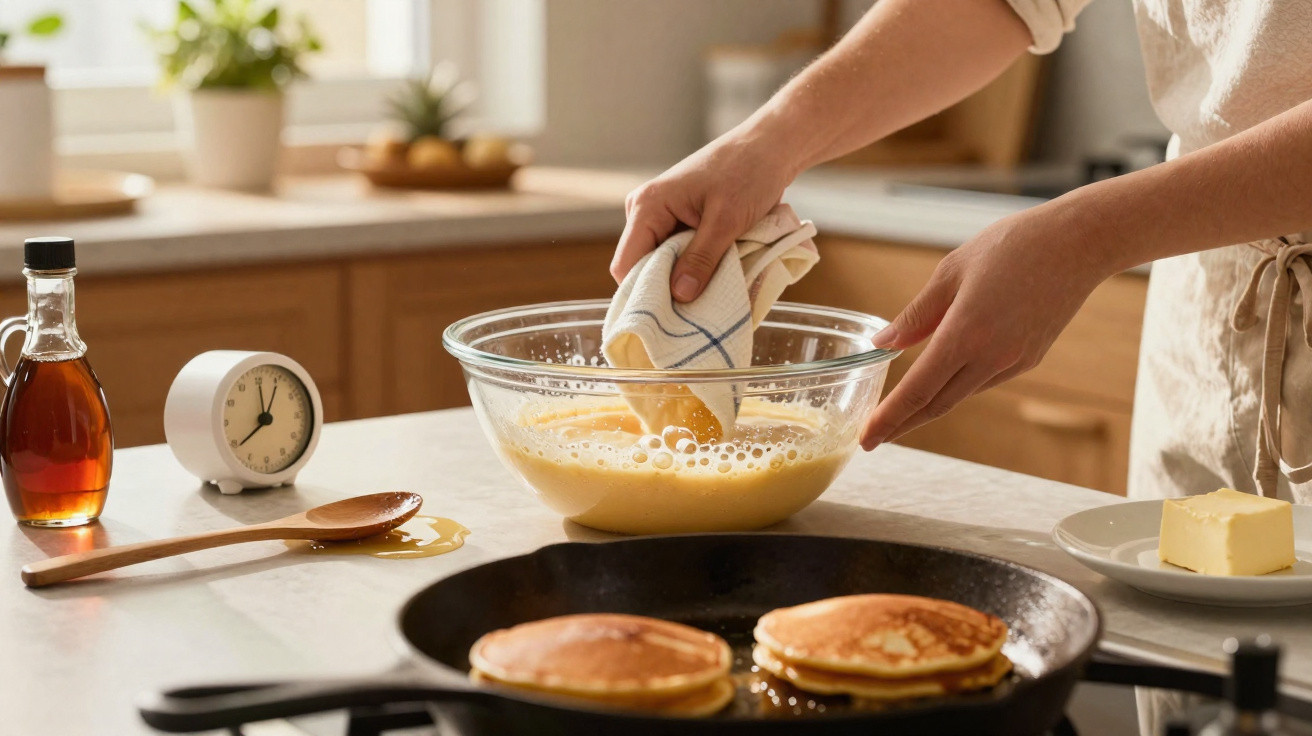
Heat is not the only factor involved. Your mixing method also affects the finished texture. Beating the batter too forcefully can build stronger gluten strands, making the crêpes chewy.
For this reason, many French home cooks continue to use a wooden spoon. It naturally promotes slower, more controlled mixing, combining the ingredients without working them excessively.
Gentle mixing with a whisk or wooden spoon helps avoid rubbery crêpes, even when you use warm milk.
When using an electric whisk or blender, blend only until the batter is smooth. Stop at that point: prolonged beating will not improve it.
Rest, no rest or a brief pause: choosing an approach
Different situations require different levels of preparation. There are three broad methods to consider:
- Traditional method: use cold or room-temperature milk and rest the batter for at least 30 minutes. This is best when cooking for guests or when especially consistent results matter.
- Compromise method: use warm milk and rest for 10–15 minutes, allowing time to prepare fillings or tidy the worktop.
- Express method: use warm milk and skip a formal rest, cooking straight away. This suits busy mornings or late-night cravings.
For regular cooking, the middle option offers a useful balance: it saves time while still giving the batter a brief opportunity to settle.
Common questions: lumps, gluten and crêpe batter science
Two terms frequently come up when discussing crêpe batter: starch and gluten. Both occur naturally in wheat flour.
Starch is the carbohydrate component that expands as it absorbs liquid. Warm milk accelerates this process, which is why the batter becomes a little thicker and more cohesive.
Gluten is the protein network that provides structure. Some is necessary to prevent crêpes from breaking apart, whereas too much makes them tough. Since warm milk also speeds gluten formation, careful and gentle mixing is even more valuable.
Lumps develop when flour clumps with liquid before it can disperse evenly. Pouring in the warm milk slowly while whisking from the centre outwards helps prevent them. Passing the batter briefly through a fine sieve is another easy solution if you want an exceptionally smooth mixture.
Practical situations and small tweaks that help
Picture a Sunday brunch when guests arrive earlier than expected. You meant to prepare crêpe batter ahead of time but forgot. Warm milk allows you to make a workable batter while the coffee is brewing, rather than holding up breakfast.
On a weekday evening, this same method can take you from a craving to the first plate in under 20 minutes: five minutes of mixing, ten minutes of resting while you slice fruit or grate cheese, and then directly to the pan.
There is scope for a little extra refinement as well. Replacing some of the milk with beer or sparkling water can make the batter lighter, producing slightly airier crêpes. A spoonful of melted butter brings richness and can reduce sticking, particularly with older pans. These adjustments complement the warm-milk method rather than undermining it.
One final consideration: very hot milk can scramble eggs as soon as they meet it, or form a cooked layer of batter in the bowl. Avoid overheating the milk to keep this shortcut reliable and safe. Keep it gently warm, mix carefully, and the first or second crêpe will show whether the balance is right.








Comments
No comments yet. Be the first to comment!
Leave a Comment