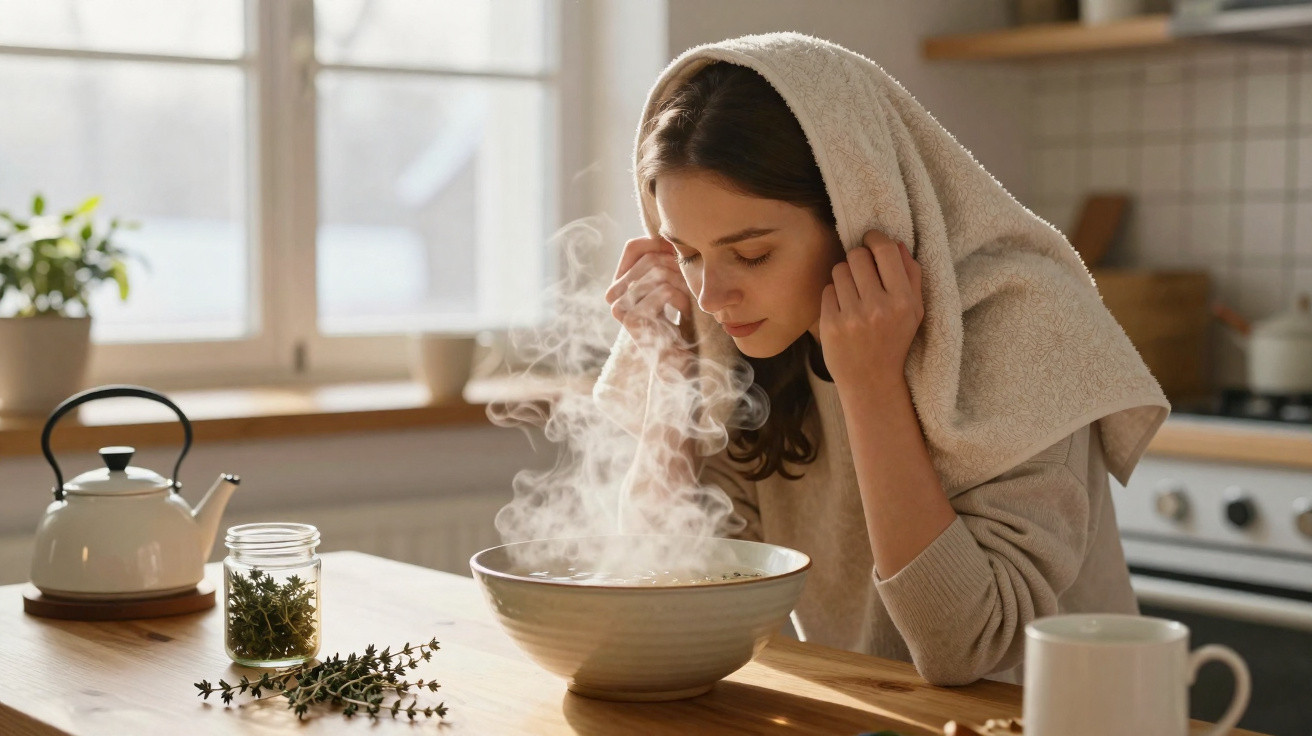
A steaming bowl on the table, a winter draught slipping through the window and that familiar tickle at the back of the nose. When colds make their way around the household, an everyday kitchen herb can help make breathing feel easier again. Here is how one herbalist uses thyme to clear a foggy head and freshen the air during the heavier months.
A green, resinous fragrance lifted from the bowl, like stepping into a heated greenhouse while everything outdoors was grey and full of sniffles. We bent over the bowl beneath a towel tent and inhaled until the room seemed to blur softly at the edges.
She spoke quietly, as people do when passing on something learned gradually over many winters. The steam brought a crisp, clean sweetness that reached behind the eyes and shifted something that had felt stuck. Faces relaxed, shoulders lowered and you could hear people swallowing comfortably again.
Then, almost as if issuing a challenge, she added: it cleans the air too.
Why thyme steam feels so restorative
Thyme meets the nose with a fresh, pine-like intensity that rouses sluggish sinuses. In steam, its essential oils lift quickly, carried by warm moisture into the nasal passages. The first inhalations can feel nearly spicy, before heat and aroma work together to encourage mucus to move and relieve that heavy, blocked-up sensation.
At a clinic I visited last January, the herbalist stored a jar of dried Thymus vulgaris beside the kettle. She relied on brief, deliberate steams whenever coughs made the waiting room sound like a choir. We all know the feeling: the house seems close, somebody sneezes and everyone becomes tense. A bowl, a handful of thyme and five peaceful minutes can alter the atmosphere.
There is sound practical reasoning behind the ritual. Warm vapour moistens the nasal lining, helping the tiny cilia clear away extra mucus, and that alone may provide relief. Thyme contains thymol and carvacrol, compounds with documented antimicrobial activity in laboratory settings, giving the practice a credible basis. It will not sterilise a room, but a cloud of thyme steam can alter how the air feels - and how you feel within it.
How to make thyme steam at home safely
Heat water until it is just below boiling, pour it into a heatproof bowl and add a small handful of dried thyme or two fresh sprigs. Leave it for a minute, allowing the surface to settle. Sit down, position yourself about an arm’s length away, place a towel over your head and the bowl, then breathe through your nose for 5 to 10 minutes.
Keep your face at least 30 cm from the water, so the warmth remains soothing rather than intense. If it becomes too hot, raise the towel and pause. Brief sessions tend to work best: aim for two steams daily when you feel congested, then reduce them. Realistically, though, few people manage that every day.
Avoid essential oils for this method - the herb itself offers plenty, while concentrated oils may cause irritation. Steam can aggravate asthma, COPD or fragrance sensitivity, so take care or avoid it altogether if this applies to you.
“The win isn’t heroics,” says Maya Bennett, a clinical herbalist who teaches winter care. “It’s small, repeatable comfort that helps you breathe and move through the day.”
- Dried culinary thyme and fresh sprigs both work well.
- Keep bowls of hot water away from children and pets, as burns can occur quickly.
- After steaming, open a window slightly to refresh the room.
- This is not a cure for infections; contact a clinician if symptoms get worse or do not go away.
If your nose has a pleasant tingle, you have found the right level.
What “disinfecting the air” really means with thyme steam
When herbalists say thyme steam can help clean the air, they are not suggesting it provides hospital-standard disinfection. They mean that the volatile compounds - the scent of thyme itself - spread through the room and may limit some microbes in the immediate area, at least briefly. Think of it as a quick rinse for winter air rather than a full wash cycle.
Research indicates that thymol can reduce certain bacteria and fungi on surfaces and in controlled aerosols, which is why it appears in natural disinfectant sprays. Kitchen steam is not a laboratory set-up, however. It is a mild cloud that can make a dry home seem less unforgiving and a head cold feel less in control.
Use it, then, for comfort and modest benefits: breathing may feel easier, dry-room dust may be less likely to trigger coughing and the air can seem more welcoming. Combine it with the essentials that truly support indoor hygiene - ventilation, handwashing and rest. One bowl will not transform the season, but it may improve the next hour.
The small ritual that changes a room
Thyme steam requires very little: a herb you may already have, a kettle and a moment of stillness. It brings people together, which is unusual when everyone is feeling unwell. You breathe side by side, the room grows warmer and conversation becomes gentler.
I have seen reserved teenagers duck beneath the towel and return with brighter eyes, before sitting by the window for a minute simply to carry on breathing. Parents unwind because the remedy does not feel like a battle, while the home takes on the scent of a garden gently simmering. A quiet practice can be louder than the cold itself.
Some winter moments do not call for grand solutions. They need a small act that tells both the body and the home that relief is possible now. If you try it, tell someone what changed - the first fragrance you noticed, the moment your voice returned or the way the air seemed a little cleaner.
| Key point | Detail | Benefit for the reader |
|---|---|---|
| Thyme’s active aroma | Thymol and carvacrol travel with warm vapour into the nasal passages | Explains why the scent can ease congestion |
| Safe, simple method | Hot water, a handful of thyme and 5–10 minutes beneath a towel | Immediate, affordable relief that can be repeated |
| Realistic effect on the air | Volatile compounds freshen the room; this is not complete disinfection | Sets appropriate expectations and prevents false promises |














Comments
No comments yet. Be the first to comment!
Leave a Comment