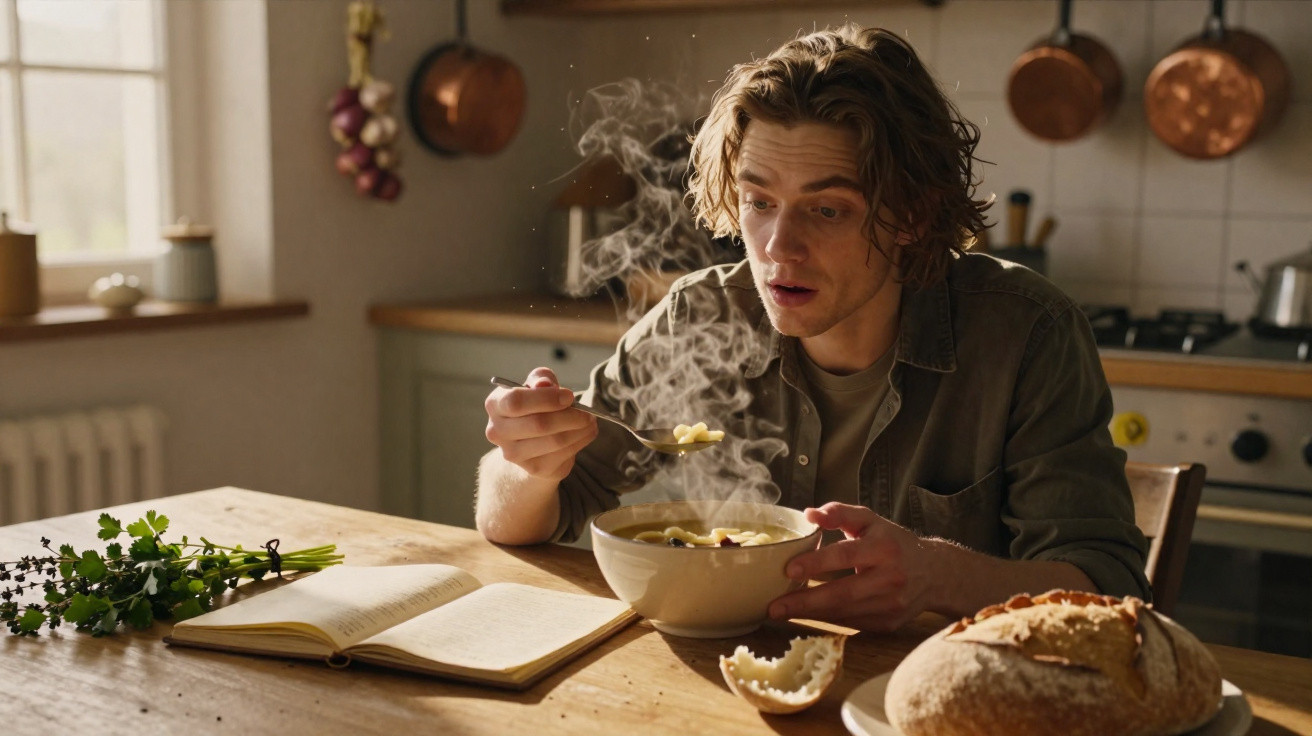
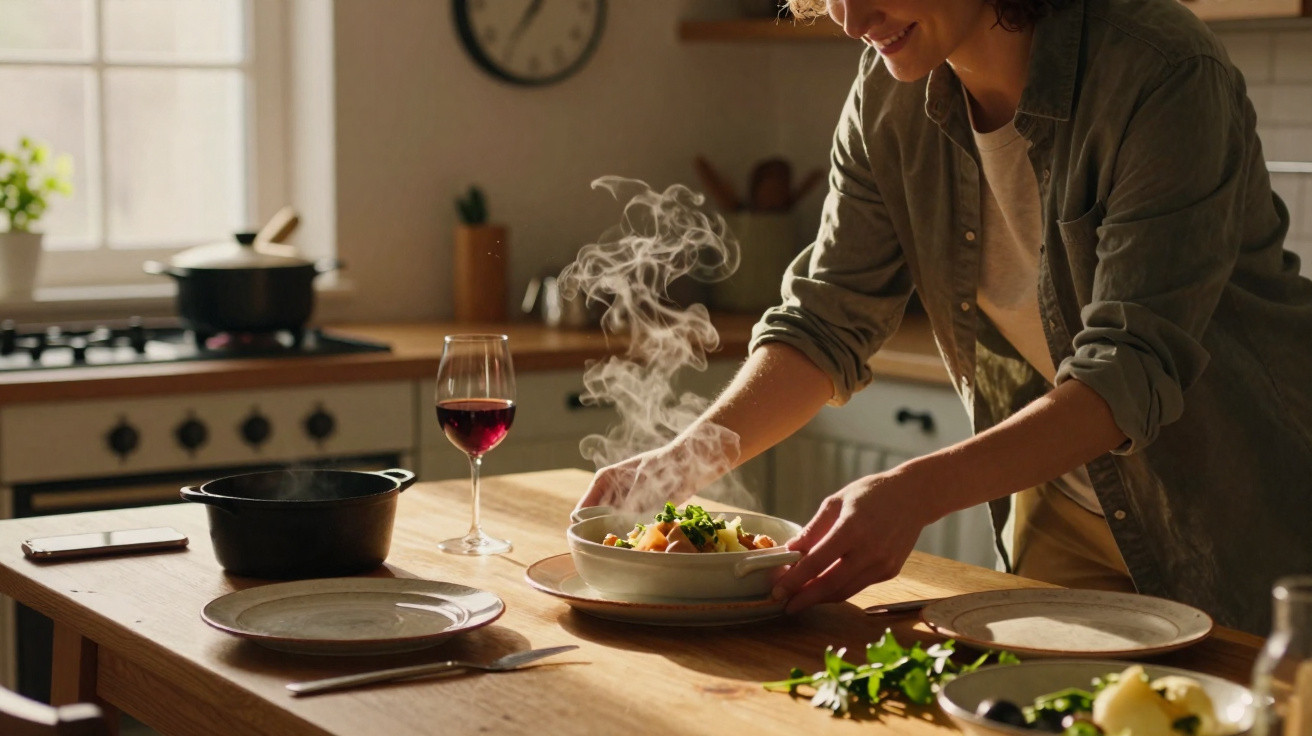
The broth came out before anything else. Steam rose in a soft, gathering plume-the sort that seems to carry stories rather than simply aroma-and hazed the edge of my sight. Its bowl was plain, with a small chip along one side, like the crockery in homes where meals are properly made rather than merely photographed. Opposite me, a woman wearing a flour-speckled apron tipped her head towards it, as though she were passing over a private confidence instead of a lunch cheaper than my morning coffee.
I lifted the spoon, prepared to be intrigued.
Instead, I felt recognition.
There was salt and fat, a faint note of garlic, and tender vegetables giving way around their edges. My mind began searching for an answer: “This tastes like… something.” My childhood? A forgotten winter day? A kitchen I had never even entered?
Every mouthful was like stepping into a room where everybody already knows who you are.
That was odd, because I had never eaten this dish in my life.
The strange comfort of a dish you have never known
The menu described it as a “traditional-style peasant soup”, the sort of phrase you might skim past online without a second thought. It was a rich broth with scraps of meat and torn bread absorbing flavours that had been cooking all afternoon. But after the first spoonful, my shoulders eased, my breath became slower, and my brain performed that familiar trick it does when something feels both entirely new and completely self-evident.
It was like discovering an old jumper in a stranger’s wardrobe and somehow knowing exactly how it would smell against your skin.
No one in my family made this recipe. The country, language and cupboard ingredients were all different. Even so, my body reacted as if it had spent years waiting for this particular flavour.
At a table nearby, a young couple arrived with their phones in hand, thumbs already poised over the camera controls. Once their bowls appeared, they did not take a single photograph. They simply bent towards them, as people do after a difficult week when they want food that makes no demands.
I saw the man take a spoonful, stop, then breathe out a quiet “oh.” It was neither theatrical nor especially impressed. It was simply the small release you hear when someone’s nervous system decides that everything is safe.
We all know that experience: a flavour does more than satisfy us; it seems to know us.
This dish produced that response across a room full of people who, I would guess, had not grown up eating it.
There is a reason our minds seize on dishes like this and categorise them as familiar, even when they are, in truth, strangers. So many traditional-style recipes are shaped by the same basic human impulses: make provisions go further, take the chill away, soothe those who are hungry.
Long, slow cooking. Fat that carries flavour. Tender textures that ask little from an exhausted jaw. These ideas recur from one country to another, a common language written in onions and bones.
Nearly every culture eventually discovered that inexpensive cuts of meat and leftover vegetables, simmered for long enough, become something kind and abundant. Over generations, our bodies have learned to trust food made this way.
When that bowl is placed in front of you, your tongue may not recognise the precise recipe. Your nervous system, however, does.
How to bring “instant familiarity” to your own cooking
If you have attempted to recreate that sensation at home only to end up with something slightly dull, you are far from alone. The restaurant cook who prepared my soup explained that the “secret” was not one magical ingredient. It was patience and sequence.
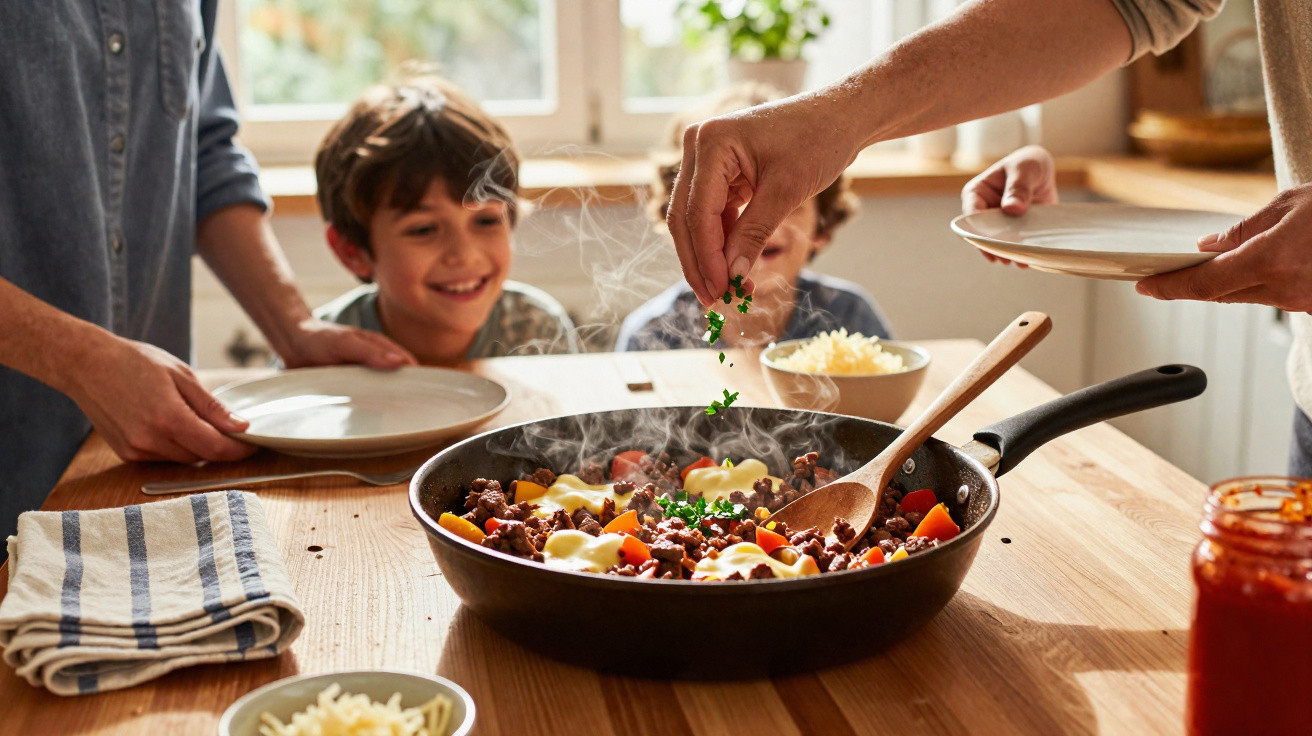
She began by browning the aromatics until the onions were almost catching in the pan, creating that near-burnt edge that brings everything to life. The bones were added next: roasted beforehand, then simmered gently rather than boiled furiously.
The vegetables went in at different stages rather than all together. Those intended to retain their shape were added later. Stale bread was ripped by hand instead of cut, leaving uneven pockets to capture the broth.
Perfection was never the point. Building layers was.
At home, this kind of cooking is often hurried because we are weary and hungry, scrolling on our phones and half-replying to messages while stirring. And, honestly, no one cooks this way every day.
It helps to replace the goal of a “restaurant-level masterpiece” with something “quietly reliable”. Work with what is already in the kitchen: half an onion, limp carrots, the final bit of roast chicken nobody wanted. Let the aromatics soften for longer than seems sensible. Taste the fat before tasting the liquid.
The usual error is to assume that “traditional-style” requires strict obedience to a grandmother’s handwritten recipe card. The spirit of these dishes lies less in exact quantities than in repetition, warmth and a willingness to accept a pot that is slightly untidy.
Another thing the cook told me stayed with me.
“People always ask for the recipe,” she laughed, wiping her hands on her apron. “But what they really want is the feeling. The recipe is the easy part.”
She relied on three foundations for creating that feeling, whatever cuisine she was making, and they are remarkably universal:
- Begin with a base that smells like home: onions, garlic, leeks, celery, or whichever ingredients your family used.
- Include one ingredient that needs time to become tender-beans, robust greens or root vegetables-so patience is built into the dish.
- End with something fresh: lemon, herbs, cracked pepper or a drizzle of olive oil, so the food feels lively rather than heavy.
Repeated regularly, these modest steps make your kitchen somewhere your future self will recognise before the door is even open.
When food becomes a memory you have not yet lived
As I walked back into the street after eating, the city seemed faintly altered. The traffic was unchanged, the pavement still cracked, and the pedestrian crossing signal remained impatient. Yet the meal had reminded me that comfort does not always need to come from your own history. Sometimes it comes from another person’s past and still suits you exactly.
That is the understated magic of traditional-style dishes: they work like shared passwords between people who have never met. You enter an unfamiliar place, order something you can barely pronounce, and suddenly join a continuity that began long before you and will continue simmering long after.
It could be a stew in a mountain village, rice and beans on a plastic plate, a casserole delivered to a funeral, or noodle soup eaten standing up with your coat still on. Such dishes do not ask to be shared online, although people may photograph them regardless. They are not fashionable, plated like miniature sculptures or seeking praise.
Still, when they arrive before you-steaming, a little chaotic and entirely honest-they can awaken a sense of belonging that feels older than your passport.
Perhaps that is why so many of us seek them out. It is not only the flavour, but also the quiet, determined reassurance that somewhere another person is stirring a similar pot, hoping it will comfort whoever comes through their door.
| Key point | Detail | Value for the reader |
|---|---|---|
| Familiarity comes from patterns | Slow cooking, layered flavours and soft textures tell the body that it is “safe” | Helps explain why certain dishes are comforting from the first mouthful |
| Technique matters more than strict recipes | Browning aromatics, simmering gently and adding ingredients in stages create depth | Offers a straightforward route to recreating that “traditional” warmth at home |
| Tradition is emotional, not just historical | “Traditional-style” food links you to other people’s stories, not only your own | Encourages you to cook and eat with curiosity as well as nostalgia |











Comments
No comments yet. Be the first to comment!
Leave a Comment