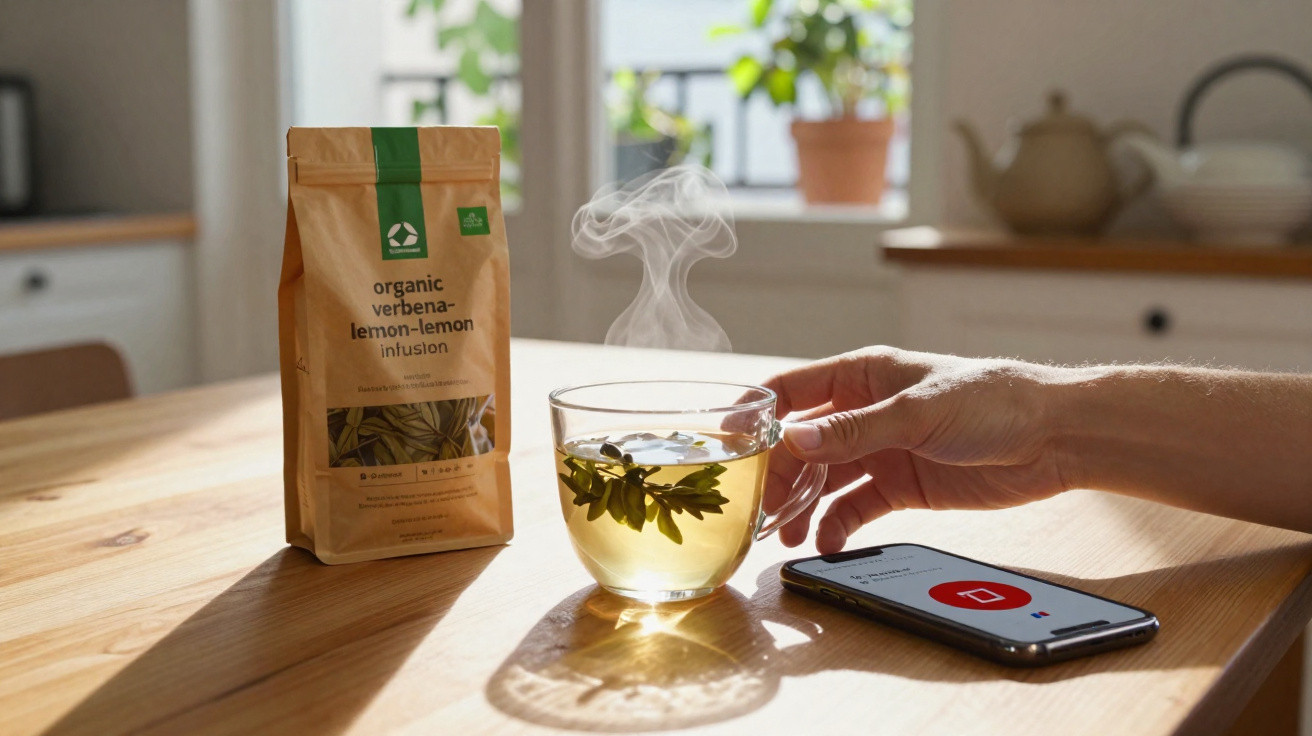
After a demanding day, plenty of people relax with a mug of herbal tea, reassured by the comforting “organic” wording on the packet.
In France, however, this peaceful evening habit has been disrupted by a nationwide recall of an organic lemon verbena infusion. Specialist retailer Origines Tea and Coffee is recalling the loose tea after testing identified a risk of biological contamination.
Organic herbal tea withdrawn from sale throughout France
France’s Rappel Conso government platform has published an alert for batches of Organic Lemon Verbena Infusion sold by Origines Tea and Coffee. Available both from shops and online, the product may be in cupboards across the country.
The recall covers loose organic lemon verbena infusion packaged in 50 g and 500 g paper bags. It was sold between 1 March 2023 and 12 February 2026, a lengthy period that gives the affected product potentially wide distribution.
Consumers who bought this organic lemon verbena infusion are urged to stop drinking it immediately and check the batch information on the packaging.
Which products are affected?
The notice provides specific references so that customers can establish whether their tea is included in the recall.
- Brand / product: Origines Tea and Coffee – loose “Organic Lemon Verbena Infusion”
- Product codes: O30516 (50 g bag) and O30616 (500 g bag)
- Best-before dates (DDM):
- 28/02/2027 – 50 g and 500 g packs
- 30/04/2027 – 500 g packs
- 30/11/2027 – 500 g packs
- GTIN: 3760247355512
- Sales channels: the Origines Tea and Coffee shop in Bruges, Gironde, and the company website, with deliveries throughout mainland France
- Recall window: the official recall process is due to remain in place until Thursday 30 April 2026
Anyone who bought the tea online during the past few years, particularly in the larger 500 g format, should inspect their cupboards carefully. Its long shelf life and far-off best-before dates mean that a considerable number of bags may remain unopened.
What contamination has been identified?
The problem is not caused by bacteria or mould, as consumers might first expect. Instead, it relates to naturally occurring plant toxins known as tropane alkaloids. These compounds occur in some plants, including datura, commonly known as jimsonweed or devil’s trumpet.
Tropane alkaloids are natural plant toxins that can severely disrupt the nervous system and the heart when ingested in significant amounts.
Quality-control testing detected these alkaloids in the recalled lemon verbena infusion. Contamination may happen when pieces of poisonous weeds are mixed with edible plants during harvesting or processing. Because these compounds are powerful, even low quantities may be significant.
Health risks associated with tropane alkaloids
At greater levels of consumption, tropane alkaloids disrupt the body’s cholinergic system, which is essential for transmitting nerve signals. This disruption may result in what clinicians call anticholinergic syndrome.
Symptoms to look out for after consuming a cup of the affected infusion include:
- An unusually dry mouth and trouble swallowing
- Blurred eyesight or difficulty focusing
- A rapid heartbeat or palpitations
- Agitation, confusion or disorientation
- Hallucinations or convulsions in severe cases
Children, older people, pregnant women, and those with existing heart or neurological conditions are at greater risk. In these groups, even moderate exposure may have a more destabilising effect.
What to do if you have this tea at home
The official advice is clear: do not drink the product. Consumers should set the bag aside, record its details, and arrange either a refund or safe disposal.
If you have been drinking this lemon verbena infusion regularly, stop immediately and contact the retailer or brand for reimbursement.
Refunds and contact information
Origines Tea and Coffee will refund recalled batches until 30 April 2026. Customers can proceed in either of the following ways:
- Take the product directly to an Origines Tea and Coffee shop in Bruges
- Telephone the company’s customer service team to arrange the process remotely
The recall notice gives the following telephone number: 05 56 51 37 30. Consumers should retain the packaging where possible, or at least make a note of the product code and best-before date, to help the claim be handled more easily.
Where returning the tea is impractical, the bag may be placed in household waste. Authorities advise consumers not to give it to anyone else or repurpose it for anything, including homemade potpourri or compost.
When to get medical advice
Those who have already consumed the infusion do not need to attend emergency services if they feel well. Nevertheless, prompt medical attention is needed if any of the following warning signs develop:
- Palpitations or an irregular heartbeat
- Sudden problems with vision
- Confusion, agitation or hallucinations
- Severe headaches, intense thirst, or difficulty passing urine
In France, health authorities advise people to call a doctor or their local emergency number if these symptoms occur after consuming a recalled product. Medical professionals can decide whether observation or treatment is required.
Why organic teas may still contain toxins
This incident highlights that “organic” does not necessarily mean “risk-free”. Organic agriculture limits the use of synthetic pesticides and fertilisers, but it cannot prevent plants such as datura from growing naturally amongst crops.
| Aspect | Organic herbal tea | Main safety concern |
|---|---|---|
| Farming | Restricted use of synthetic chemicals | Toxic wild plants may be present |
| Processing | Leaves and flowers are dried and cut | Cross-contamination can occur during harvesting or sorting |
| Consumer perception | Considered natural and mild | Potential toxicity may be underestimated |
For producers, thorough sorting and testing are intended to stop weeds and their toxins entering the supply chain. However, as this recall demonstrates, failures can occur, particularly with bulk products sold over a number of years.
Reading recall alerts and staying safe
France’s Rappel Conso platform has changed how recalls are shared with the public. It brings together alerts for food, cosmetics, toys and other products. Even so, many people may not realise that a product as apparently harmless as herbal tea can be subject to a recall.
In practical terms, the following routine can help improve safety at home:
- Review labels on long-life dried goods once or twice each year
- Keep receipts or online order confirmations for grocery purchases whenever possible
- Watch for public-health announcements and supermarket recall notices
- Take care if unusual symptoms appear after trying a new product
Herbal tea drinkers can reduce their risk by rotating brands, avoiding very large bags that could last for years, and choosing suppliers with clear traceability. No product is wholly free from safety concerns, but well-informed habits can make a difference.
Anticholinergic effects explained simply
Although “anticholinergic syndrome” may sound highly technical, its effects are tangible. Put simply, tropane alkaloids act rather like applying the brakes to the body’s “rest and digest” system. The mouth becomes dry, pupils widen, the heart speeds up, and confusion can develop.
In carefully controlled doses, these substances are used in certain medicines, including some travel-sickness tablets. In those circumstances, the benefits are assessed and the dosage is precisely calculated. Contamination in food or herbal tea is different because the amount consumed is uncertain and uncontrolled.
For a person drinking several cups each day of the same contaminated infusion, exposure may accumulate. This is why authorities are not only recalling the product, but also emphasising the importance of stopping regular consumption and monitoring for symptoms.














Comments
No comments yet. Be the first to comment!
Leave a Comment