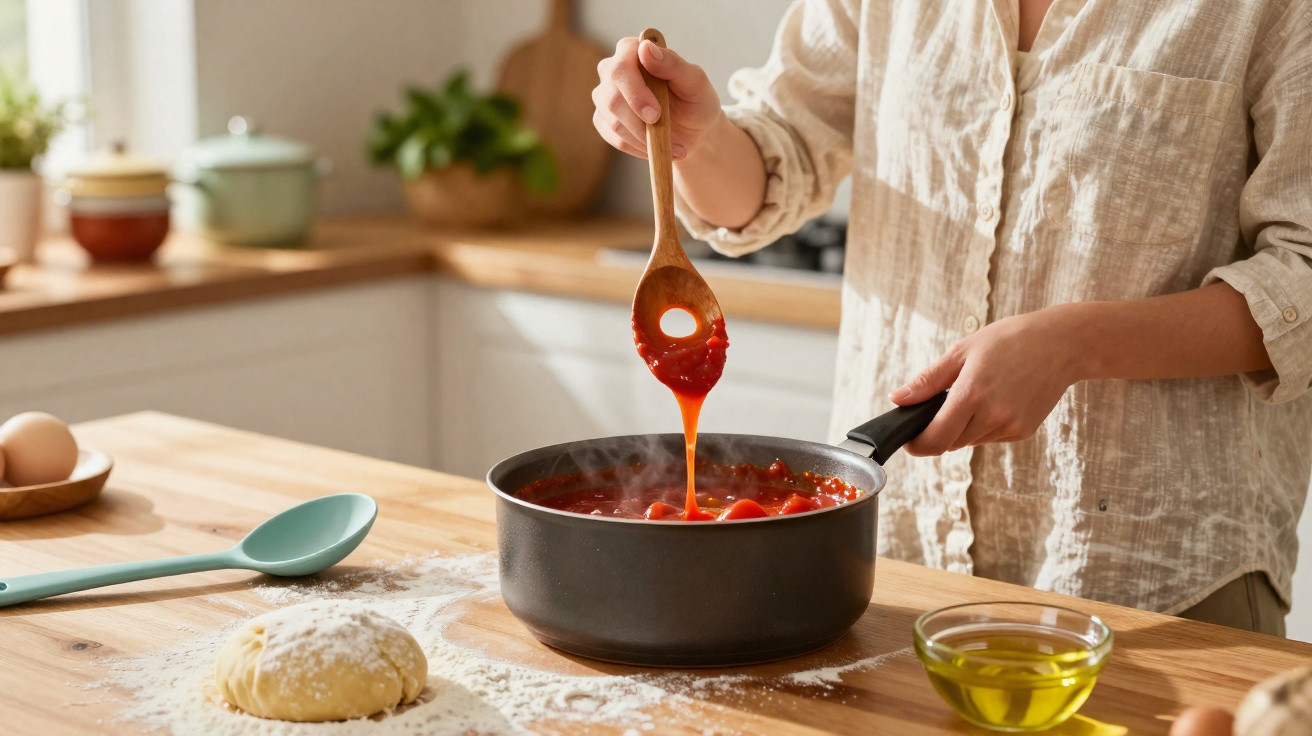
Preparing everyday recipes calls for care and the right kitchen accessories. Innovative utensils such as the spoon with a hole provide smart solutions, improving food consistency and making daily culinary preparation more efficient.
Why does the traditional wooden spoon have a central hole?
The evolution of culinary accessories has changed the way modern households cook. The arrival of models with a central opening has addressed the build-up of heavy food, allowing the mixture to flow freely through the middle of the utensil throughout stirring.
This straightforward structural change greatly lowers the physical resistance involved in stirring dense recipes. As a result, cooking demands less mechanical effort from the arms, making the routine easier for anyone preparing large dishes every day on the hob.
The main practical benefits of this tool in your routine are set out below:
- Less effort: The central opening reduces the drag created by heavy recipes at the bottom of the pan.
- Even texture: The gap helps to break up flour lumps in mixtures.
- Continuous flow: Thick sauces move through the middle without spilling over the sides of the pan.
- Complete protection: Modern plastic or silicone models prevent scratches on coated surfaces.
- Quick cleaning: The smooth surfaces of newer materials stop organic residue from building up.
How does this feature improve the preparation of thick sauces?
When a thick cream is stirred with an ordinary spoon, the food tends to gather in front of the utensil. This constant blockage forms a barrier that forces liquid towards the edges, increasing the risk of hot splashes on the domestic hob.
The central hole efficiently breaks up this hydrodynamic barrier. Liquid passes through the middle of the Tupperware Ideal spoon, or a similar model, creating an internal flow that distributes heat evenly and prevents the bottom of the pan from burning during boiling.
Below is a video from Kelly's Tupperware YouTube channel that explores the points discussed in this topic in greater depth:
What are the real benefits for heavy mixtures?
Dense mixtures, such as coxinha dough or reduced sweets, require firmness and suitable tools. The resistance created by food resting against the spoon blade can quickly tire the cook and may also hinder the proper incorporation of dry ingredients into the liquid base.
Physics in the Kitchen
Fluid Dynamics
The empty space acts as a mechanical pressure equaliser inside the cooking vessel.
The mixture passes through the central opening and undergoes continuous aeration, which removes starch lumps.
The perforated design divides the mixture into smaller portions with every stroke. This mechanical action makes it easier to break apart flour lumps, ensuring a perfectly smooth, velvety texture without needing to beat the mixture aggressively.
The improvements seen in the food's final consistency are listed below:
- Breaks up starch clumps without excessive effort.
- Provides quick homogenisation in deep or shallow pans.
- Prevents unwanted flour build-up around the side edges.
Why replace traditional wood with modern polymers?
Although the classic wooden spoon remains very popular in traditional kitchens, its natural porosity presents risks. Wood absorbs moisture and food residue extremely easily, making the utensil a favourable site for the growth of harmful bacteria.
Modern utensils made from technological materials eliminate this hygiene issue completely. Their fully non-porous, smooth surfaces make thorough cleaning easier after use, helping to maintain your family's food safety in every recipe prepared during the day.
The safety factors provided by these newer materials are outlined below:
- No grooves in which organic leftovers can accumulate.
- High heat resistance that prevents the utensil from warping.
- Full compatibility with delicate and non-stick surfaces.
How do you choose the best perforated utensil for your kitchen?
The ideal choice should take account of the handle's ergonomics and the quality of the composite material. Models combining lightness with structural rigidity are ideal for handling both light broths and extremely dense mixtures, ensuring durability for years of continuous use.
Checking that the product is free from harmful compounds supports healthy, safe cooking. Choosing recognised brands brings greater convenience to everyday cooking on the hob, turning small design details into valuable allies for your home cooking success.
Read also: Why in Japan they always boil the wooden spoon before using it in the kitchen for the first time







Comments
No comments yet. Be the first to comment!
Leave a Comment