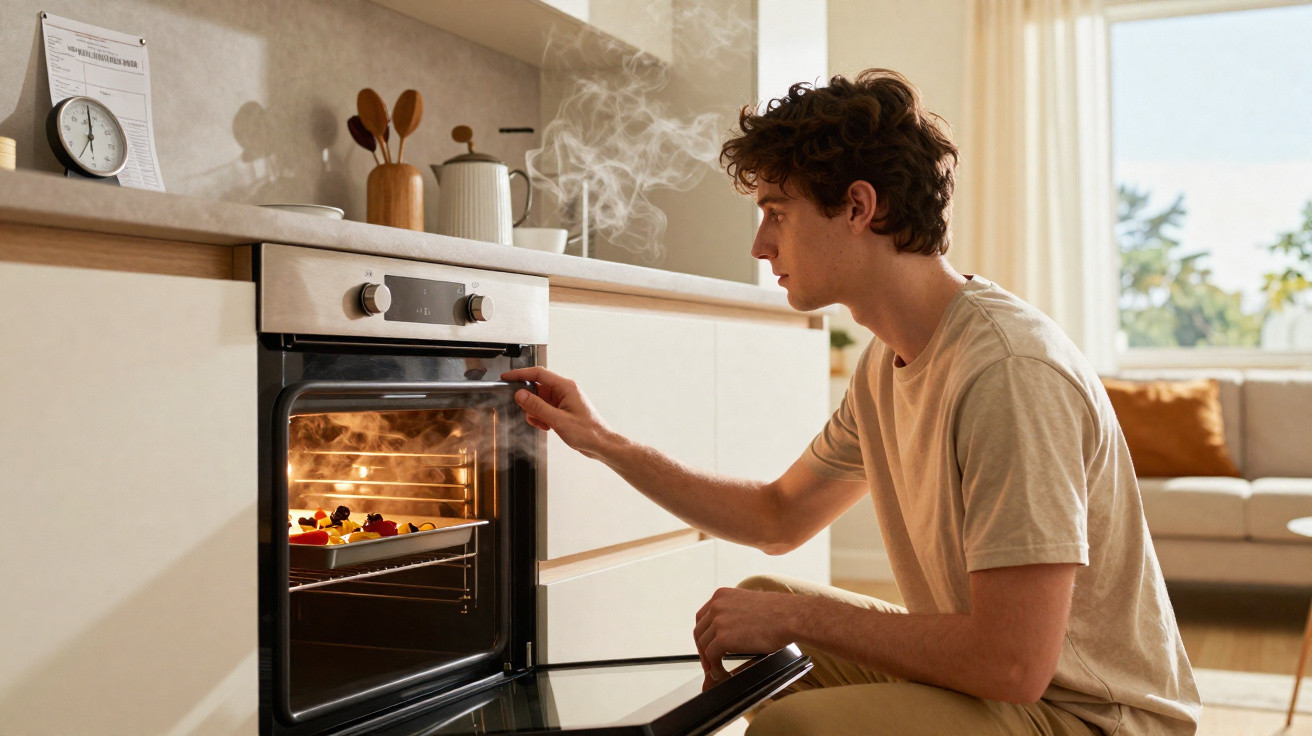
But what does this instinct actually achieve in the kitchen?
In many homes, the routine is always the same: casserole out, cake onto a cooling rack, oven door open – and hot steam pours into the kitchen. Some people swear by it, while others see it as wasted energy or even a safety risk. This everyday habit has more consequences than you might expect, affecting everything from odours and energy saving to fire and burn hazards.
Leaving the oven door open: useful trick or pointless habit?
Once baking is finished, there are initially two arguments for opening the door: the oven cools down more quickly and cooking smells disperse faster. Manufacturer Darty confirms both of these effects.
“Opening the oven door after cooking speeds up the appliance’s cooling process and allows cooking odours to escape more quickly.”
It may sound insignificant at first, but it makes a practical difference. An oven retains a considerable amount of heat in its walls and metal components. With the door shut, this heat remains in the cooking cavity for a long time. Opening it slightly creates a strong exchange of air: hot air leaves while cooler room air enters.
Why smells matter more than many people realise
The second effect is often far more important in the kitchen: odours. Aromatic and greasy residues build up on the oven walls and trays. If the oven stays closed immediately after cooking something strongly scented – such as fish, a cheesy bake or a roast – the air inside remains “perfumed”.
If a sweet recipe follows, such as a fruit tart, it can easily absorb some of those aromas. Darty sums it up clearly: anyone baking a cake straight after a strongly smelling meal risks mixing the scents.
“Leaving the door slightly ajar after cooking can help return the oven to an odour-neutral starting point.”
This approach is especially worthwhile in small kitchens where the oven is used frequently. If you regularly switch between dishes – pizza first, then a sponge base, followed by baked Camembert – leaving the door open reduces the chance of unexpected flavour combinations.
When leaving the oven door open makes sense – and when it does not
There is no universal answer to whether the door should be open or shut. It depends on the situation, the household and the type of appliance.
Common situations where an open door helps
- After strongly smelling food: fish, garlic dishes, cheese-heavy gratins, or roasts with intense marinades.
- When another dish needs to follow quickly: a savoury bake first, then shortly afterwards a cake or a quiche with a delicate filling.
- To cool the oven more quickly before cleaning: anyone wanting to wipe it out later that evening benefits from the shorter cooling time.
- In well-ventilated kitchens: an open window or extractor hood can remove the hot air directly without heating the room excessively.
In these circumstances, opening the door by a small gap is generally enough. It does not need to be fully open; even a few centimetres noticeably speed up air circulation.
When the oven door should generally stay closed
There are also cases where leaving the door open creates more disadvantages than benefits:
- Homes with young children or pets: a hot, widely opened door can attract curious hands or paws.
- Very small kitchens: the escaping heat can make the room uncomfortably warm within minutes.
- Built-in ovens fitted tightly into cabinetry: prolonged, intense heat around the front can put greater strain on seals and furniture surfaces.
- Electric ovens with sensitive electronics above the cooking cavity: rising heat places extra stress on components if the door is left fully open for a long period.
If you are unsure, follow a straightforward rule: open the door briefly, allow the kitchen to air, then close it again. That gives you odour control without compromising safety.
The major misconception: opening the oven during baking is a real mistake
Many people apply the “open-door trick” while food is still baking – and that is precisely when it can harm the cooking process. Every time the oven is opened too often or for too long, the temperature drops considerably. Darty notes that the oven loses several degrees with each opening.
“Every time the door is opened during baking, the cooking time increases, energy consumption rises and the structure of the dish can be ruined.”
Typical practical consequences include:
- Cakes collapse: the mixture suddenly loses heat, gas escapes from within and the structure sinks.
- Gratins turn tough rather than creamy: the top does not brown evenly, while the filling stays runny for longer.
- Bread and pizza lose their oven spring: instead of a crisp crust, the surface remains dull and pale.
If you need to check whether a cake is ready, wait until the stated baking time has almost elapsed and inspect it only once or twice. A quick skewer test, followed by promptly closing the door, is usually entirely sufficient.
Energy use: where can you genuinely save energy with the oven door?
Many people hope to outsmart their heating bills by opening the door: “If the oven is warm anyway, I may as well heat the kitchen with it.” The idea sounds practical, but in reality it only works to a limited extent.
| Scenario | What really happens? |
|---|---|
| The oven door remains shut and the oven is switched off | The oven releases heat gradually through its front and glass. The room warms slightly without a major blast of heat. |
| The oven door is opened wide immediately after cooking | The kitchen briefly becomes much warmer, and the heat spreads quickly but is also lost again rapidly. |
| The oven is switched off 5–10 minutes before the end of the cooking time | Residual heat finishes cooking the dish without requiring additional electricity. |
From the manufacturer’s perspective, the genuinely relevant energy-saving measure is not leaving the door open but switching the oven off before the end of the cooking time. Darty explicitly recommends turning the appliance off a few minutes early and using residual heat. This lowers energy use without affecting the dish.
Why excessive temperatures do more harm than good
People trying to shorten cooking time are often tempted to set the oven far higher than the recipe specifies. Although this speeds up browning, it can easily produce dry or unevenly cooked food. It also increases energy demand.
Moderate temperatures over a longer period generally produce better results: a juicy roast, an evenly risen cake and a stable bake. Rather than forcing the process with aggressive heat, it is better to set the timing accurately – and make use of residual heat.
How to keep oven smells under control for good
Opening the door after baking is only the first step. Anyone who regularly notices strong oven odours should review their cleaning routine.
- Wipe out the oven regularly: grease and sauce splashes settle in corners and on the base, then smell again the next time the oven is used.
- Soak baking trays and racks thoroughly: burnt-on residue produces sharp odours at high temperatures.
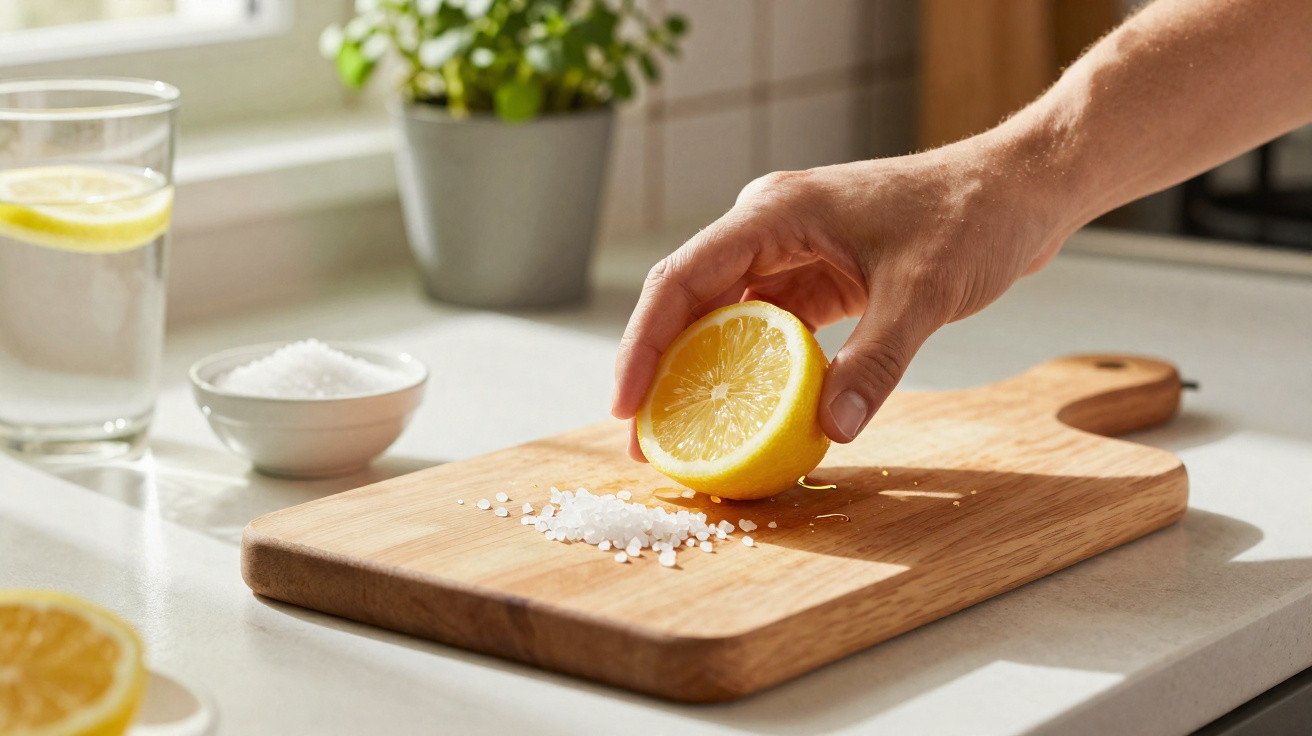
- Use bicarbonate of soda and lemon: a bowl of water with a little bicarbonate of soda or lemon juice in a warm oven helps absorb smells and loosen light residue.
- Check the seals: crumbs and greasy deposits collect in the soft rubber edges and can develop unpleasant smells.
If these basics are covered, there is less need to leave the oven door open for a long time to remove odours. A short ventilation period after baking will normally be enough.
Risks and special cases: gas ovens, children and open-plan kitchens
One point is frequently underestimated: safety. It is particularly important to take a closer look at gas ovens and homes with a very compact layout.
Gas ovens: use an open door with care
Modern appliances should not allow gas to build up, but the same principle still applies: after switching the oven off and opening the door briefly, the room should be well ventilated, especially if food has been baked at a high setting for a long time. In very small kitchens, the temperature rise can otherwise become unpleasant very quickly.
Open-plan kitchens: heat and smells spread through the whole room
Anyone with an open-plan kitchen will know the effect: a hot, open oven can turn the living room into a sauna. Warm air, together with all the cooking smells, travels directly into the living space. In this situation, leaving the door slightly ajar and cross-ventilating as soon as possible is much more comfortable than keeping it wide open for an extended period.
Practical example: using the oven efficiently on a cooking night
Imagine a typical Saturday evening: first a potato gratin with plenty of cheese, then a chocolate cake. How can the oven be used intelligently here?
- Cook the gratin at the recommended temperature and keep the door closed as much as possible during baking.
- Switch the oven off around 5–10 minutes before the cooking time ends, leaving the gratin inside. The residual heat completes the final stage of cooking and saves electricity.
- Once the gratin has been removed, open the oven door slightly so that the cheese and garlic smell can escape.
- Use this time to finish mixing the cake batter and briefly ventilate the room.
- Close the door again and set the oven to the slightly lower temperature needed for the cake. Once it has reached the target temperature, put the cake in – then keep the door shut as far as possible.
This keeps the cake’s flavour neutral, prevents the kitchen from overheating and reduces energy use by making use of residual heat.
What many people misunderstand: an open oven door does not automatically waste energy
The instinct to view every open oven door as harmful to the climate is too simplistic. What matters is when the oven is drawing electricity. If the appliance is already switched off, opening the door does not create any additional running costs. The heat is already in the system – the only question is how quickly it reaches the room.
That heat will be lost either way, whether it escapes gradually through the glass or rushes into the kitchen all at once. The factors that truly influence energy consumption are primarily the selected temperature, the total baking time and switching the oven off before the cooking time ends.
Anyone who keeps these controls in mind and uses the door deliberately – sometimes slightly ajar, sometimes fully closed – will get considerably more from their oven: better flavour, greater safety and more manageable everyday energy use.








Comments
No comments yet. Be the first to comment!
Leave a Comment