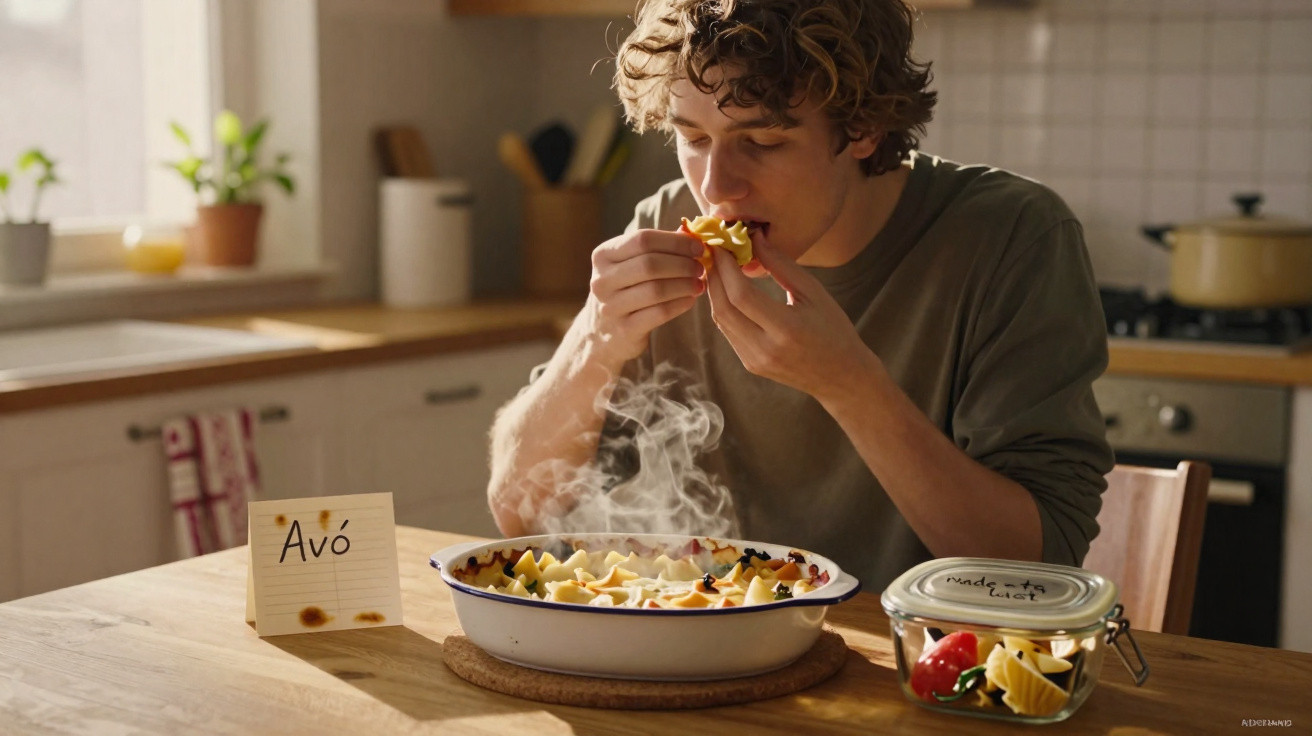
A recipe appeared in my feed late one evening, wedged between a grim news story and photographs from somebody’s holiday. It was titled “Grandma’s 30-Minute Comfort Casserole” and written in unsteady cursive on a marked index card. There was no glossy video or immaculate kitchen-only a picture of melted cheese bubbling in a chipped white dish. It resembled something I had eaten countless times as a child, yet had somehow let slip from memory.
The kitchen was chilly and still that night, with the sort of silence that makes a spoon against a pan sound enormous. I took out an unmatched baking dish, the one with a small crack at its edge, and began chopping onions as though the motion had always belonged to me.
The first mouthful tasted like a secret that had been saved especially for me.
I trusted the recipe immediately.
The quiet power of one humble homemade dish
The recipe could hardly have been more straightforward: onions, garlic, minced meat or lentils, a tin of tomatoes, a handful of pasta and cheese. There was salt, pepper and a pinch of dried thyme. It required no special cookware, digital thermometer or 30-step marinade-just cupboard staples and instinct.
As the onions turned soft and their first sweet scent filled the kitchen, I felt something within me begin to loosen. I quit looking at my phone and stopped wandering around the sitting room. Instead, I stirred, tasted and added a little more salt. The sound of the dish bubbling in the oven seemed stronger than the noise in my thoughts.
By the time I took it from the oven, the kitchen window was misted over.
My eyes were slightly misted too.
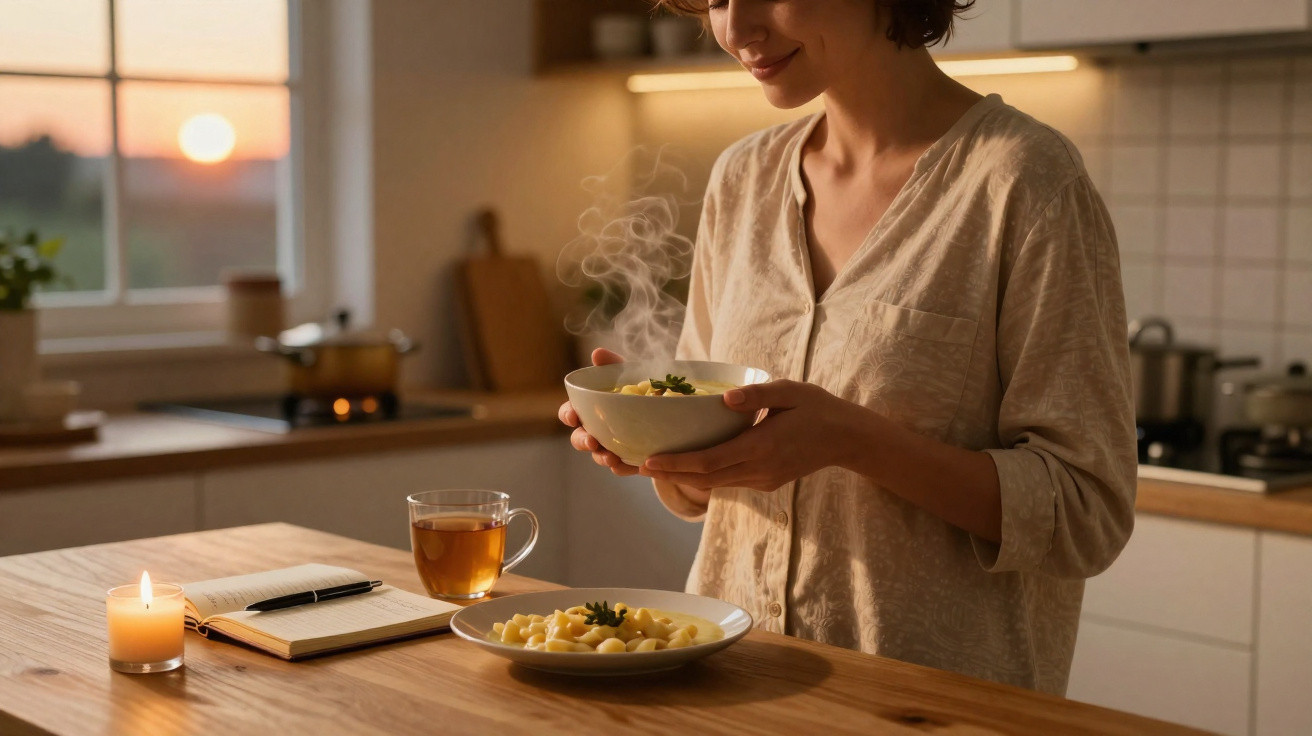
When I finally sat down with a deep bowl of casserole, my mind did something unusual: it settled before it started assessing. I did not scroll, take a photo or mentally “review” the flavours. I simply ate. The cheese stretched, though not beautifully, and the edges were crisper than any food stylist would permit.
That first forkful brought back childhood weekday suppers, when no one discussed protein intake or gluten. There were only questions such as “Did you have a good day?” and reminders to “Leave some for your brother.” The second recalled my grandmother tapping the table twice whenever she approved of something, as if she were pressing her verdict into the wood.
By the third bite, I was no longer asking, “Is this recipe any good?”
I was asking, “Where has this feeling been hiding?”
That is the peculiar quality of comfort recipes: we do not evaluate them by the same standards as fashionable restaurant food. Rather than analysing their flavours, we look for reassurance, memory and warmth. They come with an unspoken agreement of trust. You take a bite and your body tells you, “I know this. We’re safe now.”
If an experimental modern dish is a performance, a homemade comfort recipe is a hug served on a plate. Its ingredients need not dazzle; they only have to arrive when expected. Our nervous systems are quicker than our tongues when it comes to deciding what food we believe in.
Some recipes win trust through perfection.
Comfort recipes win it because they turn up when you need them.
The small ritual that makes a comfort recipe a refuge
The next time I made the casserole, I noticed the little actions that made it feel like far more than a meal. I cleared the worktop entirely, including the stack of unopened post. Then I switched on a single warm lamp and left the main lights off. The kitchen became gentler, almost like a silent stage.
Once again, I began with the onion, taking my time. I added a pinch of salt at the start so it would sweat rather than catch. The garlic went in later, to scent the dish without turning sharp. Instead of weighing the pasta exactly, I snapped it with my hands and listened to its dry crackle. Then I assembled it all in the same ageing baking dish, scattering the cheese carefully rather than trying to make it flawless.
Those quiet, practical actions became the part I trusted most.
They made the day itself seem less disorderly.
Many of us fall into a trap with “homemade” recipes: we turn them into performances. We open ten tabs, make five improvements and worry about missing three “chef’s tips”. That is how the point disappears. Comfort food is not a test; it is an exhale.
So, when you make something like this, keep it uncomplicated. Do not fixate on brands or precise quantities. There is no need to apologise if the cheese is not the expensive sort. On a Tuesday, let the sauce be slightly too thick or slightly too loose. Honestly, nobody manages this perfectly every day.
What matters is preparing it in a way that does not exhaust you.
You can take shortcuts and still call it love.
At one stage, I asked a friend why her family’s potato gratin felt so reliably comforting, despite having no measurements beyond “until it looks right”. She paused for a moment before replying:
“My mom never rushed it. She’d say, ‘We eat when it’s ready, not when the clock says so.’ Somehow that made the whole thing feel safe.”
I began to spot the same theme in other people’s comfort recipes. Each had a small ritual repeated every time: a pause, a familiar phrase or a signal that the dish had already seen people through difficult evenings.
- One particular dish or pan used every time
- A phrase someone always says when it goes into the oven
- A song or playlist linked to that recipe
- A certain chair at the table that is “yours”
- A ritual for leftovers: always kept, never wasted
These small consistencies turn an ordinary meal into somewhere you can return to emotionally.
Not the garnish.
Why this one comfort recipe quietly changed the week
During the week I found that casserole, the news felt especially relentless, while notifications and deadlines seemed to stitch my days together. Without any conscious decision, the recipe became an anchor. In the middle of the day, I would catch myself thinking, “At least tonight there’s that dish.” Even that thought took some of the harshness out of the afternoon.
For at least three attempts, I made no alterations. There were no additional herbs, clever swaps or “healthier version”. I repeated the same loose process at the same point each day, almost as though I had made a flexible but fixed appointment with myself. Chop. Stir. Taste. Bake. Eat. Breathe.
The casserole was tasty, but the certainty was better.
What my mind trusted most was the assurance that this part of the day held no surprises.
There is a simple truth at the heart of many overfull lives: plenty of us hunger more for routine than for recipes. Once you have a dish you can make almost automatically, your brain eases. Decision fatigue recedes. One part of the day has already been mapped out in your favour.
The casserole also had an unexpected effect: it made me want to invite someone over again. Not for an occasion requiring matching napkins, but with a simple, “I have this thing coming out of the oven at eight, want a bowl?” There was no show and no frantic cleaning-just shared forks and steam rising between us at the table.
That was when I understood why I had trusted it so fast.
It did more than feed me; it opened the door again.
Since then, I have started asking people a different question. Rather than “What’s your favourite food?”, I ask, “What’s the one recipe you go to when everything feels a bit too much?” Their replies arrive more quickly than you might imagine: a rice dish with too much butter; tomato soup from a carton, always topped with grated cheese; scrambled eggs on toast, eaten over the sink but invariably with hot sauce.
Every one of these recipes shares the same understated strength: they ask little and return plenty. They are imperfect, quick, slightly messy and intensely personal. They do not claim to solve anything; they merely provide a small island of normality.
Perhaps that is why they are so easy to trust. Somewhere between a spoon scraping the base of a pan and the first breath above a hot plate, we remember that comfort need not be complicated.
Sometimes, it is simply dinner.
| Key point | Detail | Value for the reader |
|---|---|---|
| Simple, repeatable ritual | Use the same dish, steps and small gestures every time | Builds a feeling of safety and predictability around mealtimes |
| Embrace imperfection | Accept uneven cheese, approximate quantities and small shortcuts | Lowers the pressure and makes cooking manageable on busy days |
| Emotional anchor | Return to one trusted recipe during stressful weeks | Provides comfort, routine and an easy way to feel grounded |








Comments
No comments yet. Be the first to comment!
Leave a Comment