The evening I cooked this, my flat seemed unusually noisy. Not with music or visitors, but with alerts, half-finished emails circling in my mind, and a sink resembling a contemporary art display of unwashed mugs. I had not had a real meal for days. It had been a pattern of “I’ll grab something later”, followed by 10:47 p.m. arriving, my stomach quietly objecting while my mind watched one more video.
I opened the fridge and lingered in front of it, allowing the cold air to hit my face as though it might chill the chaos too. Inside were carrots, half an onion, a weary lemon, a carton of stock and a forgotten cooked roast chicken.
Then the thought arrived: tonight, I’m making something that feels like a reset button.
So I began with a pot.
The night a simple pot of chicken and rice brought me back to myself
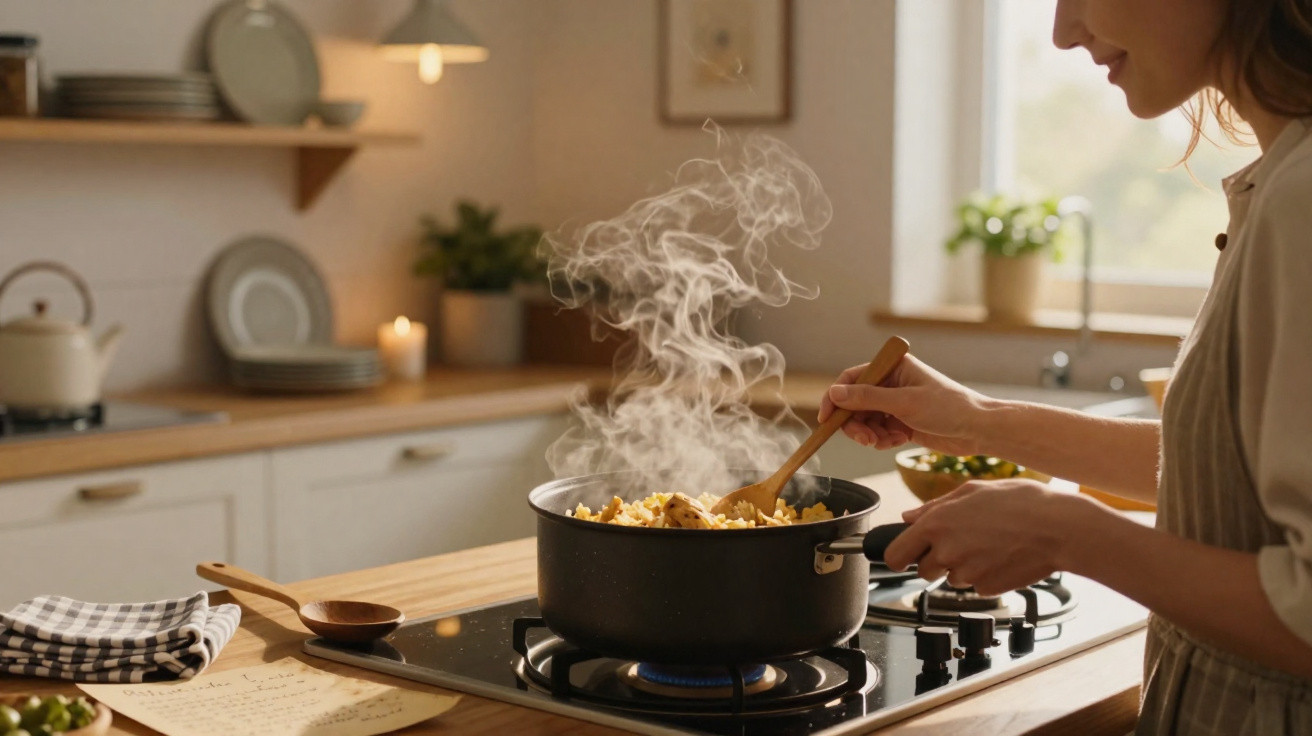
I was not trying to create anything impressive. What I wanted was warmth and silence. I put a heavy pot on the hob, added a knob of butter and listened to it hiss as it melted. That sound by itself seemed to slow something down inside me.
I chopped the onion clumsily, as you do when you have not cooked properly in a while, then tipped it into the pot. The sizzle came with that sweet, mellow, golden smell. Next came garlic, followed by old but still game carrots. All at once, it felt less like “using up leftovers” and more like making a little shelter in the middle of the week.
I pulled the chicken into shreds, added rice and poured in the stock. The pot took everything in with a gentle gurgle. For the first time all day, my phone was in a different room.
As the rice began to swell, the kitchen became a small, misty cocoon. Steam touched the windows. My shoulders, which had been lodged somewhere near my ears, finally lowered. The stock thickened a little while the once-firm, separate grains became plump and tender, absorbing all the flavour.
I stirred at an unhurried pace, not because the recipe required it but because it was satisfying. It felt like brushing out knotted hair. I added a squeeze of lemon and some chopped parsley that was nearing the end of its life in the vegetable drawer.
When I lifted the lid after twenty minutes, the aroma hit me with almost embarrassing intensity. Chicken, rice, carrot, garlic, lemon. Nothing groundbreaking. Still, my brain said, This. This is what I’ve been needing. Not a productivity hack or a new app. A bowl of something honest.
There is a reason meals like this can seem medicinal without officially being anything of the sort. Your body knows these familiar textures: soft rice, tender chicken and hot stock that steams up your glasses. Your nervous system interprets it as safety. You are not rushing, scrolling or weighing up a hundred small choices.
It is simply: serve, blow, taste.
Physically, the warmth alone encourages your body to unwind. Emotionally, it gently tells you, “You’re cared for,” even when you are the person providing that care. That is the peculiar magic of comfort food. You prepare it to nourish your stomach, and somehow your mind loosens too. A pot of chicken and rice is never just about chicken and rice.
How to cook a “reset” dish when your brain is fried
The approach that evening was accidentally straightforward, which was precisely why it helped. I began with fat and flavour: a spoonful of butter and a drizzle of olive oil in a heavy pot over a medium heat. I then added one chopped onion and two garlic cloves, cooking them until soft and lightly golden.
Next came two sliced carrots and a pinch of salt, left long enough to pick up a little colour. There was nothing elaborate about it, just a wooden spoon and some patience. I stirred in 240 ml of rinsed rice until each grain was glossy. Then I added roughly 720 ml of chicken stock, the shredded cooked chicken and a small bay leaf I found at the back of the drawer.
Lid on. Low heat. 18–20 minutes. The kitchen took care of the rest. My only job was to remain there.
This is the part people rarely mention: the meal itself matters less than how you make it. People become caught up in getting it “right”, and then they do not cook at all. They search for ten recipes, compare stock brands, worry about fresh herbs and, once again, order a takeaway while feeling oddly discouraged.
Let’s be honest: nobody really does this every single day.
Give yourself permission for it to be imperfect. Slightly burnt onions? Fine. Too much lemon? You will know for next time. No parsley? Add frozen peas. The reset lies in deliberately making something warm, not in producing restaurant-standard food. The aim is comfort, not an audition.
At some point while standing over the pot, I realised that this modest ritual was not about cooking ability at all. It was about deciding to ground myself in something tangible and slow for half an hour, in a world urging us to refresh every five seconds.
Cooking a comforting dish is one of the few everyday gestures that lets you say, without words: “I’m allowed to pause, and I’m worth feeding properly.”
Then there is the small bit of aftercare that makes a simple dinner feel like a gentle reset. While the pot was still warm, I portioned out two containers for the following day. I wiped down the worktop slowly. I left the pot on the hob with its lid slightly open, like a quiet assurance that tomorrow would not begin from nothing.
- Begin with what is already available: rice, pasta, eggs or lentils all work as a base.
- Choose one aromatic foundation: onion, garlic or a spice you enjoy.
- Include one comfort ingredient: cheese, chicken, beans or potatoes.
- Keep the heat low and the method short, giving your mind room to wander.
- Always cook a little more than you need: your future self will appreciate the leftovers.
When a chicken and rice recipe becomes a small ritual of reset
Since that evening, I have noticed a pattern: the days that feel most chaotic are the very days when I tell myself I “don’t have time” to cook. Yet those are exactly the nights when this sort of meal acts as a reset. Not because it repairs your timetable or removes your stress, but because it reminds you that you are not only a mind carrying a to-do list. You are also a body that needs warmth and care.
Sometimes the reset happens while chopping. Sometimes it comes with the first spoonful. At other times, it is in the leftovers quietly waiting in the fridge, evidence that you did something kind for yourself on an untidy day.
Perhaps chicken and rice will not be yours. Maybe it will be baked pasta, miso soup or scrambled eggs with buttered toast at 9 p.m. The particular recipe matters less than this question: which dish, if you made it tonight, would feel like pressing a gentle, human reset button?
| Key point | Detail | Value for the reader |
|---|---|---|
| Choose a simple base | Use cupboard staples such as rice, pasta or eggs | Makes a comforting meal achievable even on low-energy days |
| Focus on warmth and aroma | Onion, garlic, stock and gentle heat | Helps the body and mind move towards a more relaxed state |
| Turn it into a ritual | Cook slowly, stay present and save leftovers | Changes a basic dish into a personal reset routine |











Comments
No comments yet. Be the first to comment!
Leave a Comment