The odour is the first thing you notice.
It is not overpowering enough to seem revolting, yet it makes you pause before cutting into those vivid red tomatoes. There is a faint trace of last night’s garlic, last week’s onion, perhaps even the salmon you were certain you had cleaned away. You hold the board under hot water once more, use extra washing-up liquid and scrub more vigorously than necessary. Still, the smell remains, hanging on to the wood like an unwelcome guest refusing to go.
Like most people, you turn the board over and use its reverse side, acting as though nothing is wrong. It works… until both sides smell “a bit off”. Suddenly, the board you once liked begins to seem… questionable. You start asking yourself what may be lurking in those tiny knife cuts.
Then you watch someone in a small kitchen use one straightforward method - no chemicals or expensive gadgets - and their board has no smell at all. Naturally, you want to know their secret.
Why your cutting board smells despite looking clean
Spend five minutes in any active home kitchen and you will see the same routine: chop, push aside, rinse, wipe, repeat. A cutting board handles it all: garlic, onions, chicken, citrus fruit, coffee grounds and children’s snacks. It quietly bears witness to every meal. From a distance, it may appear perfectly fine; look closely in the right light, however, and it reveals a different picture.
Those fine knife marks are effectively miniature valleys. Liquid seeps into them, grease collects and microscopic pieces of food remain behind. Hot water and washing-up liquid handle some of this, but not everything. You wipe the board, leave it to dry on the worktop and stack it with the pans. When you return that evening, a faint “kitchen smell” has taken hold. Once established, it is often reluctant to disappear.
A home survey by a UK hygiene laboratory found that cutting boards may contain more bacteria than a toilet seat, largely within those unseen scratches. That does not mean your kitchen is unsafe; it means your board is busy. Think back to last week’s burger night: raw meat, a speedy rinse beneath the tap, a little washing-up liquid “just this once”, then the board stood up to dry again.
Now picture a thin layer of grease that was never entirely removed. Over several days, it oxidises and becomes rancid. That is the elusive lingering smell you cannot quite identify. On plastic boards, odours settle into the grooves. With wooden boards, they penetrate slightly farther, combining with moisture. Either type can develop that “old fridge” smell that puts you off before cooking has even begun.
The explanation is straightforward. Smells are tiny volatile molecules released into the air. Some attach to oils, others adhere to porous materials, while some interact with bacteria that thrive in warm, damp conditions. Ordinary washing-up liquid removes plenty, but it does not always shift the most persistent particles or oils hidden in the grain. That is why last week’s garlic can still be noticeable after repeated wiping and scrubbing.
To stop this pattern, there is no need for bleach, spray bottles or unidentified blue liquids. What you need is something that breaks down grease, neutralises odours and allows the board to dry quickly enough that bacteria cannot settle in. This is where the simple method comes in.
The simple salt and lemon cutting board trick that works
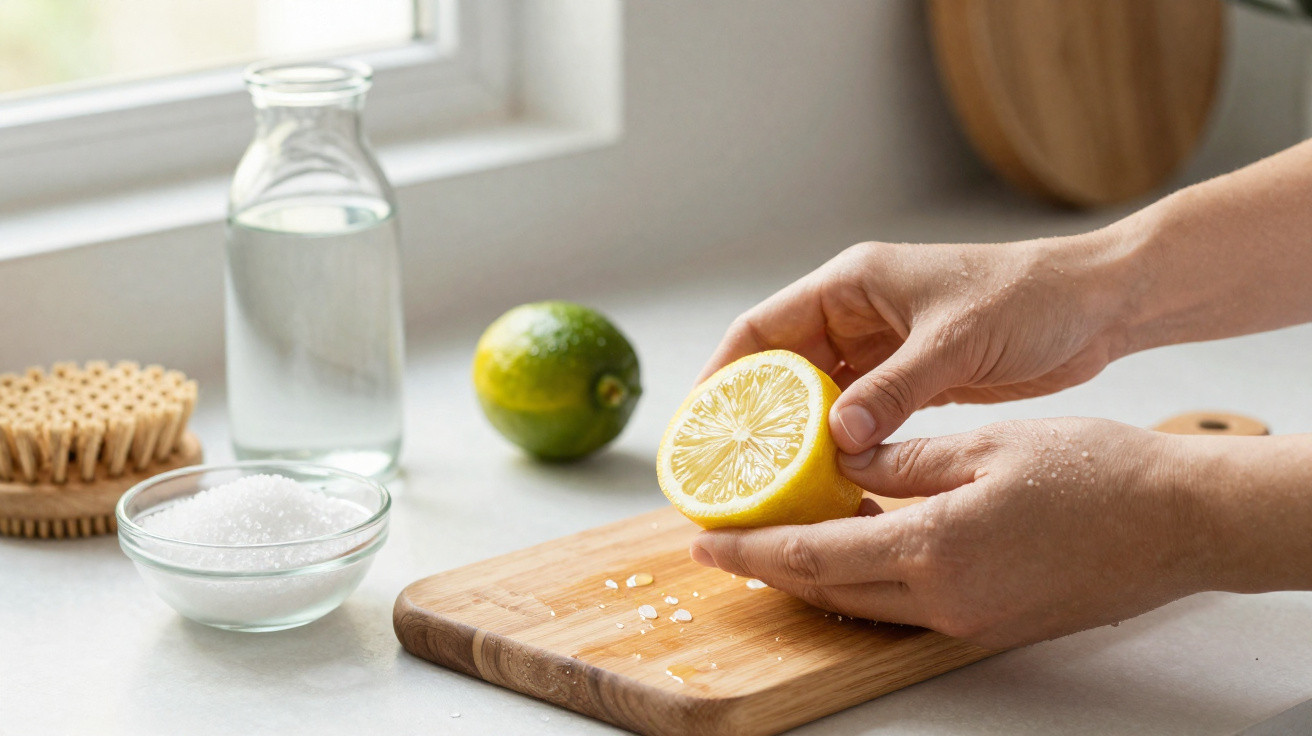
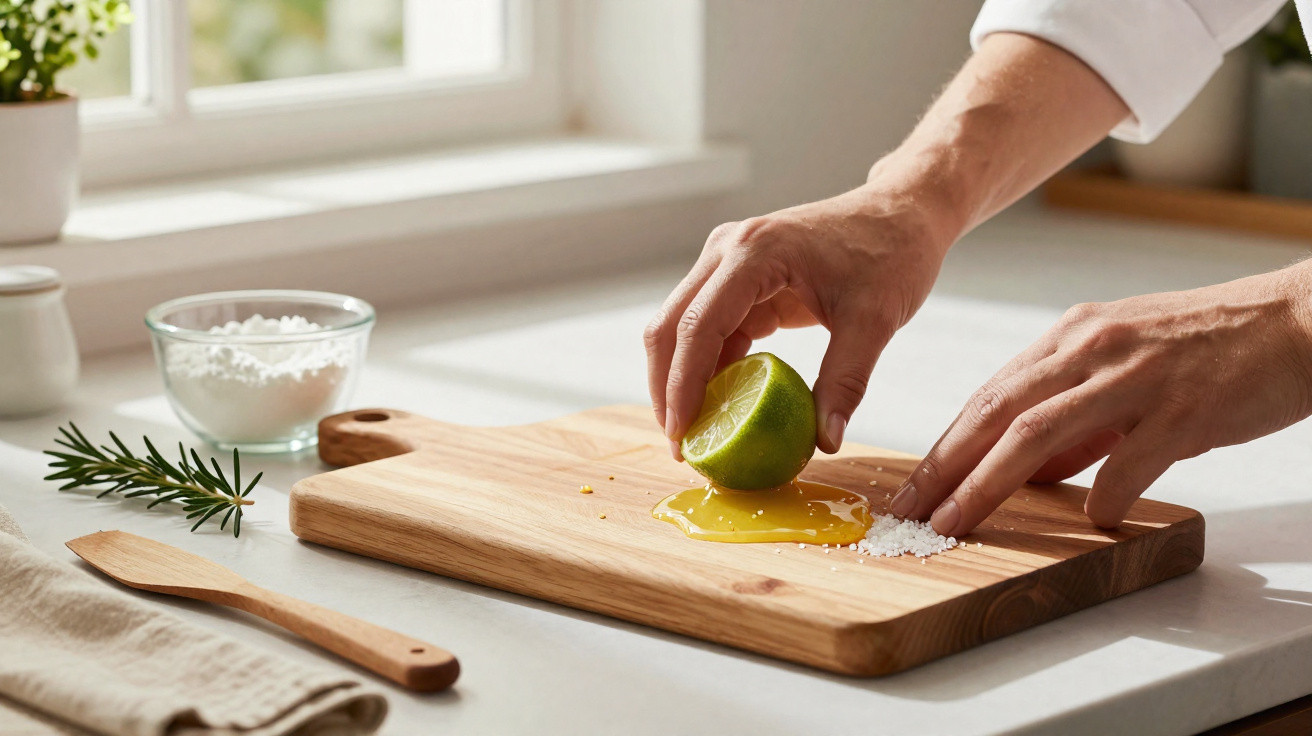
The method is almost ridiculously easy: salt and lemon. Nothing more. You do not need a particular salt or an overpriced “board cleaner” - simply coarse salt and half a lemon. Scatter a generous handful of coarse salt over the dry board. This should be a proper covering, not a light sprinkle. Next, use a cut lemon as though it were a scrubbing brush.
Place the cut side of the lemon against the board and move it across the surface, allowing its juice to combine with the salt. As you work, the salt cleans within the grooves while the lemon’s acid cuts through grease and neutralises odours. Take your time, particularly across the centre where you do most of your chopping. Leave the salty lemon juice in place for five minutes. Scrape away the excess, then rinse briefly with cool or lukewarm water. Finish by drying the board completely with a clean tea towel and leave it upright to air-dry.
In practical terms, this small routine makes a considerable difference. The first time you use it, you will probably notice the change immediately. Garlic vanishes. Fish odour? Gone. The faint stale scent that made you question your board is replaced by almost nothing, perhaps with only the lightest hint of lemon. There is no need to repeat this every day.
Let’s be honest: nobody really does that every day.
For a home kitchen, once every week or two is sufficient. The salt gently exfoliates the board, drawing out what washing-up liquid alone can leave behind. Naturally acidic lemon juice helps dissolve oils and neutralise remaining smells without leaving harsh chemical residue. The board will look unchanged. It will simply smell clean, in the truest sense.
The difficulty people encounter is usually not the salt-and-lemon stage, but what happens around it. Some scrub as though they are sanding furniture, only to damage the surface. Force is unnecessary; patience is what matters. Allow the lemon juice those few quiet minutes to work, and let the salt tackle the tiny grooves your eyes cannot see.
Another frequent error is soaking the board in water. Wood particularly dislikes this treatment. Extended soaking warps the board and creates cracks that retain even more odour. The aim is a quick rinse followed by swift drying. Leaving a damp board flat on the worktop is another unhelpful habit. Trapped moisture gives bacteria something like a spa day. Stand the board on its edge so air can circulate freely around it. This method also works on plastic boards, although you may need to use it a little more often if you prepare plenty of meat and fish.
One food stylist I spoke to put it simply:
“My cutting boards are on camera almost every day. People think I replace them all the time, but I don’t. It’s just salt, lemon, and a towel. Smell tells you the truth long before stains do.”
This routine also offers a small emotional benefit. It makes you slow down. Rather than viewing your cutting board as a cheap utensil, you begin to see it as a quiet kitchen companion. You handle it, clean it deliberately and notice the grain, the knife marks and the memories of every meal prepared on it. It is a three-minute reset that smells of fresh lemon and perhaps of treating your home a little more seriously, without becoming a perfectionist.
- Choose coarse salt rather than fine table salt for greater scrubbing power.
- Dry the board with a tea towel every time, then stand it upright.
- Use separate boards: one for strong odours such as garlic, onions and fish, and another for fruit and bread.
- Treat wooden boards monthly with a light layer of food-grade mineral oil.
- If an odour remains after the lemon treatment, repeat it or sand very lightly with fine sandpaper.
Living with a cutting board that never smells “off”
After trying the salt-and-lemon method a few times, something changes almost imperceptibly. You no longer dread that faint burst of unidentified odour when you begin cooking. You reach for the board confidently. It smells like… nothing. That is precisely what you want before placing strawberries, herbs or a slice of cake on it. You may even find yourself smelling the wood just to make sure. Cleanliness can become surprisingly addictive.
That small adjustment affects much more than a piece of wood or plastic. It softens the invisible boundary between “quick survival cooking” and “this is my kitchen, my space”. When a friend visits and you slice lemons for drinks on a board that does not smell of garlic, there is a quiet sense of satisfaction. When children help prepare fruit without pulling a face at an odd smell, you may feel that, just possibly, you have things under control.
Interestingly, this trick belongs to the group of simple habits we all claim we lack time for, despite taking only three minutes. It is not about achieving perfection; it is about deciding where your effort matters. A board without unpleasant smells is more than a hygiene success. It is a small sign that your everyday tools are cared for and that your cooking life is not permanently in “damage control” mode.
The next time you notice that faint onion ghost before slicing an apple, stop for a moment. Do not sigh or rush on. Take the salt, cut the lemon and give your board this small, almost old-fashioned treatment. You may end up passing the method on to someone else over coffee or a late supper, as casually as a secret handshake between people who have chosen to value the quiet details.
| Key point | Detail | Benefit for the reader |
|---|---|---|
| The salt + lemon pairing | Coarse salt scrubs the board while lemon juice cuts grease and neutralises odours. | Provides an affordable, chemical-free solution using ingredients already found in most kitchens. |
| Fast drying | Rinse briefly, dry with a tea towel, then air-dry the board upright. | Restricts bacterial growth and stops odours returning too quickly. |
| A regular routine | Repeat every 1–2 weeks, more frequently after heavy meat or fish use. | Keeps boards fresh over the long term without complicated products or routines. |













Comments
No comments yet. Be the first to comment!
Leave a Comment